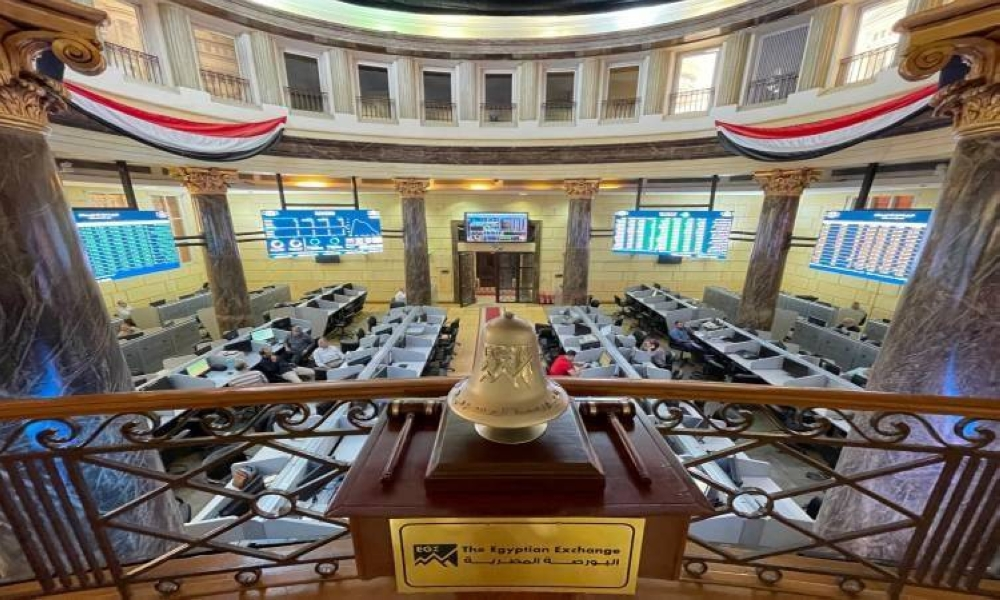
Strong performance for the Egyptian stock market at the close of trading
The Egyptian stock market closed today with a significant collective rise, continuing the recent positive performance of the markets. The market capitalization of listed companies achieved strong gains of approximately EGP 27 billion, closing at EGP 3.257 trillion. This rise came amidst robust trading activity, with total transaction value reaching around EGP 69.5 billion, of which EGP 8.4 billion was in the stock market.
Regarding the performance of the main indices, the benchmark EGX 30 index led the upward trend, rising by 1.33% to reach 49,631.56 points. It was followed by the EGX 70 index for small and medium-sized enterprises, which increased by 0.61% to reach 12,788.12 points. The broader EGX 100 index also saw gains, climbing by approximately 0.73% to close at 17,689.85 points, reflecting a prevailing sense of optimism across most sectors.
The general economic context and its impact on the market
This strong performance of the Egyptian stock market comes amid a series of significant economic developments that have boosted the confidence of both local and foreign investors. Over the past few months, the Egyptian government and the Central Bank have taken bold economic decisions aimed at achieving monetary and financial stability, most notably the complete liberalization of the Egyptian pound's exchange rate and a substantial increase in interest rates to curb inflation. These steps, while challenging in the short term, have been widely welcomed by international financial institutions, particularly the International Monetary Fund, which has increased the value of its loan to Egypt.
The major investment deal in the Ras al-Hikma project with the United Arab Emirates also marked a turning point, injecting significant dollar liquidity into the Egyptian economy. This helped eliminate the parallel currency market and increased the country's ability to meet its external obligations. All these factors combined created a clearer and more attractive investment environment, which was directly reflected in the performance of the stock market, a key indicator of the economy.
The importance of positive performance and its expected impact
The Egyptian stock market's consecutive gains are not merely positive indicators; they carry deeper implications at the local, regional, and international levels. Locally, this performance bolsters the confidence of individual and institutional investors in the market, encouraging them to channel their savings into official investment channels rather than hoarding or dollarizing them. It also provides a favorable environment for the government's privatization program, which aims to sell stakes in state-owned companies to increase private sector participation and attract new investments.
Regionally and internationally, the strong performance of the Egyptian Stock Exchange sends a positive signal to foreign investors that the Egyptian market is regaining its appeal as one of the most important emerging markets in the region. With the exchange rate stabilizing, asset valuations have become more realistic, reducing investment risks and encouraging global investment funds to return strongly to the Egyptian market. This contributes to strengthening foreign currency reserves and supporting long-term economic growth.