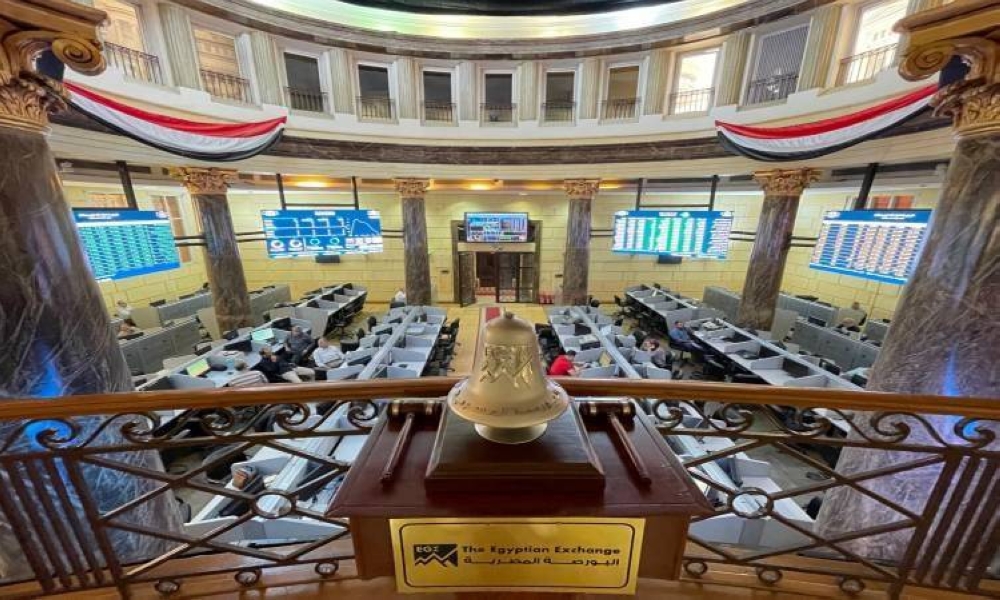
Trading screens closed with a notable decline, as the Egyptian Stock Exchange's results on Thursday, the last trading day of the week, showed a collective drop in the main indices. The market capitalization of listed companies suffered losses of approximately 31 billion Egyptian pounds by the end of trading, bringing the total market capitalization to 3.261 trillion pounds. These figures reflect a state of anticipation and caution among investors in light of current economic variables and the usual profit-taking at the end of the week.
Regarding trading details, the total value of transactions in the market reached approximately EGP 96.3 billion, with stock market transactions accounting for about EGP 5.7 billion. As for the indices, the main index of the Egyptian Exchange (EGX 30) declined by 1.04%, closing at 47,001.89 points. The decline was not limited to leading stocks, but also extended to the small and medium-sized enterprises index (EGX 70), which fell by 0.92% to 12,706.78 points. The broader EGX 100 index also dropped by 0.87%, closing at 17,722.36 points.
The economic context and its impact on the results of the Egyptian Stock Exchange
The Egyptian Stock Exchange is one of the oldest and most established financial markets in the Middle East and Africa, dating back to the late 19th century. For decades, the exchange has reflected the country's economic health and has been directly influenced by monetary and fiscal policies. Currently, the Egyptian Stock Exchange's performance is affected by several macroeconomic factors, including inflation rates, interest rates set by the Central Bank of Egypt, and global and regional geopolitical tensions that impact emerging markets. The decline in indices today reflects a natural response from investors seeking to reassess their portfolios in light of these factors, as capital tends to hedge against economic volatility.
The strategic importance and expected impact of market trading
The importance of daily stock market trading extends far beyond immediate figures, encompassing wide-ranging effects both locally and internationally. Locally, the stock market plays a vital role in providing companies with the necessary financing for expansion and growth, positively impacting employment rates and GDP. When indices decline, the pace of new listings may temporarily slow until the market recovers. Regionally and internationally, the performance of the Egyptian market remains under close scrutiny by global financial institutions and foreign investment funds seeking promising investment opportunities in emerging markets. Despite temporary losses that the market may experience in some sessions, the robust infrastructure of the Egyptian economy and ongoing reform measures contribute to maintaining the market's attractiveness in the medium and long term, making these declines a potential opportunity for investors to acquire stocks with strong fundamentals at competitive prices.