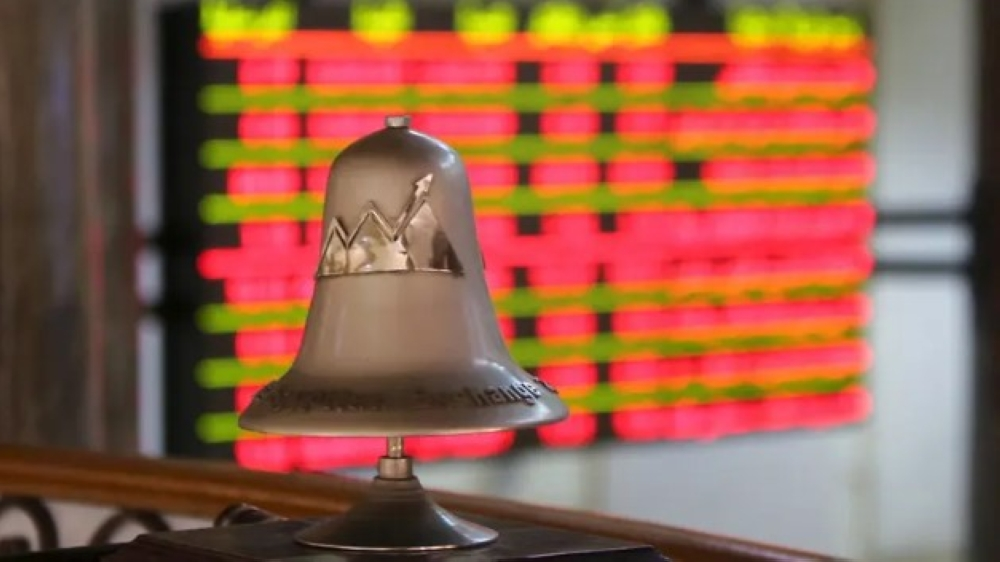
The Egyptian stock market closed today's trading session with mixed performance, reflecting a state of anticipation and portfolio rebalancing among investors. Despite the divergent movements of the main and sub-indices, the market capitalization of listed companies gained approximately 6 billion Egyptian pounds, closing at a historic high approaching the 3 trillion pound mark, specifically at 2.991 trillion pounds.
The session witnessed significant activity in liquidity, with total market transactions recording a huge value of about 69.4 billion pounds, including stock market transactions alone amounting to about 5.4 billion pounds. This indicates the presence of large deals or trades on debt instruments and bonds, which usually raise the total value of transactions significantly, thus enhancing the depth of the market and its ability to absorb large cash flows.
In terms of index performance, the Egyptian Exchange's main index, EGX 30, led the gains, rising 0.75% to close at 41,856.76 points, supported by selective buying of blue-chip stocks with the largest relative weight. Conversely, profit-taking dominated small and medium-sized stocks, causing the EGX 70 index to decline by 0.65% to close at 12,941.85 points, while the broader EGX 100 index fell by 0.55% to 17,218.46 points.
This performance comes within a broader economic context, as the Egyptian Stock Exchange is one of the oldest and most established financial markets in the Middle East and North Africa region, playing a pivotal role as a reflection of the Egyptian economy. These movements are particularly significant given the efforts of both local and foreign investors to use the stock market as a hedge against inflation and to preserve asset values, especially in light of the recent asset repricing witnessed in the market.
The market capitalization reaching nearly 3 trillion Egyptian pounds marks a pivotal moment in the market's history, reflecting the growth in the size of listed companies and the increased attractiveness of the market to institutional investors. The divergence in daily performance between the main index and smaller stock indices indicates the nature of the current economic cycle, with liquidity moving between different sectors in search of promising investment opportunities. This underscores the market's dynamism and its ability to adapt to local and global economic changes.