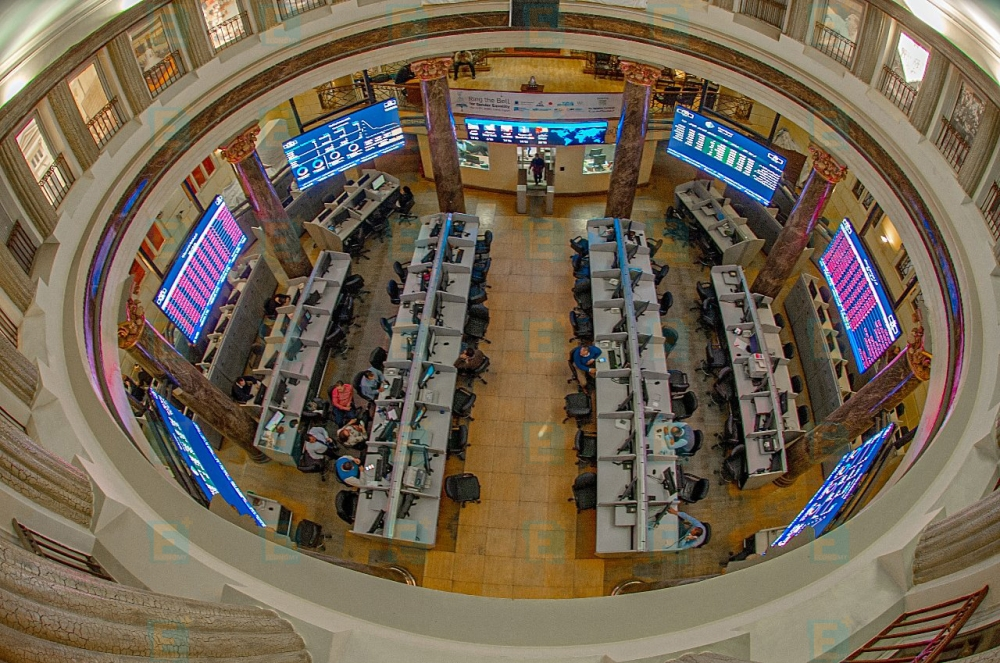
Mixed performance dominated the Egyptian stock market indices at the close of trading
The Egyptian stock market experienced a volatile trading session, with the Egyptian Exchange's indices closing mixed. While the main index managed gains, declines dominated the small and medium-sized stock indices, reflecting a cautious and watchful stance among investors regarding the current economic conditions. The market capitalization of listed companies increased by approximately 7 billion Egyptian pounds, reaching 3.181 trillion pounds, amidst substantial total trading volume of around 206.8 billion pounds, of which 6.7 billion pounds were traded on the stock market.
Key indicators performance details
The performance was primarily driven by the rise in the Egyptian Exchange's main index, the EGX 30, which comprises the 30 largest and most liquid listed companies. The index climbed 0.69% to close at 47,834.55 points. This rise typically indicates investor confidence, particularly among foreign institutions and funds, in leading stocks with strong financial standing and the ability to withstand economic challenges.
In contrast, the EGX 70 index, which tracks small and medium-sized enterprises, saw a notable decline of 1.04%, closing at 12,505.58 points. The broader EGX 100 index also fell, dropping 0.57% to close at 17,184.58 points. This divergence between the main index and the others reflects retail investors' concerns about the impact of rising operating and financing costs on smaller companies.
The economic context and its impact on the market
This performance comes against a complex economic backdrop in Egypt. On the one hand, the government and the central bank are implementing structural reforms aimed at stabilizing the macroeconomy, such as floating the exchange rate and raising interest rates to curb inflation—steps welcomed by international institutions. On the other hand, these measures are putting pressure on businesses and consumers in the short term. The divergent performance of the indicators today is a direct reflection of this situation, with large exporting companies benefiting from the exchange rate flexibility, while companies reliant on the domestic market are affected by rising costs and weakened purchasing power.
Importance and expected impact
The Egyptian Stock Exchange, one of the oldest in the Middle East and Africa, is a mirror of the national economy and a key indicator of local and international investor confidence. Its performance is closely monitored by credit rating agencies and foreign investors seeking opportunities in emerging markets. A continued rise in the main index could encourage further inflows of foreign direct and indirect investment, which is vital for bolstering foreign exchange reserves and financing development plans. However, the decline in small-cap stock indices highlights the challenges facing a broad sector of the economy, potentially requiring supportive policies to enhance its resilience and growth potential.