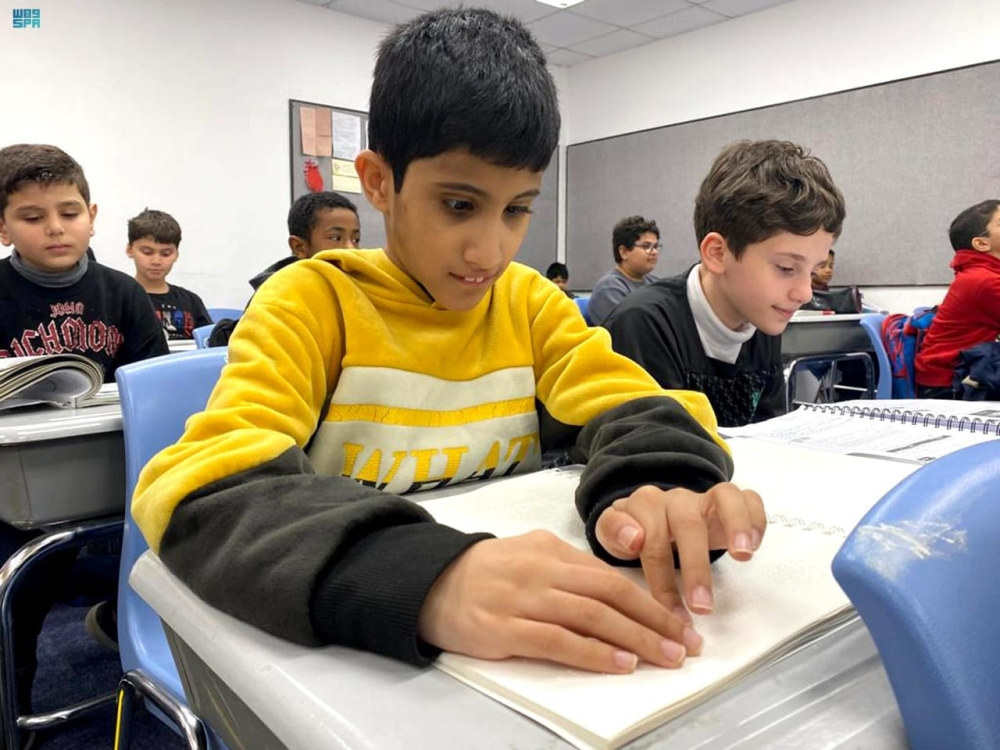
In a strategic move aimed at strengthening the inclusive education system, the Ministry of Education launched a package of specialized training programs under the umbrella of the "Inclusive Learning Journey" initiative. This initiative, sponsored by the Deputy Minister, Dr. Saad Al-Harbi, aims to train 8,000 specialized educational personnel by developing central trainers and equipping them with the latest global methodologies and virtual reality technologies. This will ensure the integration of students with disabilities into mainstream education and empower them in line with the objectives of the Human Capacity Development Program.
The first phase of this ambitious educational movement has begun with the training of 228 central trainers representing various education departments in Saudi regions and governorates, to form a basic nucleus for transferring knowledge and localizing expertise in the educational field, in preparation for reaching the final goal of training thousands of teachers and specialists.
Strategic context and national vision
This step is not isolated from the Kingdom's strategic directions; rather, it is a fundamental pillar of the goals of "Vision 2030," which explicitly stipulates the necessity of empowering people with disabilities and transforming them from recipients of care to productive and active members of society. The shift from a system of "segregation" in special education institutes to a system of "comprehensive inclusion" in public schools is one of the most significant historical transformations in the history of Saudi education. This approach contributes to bridging the gap between public and special education and achieves the principle of equal educational opportunities for all.
Modern technologies and global methodologies
The training packages adopted in the program feature a qualitative leap in the tools used, employing virtual reality (VR) and augmented reality (AR) technologies to train students in life and social skills in safe, simulated environments. The programs also adopt the Multi-Level Support System (MTSS) model as a fundamental pillar for all grade levels, ensuring the provision of graded educational and behavioral responses that precisely meet each student's needs. Furthermore, they empower teachers to use Applied Behavior Analysis (ABA) to optimize classroom management and develop effective teaching strategies.
Expected impact: social and economic dimensions
This program is expected to have a far-reaching impact that extends beyond the classroom. Socially, integrating students with disabilities into mainstream schools will foster values of acceptance and diversity among young people, reducing social stigma and promoting community inclusion. Economically, providing this group with educational and skills training in natural environments will enhance their readiness for the future job market, thus supporting the national economy with a diverse and capable workforce.
This integrated training system seeks to promote the concept of “least restrictive environments” and develop professional practices for measurement and diagnostic specialists, ensuring high-quality educational outcomes that meet global standards and place the Kingdom among the leading countries regionally in the field of inclusive education.