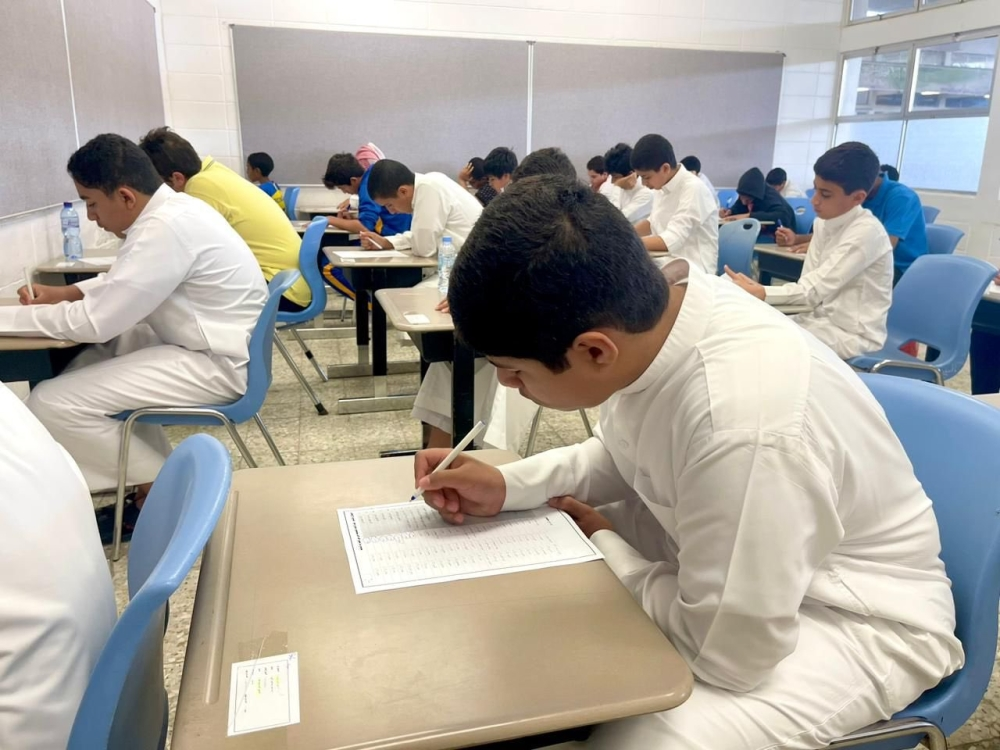
In a move aimed at enhancing school discipline and improving the quality of the learning environment, the Ministry of Education has officially decided to integrate behavioral assessment into students' academic performance starting from the third grade. Under this decision, behavior has become a separate subject with a weight of 100 points, directly impacting the student's overall grade point average. This establishes new standards for success and excellence that rely not only on memorization and comprehension but also on ethical and behavioral conduct.
Details of the new behavior grading system
The new system places third-grade students, who are at a sensitive age (around nine), under early responsibility for their academic achievement. Conduct is treated like core subjects such as mathematics and Arabic in terms of its impact on the semester grade point average. The marks allocated for conduct are divided into two categories:
- Trust balance (80 points): It is automatically granted to the student at the beginning of the semester, but it is subject to immediate deduction in the event of behavioral violations, as violations turn into “debts” that deplete this balance.
- Excellence marks (20 marks): These are not awarded automatically, but the student must earn them through positive behavioral practices, initiatives, and high commitment, which means that passive discipline (mere non-mischief) is not enough to get the full mark.
The educational context and the importance of the decision
This shift comes within the framework of a comprehensive vision for developing the educational system, where education is no longer merely the transmission of information, but rather an integrated educational process aimed at building the student's character. Historically, behavior assessment in the early stages often relied on descriptive observations without decisive numerical impact, which could diminish the seriousness with which violations are addressed. The third grade of primary school is a crucial transitional stage, as students begin to grasp rules and regulations more deeply, making it the ideal time to instill values of discipline and responsibility.
Expected impact and the role of the family
This decision is expected to bring about a tangible change in the relationship between home and school. With behavior now integrated into the academic grade, parents will become key partners in monitoring their children's conduct, not just their academic performance. This system will also enhance the authority of teachers and school administration, as they now have clear regulatory tools (formal regulations) for addressing infractions, contributing to a reduction in bullying and classroom disruptions, and creating a more attractive and stimulating learning environment.
Compensation mechanism: a lifeline
Recognizing the nature of this age group and the potential for behavioral modification, the Ministry has provided a flexible mechanism for compensation. Students who have had marks deducted can have them reinstated before the system closes by providing concrete evidence of improved behavior or participation in volunteer work and positive initiatives within the school. This process requires direct coordination between the parent and the student affairs officer, thus offering students a constant opportunity to correct their course and avoid academic setbacks.
Exception for early primary grades
The system takes into account the developmental characteristics of early childhood, exempting first and second grade students from this strict numerical system. Their behavior will continue to be assessed through descriptive and guiding statements aimed at gentle reinforcement and correction without affecting their grades or averages, thus ensuring they are not subjected to premature psychological pressure in their early school years.