Strengthening cooperation to address environmental challenges
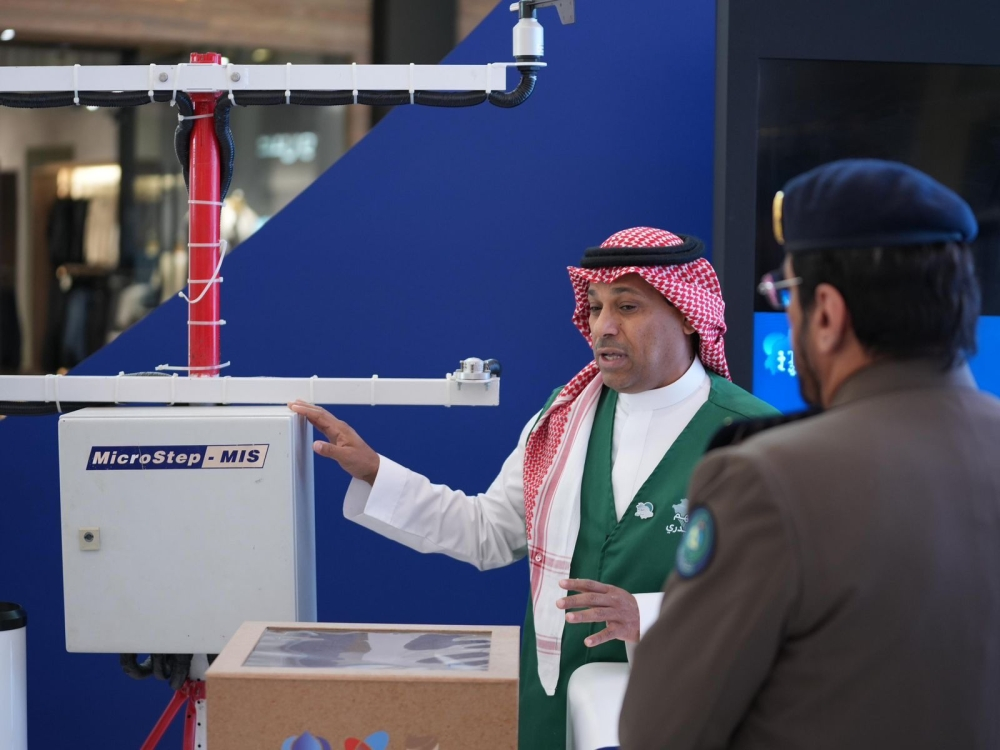
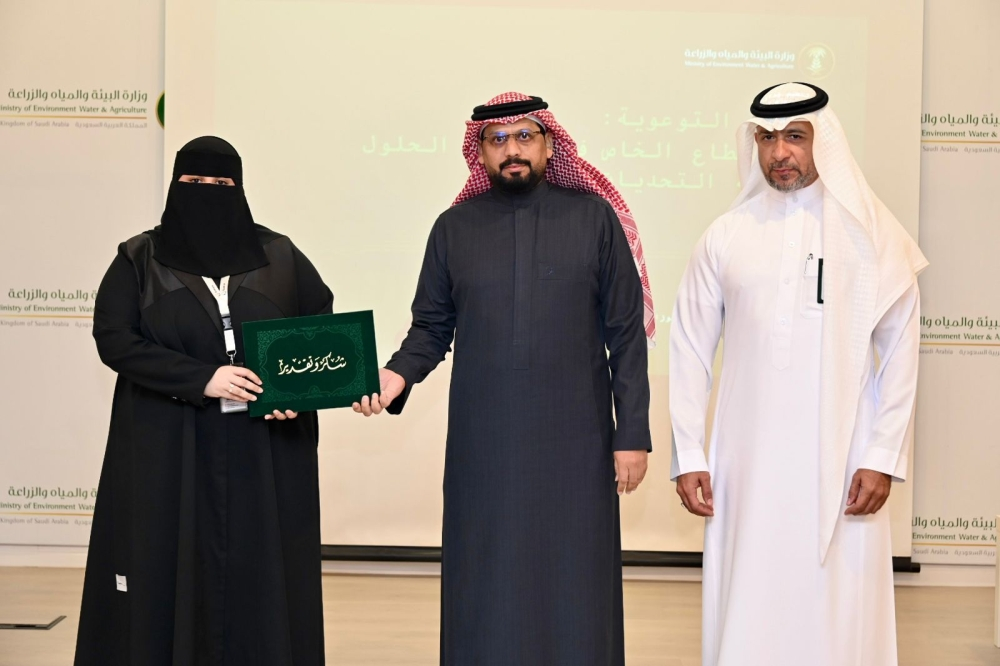
In a move reflecting the Kingdom of Saudi Arabia’s commitment to environmental sustainability, the Eastern Province branch of the Ministry of Environment, Water and Agriculture held an awareness seminar entitled “The Role of the Private Sector in Providing Solutions to Address Environmental Challenges.” The seminar, which included the participation of experts and officials, reviewed the pivotal role of the private sector in addressing pressing environmental challenges such as pollution and global warming, within a framework that complements government efforts.
Engineer Fahd Al-Hamzi, Director General of the Ministry's Eastern Province branch, emphasized the importance of this cooperation, noting that current challenges, including climate change, air and soil pollution, and biodiversity loss, necessitate a concerted effort. He added that achieving food security, a cornerstone of national security, is inextricably linked to environmental health and sustainability, requiring the development of joint strategies that leverage the Kingdom's capabilities and comparative advantages.
National context: Vision 2030 and green initiatives
This symposium comes within the broader context of the national transformation led by Vision 2030, which places environmental sustainability and the protection of natural resources among its top priorities. The Kingdom has launched ambitious initiatives such as the Saudi Green Initiative and the Middle East Green Initiative, which aim to rehabilitate vast areas of land, plant billions of trees, and significantly reduce carbon emissions. These initiatives serve as a clear roadmap for improving quality of life and protecting the planet for future generations. Private sector engagement is a cornerstone of their success, through investment in clean technologies, the adoption of sustainable industrial practices, and contributions to afforestation and renewable energy projects.
The importance of the event and its expected impact
This partnership is particularly important in the Eastern Province, the Kingdom’s industrial heartland and a major energy hub. The adoption of innovative solutions by companies in the region to reduce their carbon footprint and manage industrial waste not only contributes to achieving national environmental goals but also enhances their global competitiveness. Regionally, the Kingdom’s efforts offer a leading model for other countries in the region on how to balance economic growth with environmental preservation. Internationally, the Kingdom’s commitment to achieving net-zero carbon emissions by 2060, supported by such local partnerships, represents a significant contribution to global efforts to combat climate change under the Paris Agreement.
Symposium themes and recommendations
The symposium's lectures focused on several key themes. Asayel Al-Otaibi and Salem Al-Hashem discussed the concept of the "carbon footprint" as a precise scientific tool for measuring human impact on the environment, and the importance of the private sector's contribution in aligning its strategies with the goals of the Saudi Green Initiative. Noura Al-Qahtani addressed ways to achieve environmental sustainability in the Kingdom and the private sector's role in developing technological solutions that enhance environmental transparency. The symposium concluded by emphasizing that the private sector's role is no longer limited to implementation, but has become a strategic partner in raising awareness, transferring knowledge, and accelerating the widespread adoption of sustainable solutions.