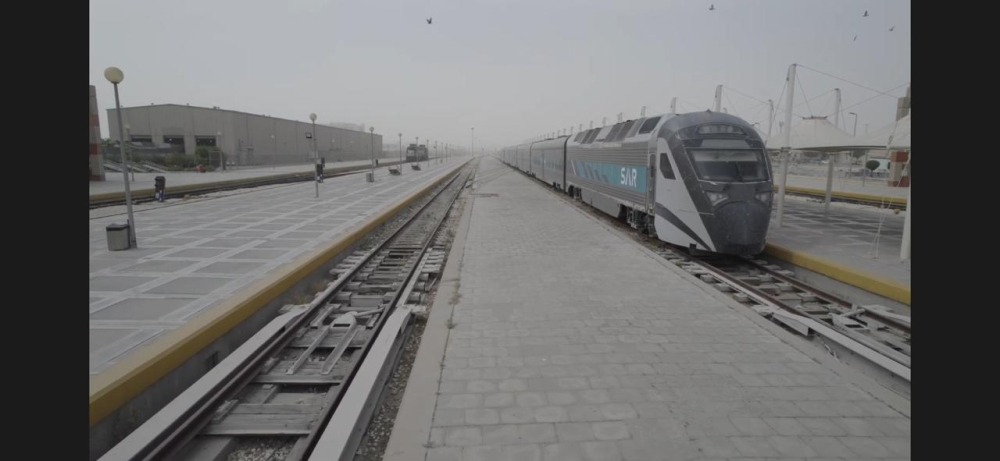
Khaled Al-Farhan, Director of Public Relations at Saudi Railways (SAR), confirmed that the Kingdom's train system continues to operate at full capacity without any impact from the ongoing regional events. In a testament to its high operational efficiency, the Eastern Train transported approximately 35,000 passengers across 14 daily trips, directly contributing to ensuring safe and seamless travel for Saudi and Gulf citizens wishing to return to their home countries amidst the current circumstances.
The role of the Orient Express in strengthening the regional transport system
Historically, Saudi Arabia’s railway network has played a pivotal role in connecting the Kingdom’s vast regions. The Eastern Railway is a continuation of decades of efforts to develop the transport sector’s infrastructure. This vital route connects the capital, Riyadh, with the Eastern Province, passing through key stations such as Hofuf, Abqaiq, and Dammam, making it a crucial artery for trade and travel. With ongoing development led by the Saudi Railway Company (SAR), this network has become a cornerstone of land transport, not only domestically but also as a strategic link serving travelers to and from the Gulf Cooperation Council (GCC) countries.
Al-Farhan explained that passenger transport continues to operate at full capacity to meet increasing demand. The train operates daily with a capacity of approximately 4,000 seats. Many passengers traveled via the Riyadh and Dammam stations to Gulf countries such as Kuwait and Bahrain, while others traveled via the Hofuf station to Qatar and the United Arab Emirates. The system also facilitated the transport of residents of Gulf countries into the Kingdom, enabling them to continue their journeys via King Khalid International Airport in Riyadh, in a transfer process described as fast, safe, and organized.
Strategic importance and impact of travel at the local and international levels
The significance of this event lies in demonstrating the Saudi infrastructure's ability to adapt to regional changes and provide safe and reliable alternatives for travelers. Domestically, this strong performance enhances the confidence of citizens and residents in public transportation and supports economic and tourism activity between the Kingdom's cities. Regionally and internationally, the success of Saudi Railways in facilitating the return of thousands of Gulf nationals reinforces the Kingdom's position as a leading global logistics hub, directly aligning with the objectives of Saudi Vision 2030 and the National Transport and Logistics Strategy, which aims to connect continents and facilitate the movement of people and goods.
Regarding the increased demand for travel, Al-Farhan emphasized that this has not caused any operational pressures, as the trains operate according to precise schedules and advanced procedures that ensure the highest levels of efficiency. The railway system is not limited to the eastern line; it also includes the northern network, the Haramain High-Speed Railway, which experiences high operational demand during the Umrah season in Ramadan, and the Holy Sites Metro network.
Al-Farhan concluded his remarks by emphasizing that the success and continuity of the operational processes is due to the continuous follow-up and great support from the wise leadership, and the direct supervision from the Ministry of Transport and Logistics, which ensures that travelers reach their destinations on time and with the highest levels of safety and comfort.