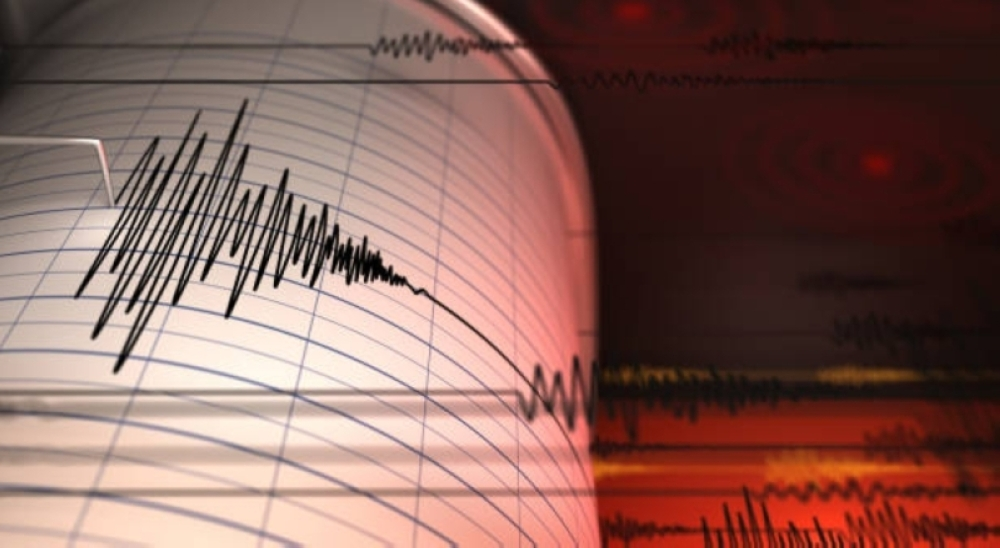
The Indonesian Meteorology, Climatology, and Geophysics Agency (BMKG) announced today that a strong earthquake measuring 6.3 on the Richter scale struck off the coast of Sumatra Island, specifically near Aceh province, raising concerns in the region, which is experiencing ongoing seismic activity.
The agency explained in its official statement that the earthquake's epicenter was at a depth of 10 kilometers, which experts classify as a shallow earthquake, typically felt more strongly by residents than deeper earthquakes. Despite the earthquake's strength, Indonesian authorities confirmed there was no immediate tsunami threat, urging citizens to remain calm and vigilant for possible aftershocks.
Indonesia and the Ring of Fire: A complex geological context
This earthquake is part of the expected natural activity in Indonesia, which lies geographically on the Pacific Ring of Fire. This region is one of the most seismically and volcanically active areas in the world, where several major tectonic plates meet, most notably the Indo-Australian and Eurasian plates. The constant collision and sliding of these plates beneath each other leads to a buildup of pressure in the Earth's crust, which is suddenly released in the form of earthquakes.
Geological data indicates that Indonesia experiences thousands of earthquakes annually, ranging from minor tremors imperceptible to devastating ones. Sumatra, in particular, is a hotspot for this activity due to its location parallel to the Sunda Trench, a highly active tectonic subduction zone.
Historical memory of Aceh region
Aceh province, near the epicenter of the earthquake, holds a special place in the collective memory of Indonesians and the world when it comes to natural disasters. It was the region hardest hit by the 2004 tsunami, triggered by a massive 9.1 magnitude earthquake. That historic catastrophe made early warning systems and public awareness campaigns a top priority for the Indonesian government in the years that followed.
Although the current 6.3 magnitude earthquake is not comparable in intensity to the 2004 earthquake, any seismic activity in this region always necessitates a rapid response from monitoring agencies to ensure the safety of coastlines and residential areas. Local authorities continue to closely monitor the situation to ensure the safety of citizens and property in the affected areas.