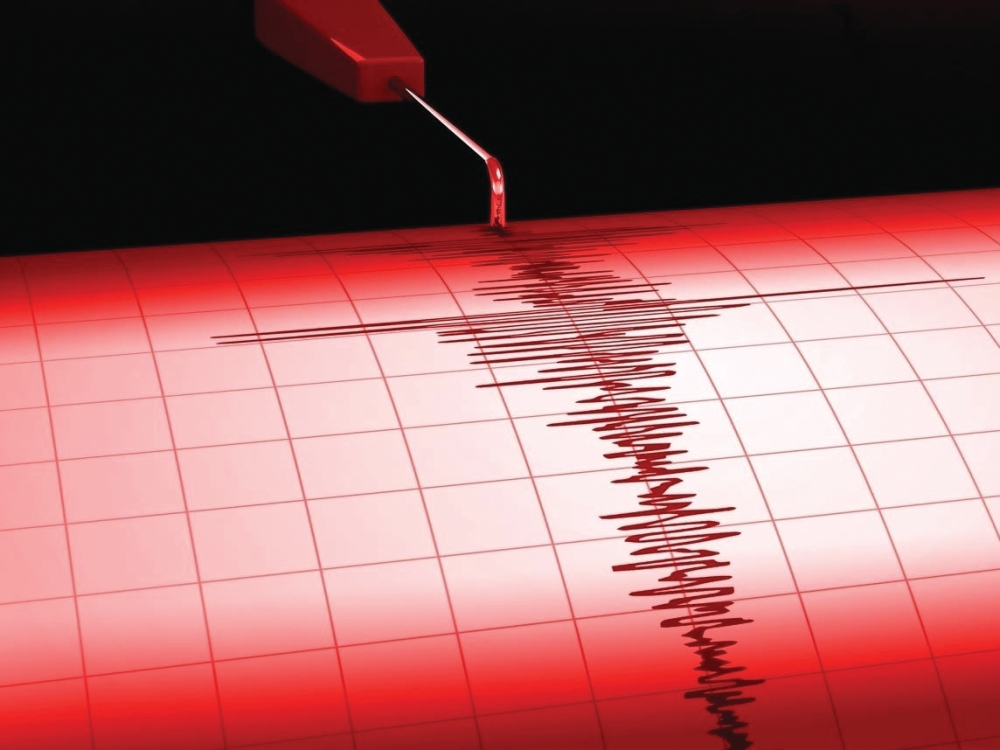
An earthquake measuring 4.3 on the Richter scale struck Bushehr province in southern Iran today, with no immediate reports of casualties or damage. The seismological center of the Geophysics Institute at Tehran University reported that the quake occurred at a depth of 12 kilometers, making it a relatively shallow tremor.
Iran is in the heart of the earthquake belt
This earthquake serves as a reminder of Iran's active geological nature. Situated on major fault lines, it is one of the world's most earthquake-prone countries. Its geographical location at the junction of the Arabian and Eurasian plates makes it a focal point of continuous tectonic activity. This constant collision of plates leads to a massive buildup of energy, which is released in the form of frequent earthquakes, ranging in intensity from minor tremors imperceptible to devastating earthquakes.
The importance of the earthquake's location and its potential impact
Bushehr province holds strategic importance and special sensitivity both domestically and internationally, not only because it is a major industrial center, but also because it houses the Bushehr Nuclear Power Plant, the country's only commercial nuclear power plant. Although a 4.3 magnitude earthquake is not considered a direct threat to a facility designed to withstand much stronger tremors, any seismic activity in the region raises concerns among international observers and neighboring countries, who fear an accident that could compromise the reactor's safety. Iranian authorities have repeatedly asserted that the plant was built according to the highest safety standards and is capable of withstanding earthquakes up to magnitude 8.
Iran's impressive seismic record
Iran has a long and painful history with devastating earthquakes that have claimed hundreds of thousands of lives over the decades. In recent memory, the 2003 Bam earthquake, measuring 6.6 on the Richter scale, remains vivid, having killed more than 26,000 people and completely destroyed the historic city. Prior to that, the 1990 Manjil-Rudbar earthquake, with a magnitude of 7.4, was one of the worst natural disasters in the country's history, leaving tens of thousands dead. These tragic events justify the anxiety felt by the population with every earthquake and underscore the critical importance of implementing earthquake-resistant building standards and developing emergency response plans.