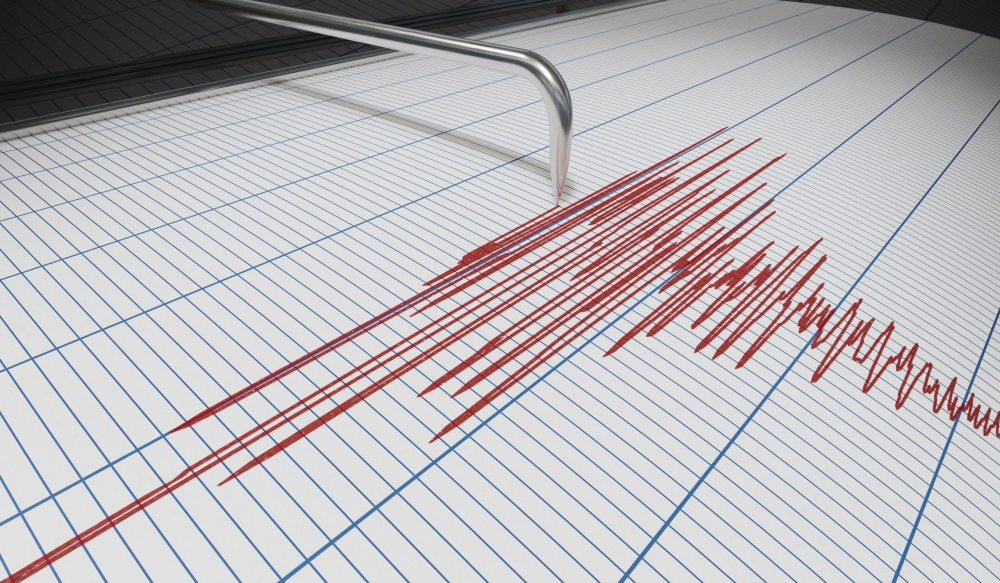
Northwest Greece experienced earthquake measuring 5.3 on the Richter scale overnight Saturday to Sunday, causing concern among residents but no reported injuries, according to initial reports from local authorities and civil defense agencies in the country.
Details of seismic activity in Ioannina
Residents of the Ioannina region, about 420 kilometers northwest of Athens, felt the earthquake strongly, which occurred at 3:32 a.m. local time. Data from the seismic monitoring station in Thessaloniki (northern Greece) indicated that the epicenter was at a depth of 14 kilometers, near the town of Leptocaria, a relatively shallow depth that amplified the tremors felt by residents.
In a related context, the observatory confirmed that this major earthquake was not an isolated event, but was followed by a series of seismic activities, as more than ten aftershocks of varying strengths were recorded, which is a natural pattern that usually occurs after medium and large earthquakes as the earth's layers try to regain their stability.
Material damage and effects of the earthquake
Although no lives were lost, local authorities reported some limited property damage. This included minor rockslides on some mountain roads, as well as power outages in some areas and villages of the Ioannina region due to damage to local power grids caused by the tremors.
The geological nature of Greece and the frequency of earthquakes
Greece is one of the most seismically active countries in Europe, due to its complex geological location. The country lies at the intersection of major tectonic plates, specifically in the Hellenic Arc of the southeastern Mediterranean. This location makes the region subject to constant geological stresses resulting from the collision of the African and Eurasian plates.
As a result of its geological nature, Greece experiences frequent earthquakes of varying intensity. However, the accumulated experience of the Greek authorities and the implementation of strict earthquake-resistant building standards in recent decades have significantly reduced the scale of human and material losses compared to other countries located in seismically active regions.
The importance of continuous monitoring and follow-up
Experts consistently emphasize the importance of monitoring seismic activity in the Mediterranean region, where monitoring stations play a vital role in providing accurate data that aids in disaster management and rapid response. Vigilance and adherence to public safety guidelines remain paramount for residents in areas experiencing frequent seismic activity, such as northwestern Greece.