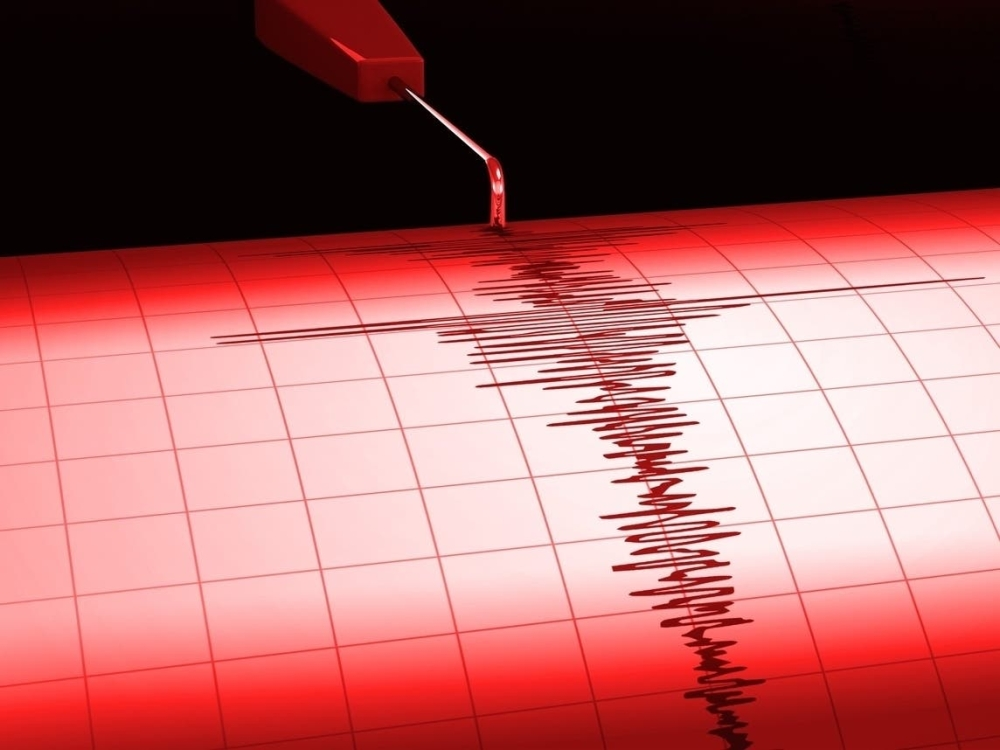
The border region between the US state of Alaska and the far west of Canada experienced intense seismic activity on Saturday, raising concerns among geological observatories, as a powerful earthquake measuring 7 on the Richter scale struck a rugged, sparsely populated mountainous area, according to the US Geological Survey (USGS).
The institute located the epicenter at 8:41 PM GMT, noting that it occurred at a shallow depth of only about 10 kilometers, which typically increases the intensity of the shaking felt at the surface. The epicenter was located near the coast on the border between Alaska and Canada's Yukon Territory, specifically about 250 kilometers west of Whitehorse (the capital of Yukon) and about 370 kilometers northwest of Juneau (the capital of Alaska).
Aftershocks and tsunami situation
The seismic activity didn't stop with the main quake. Sensors detected two strong aftershocks in the minutes following the initial earthquake, measuring 5.6 and 5.3 respectively, indicating significant tectonic activity in the region. Despite the earthquake's proximity to the Pacific coast, the U.S. Tsunami Warning Center quickly reassured residents and authorities, confirming that no tsunami warning had been issued for the U.S. or Canadian coasts.
Geological context: The Ring of Fire
These earthquakes occur within the natural context of the region geologically known as the Pacific Ring of Fire, a horseshoe-shaped area encircling the Pacific Ocean basin characterized by extremely high seismic and volcanic activity. These earthquakes result from the continuous movement of tectonic plates, where the Pacific Plate slides beneath the North American Plate, leading to a buildup of geological pressure that is suddenly released in the form of earthquakes.
Alaska's seismic history
Alaska is one of the most seismically active regions in the United States and the world. These events evoke historical memories for the region's inhabitants, most notably the Great Alaska Earthquake of 1964, which measured 9.2 on the Richter scale and was the second strongest earthquake ever recorded, causing widespread destruction and devastating tsunamis. However, the current earthquake, despite its strength, occurred in a remote area with very low population density, significantly reducing the likelihood of significant human or material losses compared to earthquakes that strike densely populated urban areas.
Competent authorities in Canada and the United States continue to closely monitor the situation for any additional seismic activity that may occur in the coming hours or days, while emphasizing the importance of following public safety guidelines in areas near the epicenter.