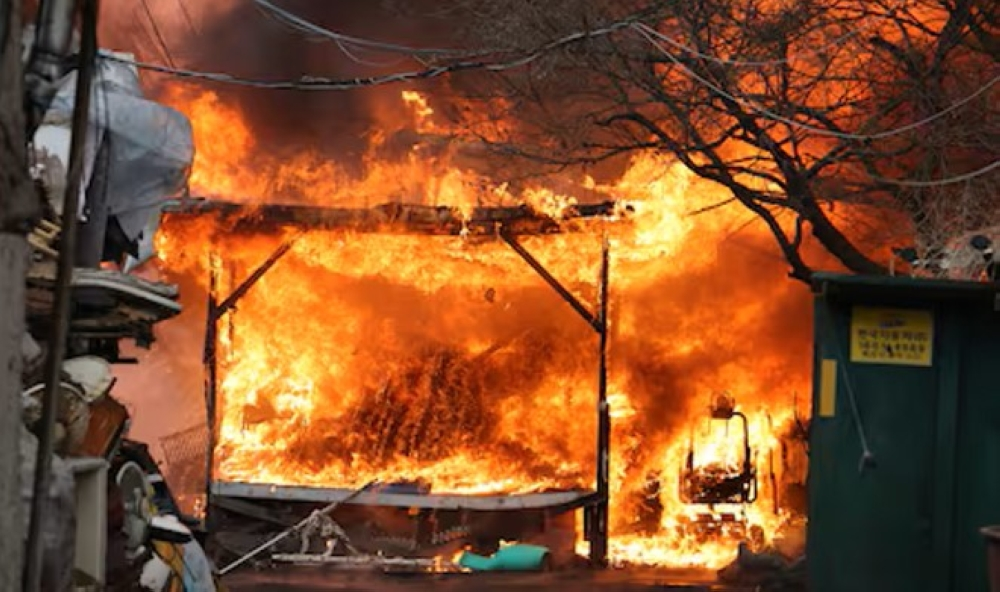
A new security incident occurred in the city of Penza, located in western Russia, early Friday morning when a large fire broke out inside an oil storage tank as a result of a drone attack. The regional governor, Oleg Melnichenko, confirmed the incident, stating that emergency teams responded immediately and that no injuries have been reported so far.
Details of the field attack
According to reports, the attack occurred around 4:00 AM local time (01:00 GMT). Social media platforms circulated videos showing plumes of smoke and flames rising from the oil depot located on the eastern outskirts of Penza. This strike is particularly significant given the city's geographical location, approximately 618 kilometers from the front lines, demonstrating the drones' ability to penetrate deep into Russian territory.
For its part, the Russian Ministry of Defense announced that its air defense systems were on alert, and were able to intercept at least 12 Ukrainian drones during the night in various areas, one of which was over the airspace of the Penza region, which explains the incident.
Energy war and the strategy of attrition
This attack comes within the context of an escalating military strategy adopted by Kyiv targeting Russia's energy infrastructure. These operations aim to achieve two main objectives: first, to deplete Moscow's economic resources and disrupt the logistical and fuel supplies needed by the Russian military on the front lines; and second, to bring the fight to the Russian home front in order to influence public opinion.
Drones, which are relatively inexpensive compared to conventional missiles, have proven highly effective in causing billions of dollars in material damage to the Russian oil and gas sector, which is the main artery of the Russian economy.
context of reciprocal response
On the other hand, Kyiv considers these attacks a "just and legitimate response" to the ongoing and intensified Russian strikes targeting Ukraine's energy infrastructure. In recent weeks, Ukraine has suffered waves of shelling that have left thousands of civilians without electricity and heating, amid harsh weather conditions and sub-zero temperatures, exacerbating the country's humanitarian crisis.
Analysts point out that the continued targeting of energy facilities by both sides reflects the transformation of the conflict into a long-term war of attrition, where each side seeks to break the will of the other by striking at its economic and vital infrastructure.