Kinshasa sounds the alarm: Humanitarian tragedy and organized looting in eastern Congo
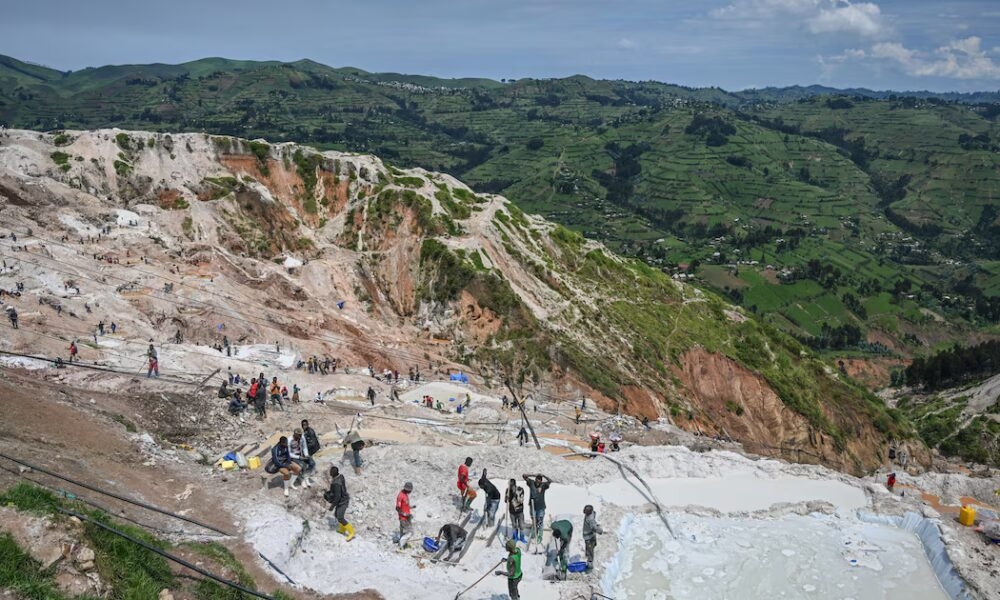
In a new escalation of the crisis in eastern Democratic Republic of Congo, the Kinshasa government has issued an urgent appeal to the international community, calling for immediate action to stop what it described as an “organized looting regime” led by the M23 rebel movement with Rwandan support. This appeal follows a horrific humanitarian disaster at the Rubaya mining site, where at least 200 people are feared dead in a massive landslide, once again highlighting the heavy human cost of the conflict over resources in the region.
According to a statement from the Congolese government, the collapse that occurred Wednesday and Thursday at the Rubaya mine, controlled by the M23 movement since April 2024, was not an accident but a direct result of the "armed occupation" and the indiscriminate exploitation of resources with no regard for the safety of local miners. Kinshasa stressed that "the scale of this tragedy" requires a firm international response.
Background of the conflict and the roots of the “M23” movement
Tensions in eastern Congo date back decades, specifically to the aftermath of the 1994 Rwandan genocide, which triggered a massive influx of refugees and militias across borders, fueling complex regional conflicts. The M23 (March 23 Movement) is one of the most prominent rebel groups to emerge in this context. Founded in 2012 by soldiers who defected from the Congolese army, mostly from the Tutsi ethnic group, the movement cited the government's failure to uphold previous peace agreements as its motive. Despite being defeated in 2013, the M23 resurfaced strongly in late 2021 and has since controlled large swathes of territory in North Kivu province.
The Congolese government, supported by reports from UN experts and several Western countries, accuses Rwanda of providing direct military and logistical support to the M23 movement, an accusation Kigali consistently denies. This accusation further complicates the crisis and transforms it into a regional conflict that threatens the stability of the entire Great Lakes region.
The strategic importance of coltan and its impact on the conflict
The importance of the Rubaya region lies in its status as one of the world's richest areas in coltan, the mineral from which tantalum is extracted—an essential component in the manufacture of modern electronic devices such as smartphones and laptops. Eastern Congo is estimated to hold up to 80% of the world's coltan reserves, making it an arena of fierce competition. By controlling the Rubaya mines, the M23 movement controls a vital economic artery. According to UN experts, the movement has established a parallel administrative system in the region, including a "Ministry of Minerals" that levies taxes on mining activities, generating hundreds of thousands of dollars monthly to finance its military operations and arms purchases, in a vicious cycle of violence fueled by global demand for these minerals.
Regional and international repercussions
The rebels’ control of these resources not only fuels the local conflict but also has serious international repercussions. It raises questions about global mineral supply chains and the responsibility of major technology companies to ensure that “conflict minerals” are not used in their products. The crisis has also displaced millions of people, creating one of the world’s worst humanitarian crises. Kinshasa’s appeal to the international community is an attempt to press for concrete action, not only to provide humanitarian aid but also to address the root causes of the conflict, including foreign interference and the illicit plundering of natural resources that should belong to the Congolese people.