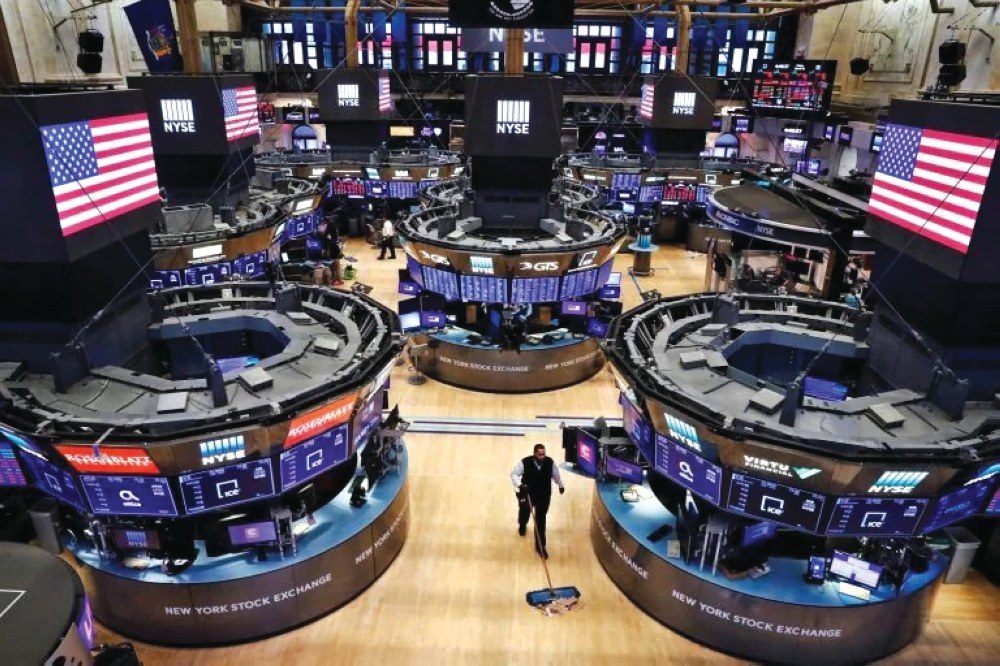
In a historic trading session, US stocks experienced a strong rebound, with the Dow Jones Industrial Average (DJIA) leading the gains with a stunning 1,100-point surge. This significant rise, representing a 2.2% increase, enabled the index to recover a large portion of its earlier losses and revived optimism among Wall Street investors.
The gains weren't limited to the Dow Jones Industrial Average; other major indices also rose. The S&P 500, which tracks the 500 largest companies in the United States, climbed 1.7%. Meanwhile, the Nasdaq Composite, heavily weighted towards technology stocks, posted a strong 1.9% gain, signaling a return of confidence in growth and technology stocks that had recently come under pressure.
General context and background of economic performance
This significant rise comes amid a complex economic context, where investors face multiple challenges, including high inflation and the Federal Reserve's (the US central bank) tightening monetary policies. The Dow Jones Industrial Average, founded in 1896, is one of the oldest and most important economic indicators in the world, tracking the performance of 30 leading US companies in their respective sectors. Therefore, its performance is considered a barometer of the health of the US economy and business confidence.
Large single-day price movements, such as the 1100-point surge, are often driven by a combination of catalysts. These might include positive economic data, such as an unexpected drop in inflation or strong jobs reports, better-than-expected earnings results from major companies, or even reassuring comments from Federal Reserve officials regarding the future of interest rates. This strong performance reflects the market's ability to absorb positive news and translate it into widespread buying momentum.
The importance of the event and its expected impact
Domestically, this surge represents a significant morale boost for both individual and institutional investors, and could encourage increased investment inflows into the stock market. It also reinforces confidence in the strength of the US economy and its ability to overcome current challenges. For listed companies, this rise reflects optimism about their future performance and their capacity to generate strong profits.
Internationally, Wall Street's performance leaves its mark on global financial markets. A strong rally in US markets typically leads to a positive opening in Asian and European stock exchanges the following day. Furthermore, the strength of US stocks can attract more foreign capital, potentially impacting exchange rates, particularly the strength of the US dollar. This is seen as a global indicator that risk appetite among international investors is returning, which could support other asset markets worldwide.