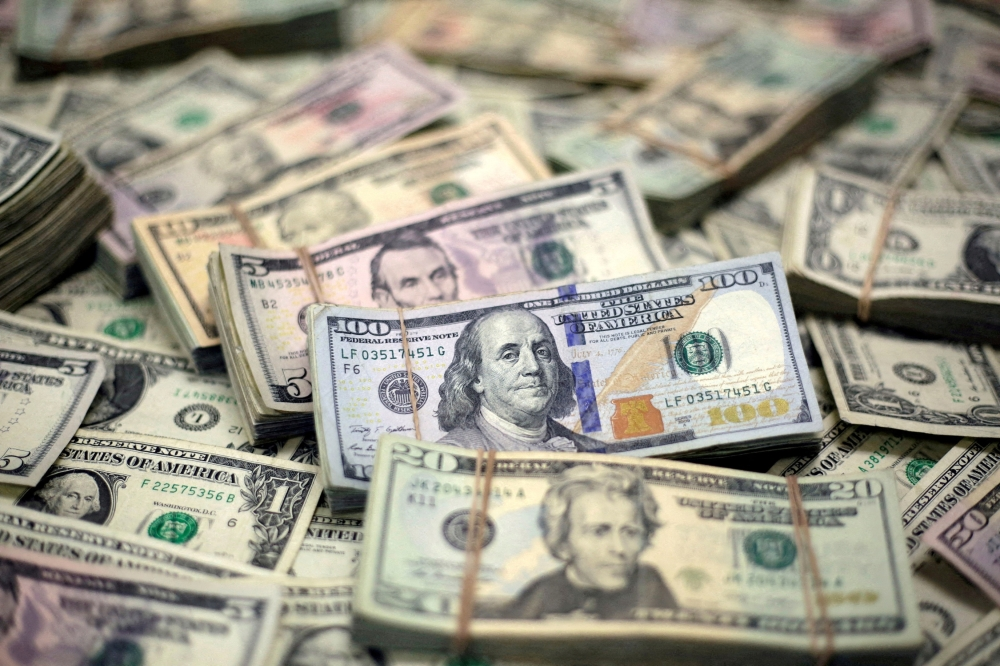
The US dollar exchange rate against the Egyptian pound saw significant fluctuations at the close of trading on Monday across various public and private banks operating in the Egyptian banking market. This volatility comes amidst a climate of anticipation prevailing in the markets following the Central Bank of Egypt's historic decision to fully liberalize the exchange rate in March 2024, ushering the economy into a new phase where the value of the local currency is determined by supply and demand mechanisms.
Dollar exchange rates in major Egyptian banks today, Monday
The following is a presentation of dollar exchange rates at a number of major banks at the end of trading:
- The Central Bank of Egypt: The dollar recorded a price of 46.71 Egyptian pounds for buying and 46.85 Egyptian pounds for selling.
- National Bank of Egypt: The dollar was priced at 46.74 Egyptian pounds for buying and 46.84 Egyptian pounds for selling.
- Bank of Egypt: The dollar recorded a price of 46.74 Egyptian pounds for buying and 46.84 Egyptian pounds for selling.
- Commercial International Bank (CIB): The dollar was priced at 46.74 Egyptian pounds for buying and 46.84 Egyptian pounds for selling.
- Bank of Alexandria: The dollar recorded a price of 46.72 Egyptian pounds for buying and 46.82 Egyptian pounds for selling.
- Suez Canal Bank: The dollar price stabilized at 46.72 Egyptian pounds for buying and 46.82 Egyptian pounds for selling.
Background to the decision to liberalize the exchange rate
The current exchange rate stability comes after a prolonged period of economic challenges for Egypt, characterized by a dual exchange rate system: an official rate at banks and a significantly different rate on the parallel (black) market. This situation exacerbated inflationary pressures and negatively impacted foreign investment. To address these challenges, the Central Bank of Egypt made a decisive decision on March 6, 2024, to implement a flexible exchange rate system. This allowed the Egyptian pound to depreciate considerably, approaching its value on the parallel market before gradually stabilizing. This decision was supported by a massive $35 billion investment deal with the UAE to develop the Ras al-Hikma region, as well as an increase in the value of the loan provided by the International Monetary Fund. This influx of dollars provided substantial liquidity, which helped eliminate the parallel market and bolster the stability of the official exchange rate.
Expected economic effects of exchange rate stability
Exchange rate stability is of paramount importance to the Egyptian economy on several levels. Domestically, a unified exchange rate helps curb inflation in the medium term, as imported goods are priced based on a clear and stable exchange rate. It also enhances the central bank's ability to effectively target inflation. Internationally, a flexible and transparent exchange rate boosts foreign investor confidence and encourages the flow of direct and indirect investments, which is vital for achieving sustainable economic growth. This reform also meets the key requirements of international financial institutions, paving the way for increased financing and support for the Egyptian economy in the future.