The dollar exchange rate against the pound remained stable at the start of the week's trading
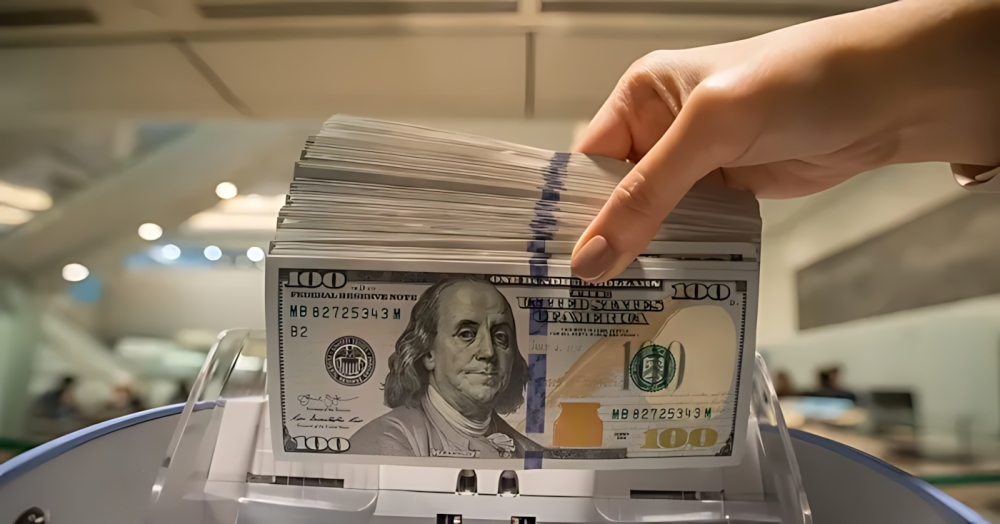
The US dollar exchange rate against the Egyptian pound remained relatively stable with a slight upward bias at the start of trading on Sunday morning in both Egyptian public and private banks. This movement is within the normal daily fluctuations that the foreign exchange market has witnessed since the Central Bank of Egypt's decision to fully liberalize the exchange rate in March 2014, a decision that ended the dual exchange rate system and unified the official market.
Dollar exchange rates at major Egyptian banks today, Sunday
The exchange rates of the US dollar against the Egyptian pound in a number of major banks were as follows:
- The Central Bank of Egypt: The buying price was recorded at 46.76 Egyptian pounds, and the selling price at 46.89 Egyptian pounds.
- National Bank of Egypt: The buying price was recorded at 46.80 Egyptian pounds, and the selling price at 46.90 Egyptian pounds.
- Bank of Egypt: The buying price was recorded at 46.80 Egyptian pounds, and the selling price at 46.90 Egyptian pounds.
- Commercial International Bank (CIB): The buying price was 46.80 Egyptian pounds, and the selling price was 46.90 Egyptian pounds.
- Bank of Alexandria: The buying price was recorded at 46.80 Egyptian pounds, and the selling price at 46.90 Egyptian pounds.
- Abu Dhabi Islamic Bank: The buying price was 46.82 pounds, and the selling price was 46.92 pounds.
Background to the decision to liberalize the exchange rate and its impact on the economy
These slight fluctuations in the exchange rate would have been unthinkable just a few months ago. For decades, the Egyptian economy followed a managed exchange rate policy, which in recent years led to the emergence of a parallel market (the black market) that fueled widespread speculation and a severe shortage of foreign currency in banks. In a historic move on March 6, 2024, the Central Bank of Egypt decided to allow the exchange rate to be determined by supply and demand, a move known as a “full float.” This decision was accompanied by a sharp interest rate hike of 600 basis points aimed at curbing inflation and attracting speculative capital.
The importance of the event and its expected impact locally and internationally
Domestically, the decision to float the Egyptian pound had an immediate and twofold impact. On the one hand, it virtually eliminated the parallel dollar market and increased banks' foreign currency reserves, whether from remittances from Egyptians abroad or from currency exchanges by companies and individuals. On the other hand, it triggered an inflationary wave that affected the prices of goods and services, especially imported ones, posing a significant challenge for citizens. Internationally, the decision was widely welcomed by international financial institutions, most notably the International Monetary Fund, which approved increasing its loan to Egypt to $8 billion. Furthermore, the decision, bolstered by a major investment deal in Ras al-Hikma with the UAE, contributed to strengthening foreign investor confidence in the Egyptian economy, promising increased foreign direct investment inflows in the medium and long term. This, in turn, supports economic stability and enhances growth opportunities and job creation.