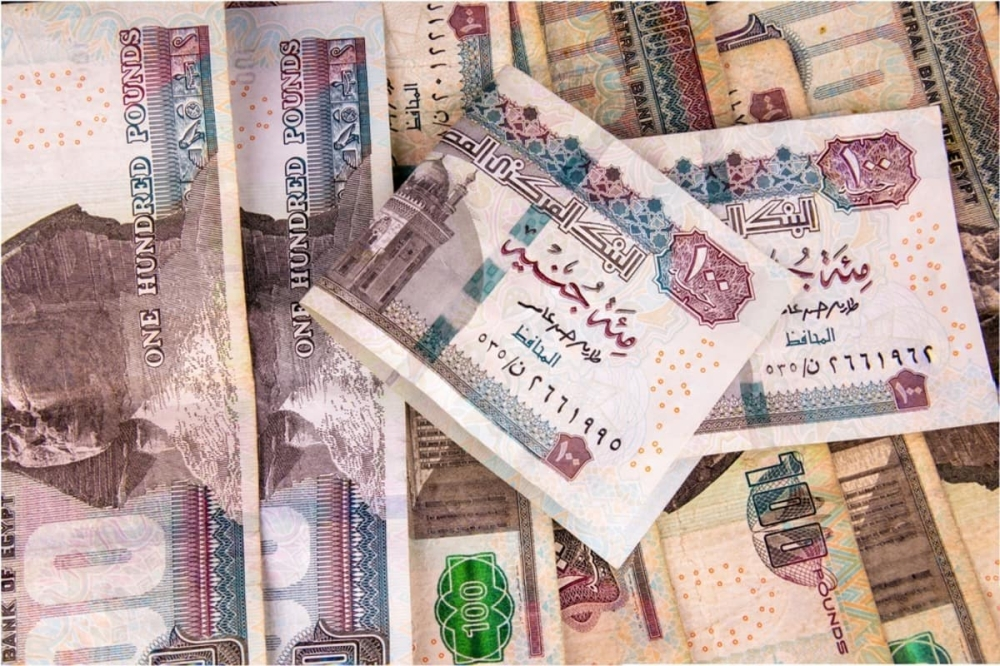
The exchange rate of the US dollar against the Egyptian pound saw notable fluctuations at the start of trading on Sunday across the Egyptian banking network, amid a climate of anticipation in the markets following the recent economic measures taken by the Central Bank. This volatility is part of the new dynamics of the foreign exchange market after the decision to float the currency, a move aimed at achieving long-term economic stability and attracting foreign investment.
Dollar exchange rates in major Egyptian banks today
Today, the dollar exchange rates fluctuated between increases, decreases, and stability in various banks. Below is a breakdown of the exchange rates in a number of major banks operating in Egypt:
- The Central Bank of Egypt: The buying price was recorded at 47.52 Egyptian pounds, and the selling price at 47.66 Egyptian pounds.
- National Bank of Egypt: The buying price was recorded at 47.63 Egyptian pounds, and the selling price at 47.73 Egyptian pounds.
- Bank of Egypt: The buying price was recorded at 47.63 Egyptian pounds, and the selling price at 47.73 Egyptian pounds.
- Cairo Bank: The buying price remained stable at 46.96 Egyptian pounds, and the selling price at 47.06 Egyptian pounds.
- Commercial International Bank (CIB): The buying price was recorded at 47.54 Egyptian pounds, and the selling price at 47.64 Egyptian pounds.
- Bank of Alexandria: The buying price was recorded at 47.54 pounds, and the selling price at 47.64 pounds.
- Faisal Islamic Bank: The buying price rose to 47.61 pounds, and the selling price to 47.71 pounds.
- Abu Dhabi Islamic Bank: The purchase price was recorded at 47.65 pounds, and the selling price at 47.75 pounds.
Background to the decision to liberalize the exchange rate
These daily fluctuations in the exchange rate were not spontaneous, but rather a direct result of a historic decision made by the Central Bank of Egypt on March 6, 2024, to allow the exchange rate to be determined by market supply and demand. This decision, known as a “managed float,” was a crucial step to address the economic challenges that Egypt had faced for years, most notably the existence of a parallel (black) currency market that was straining the formal economy and hindering the flow of foreign investment.
This decision followed the signing of the largest direct investment deal in Egypt's history: the Ras El Hekma development project in partnership with the United Arab Emirates. This project injected a massive amount of dollar liquidity into the Egyptian economy, giving the Central Bank the confidence and ability to unify the exchange rate and eliminate the parallel market. This move also paved the way for a broader agreement with the International Monetary Fund to increase the value of the loan granted to Egypt, thus enhancing the credibility of the Egyptian economic reform program on the international stage.
Expected impacts on the economy and citizens
The liberalization of the exchange rate has varying effects on different sectors of the economy and society. Domestically, the initial devaluation of the pound leads to an inflationary wave, as the cost of imported goods rises, including basic foodstuffs, medicines, and industrial and agricultural production inputs. This places significant pressure on Egyptian household budgets, which the government is attempting to mitigate through social protection programs.
On the other hand, unifying the exchange rate is considered a positive step for attracting foreign direct and indirect investment, as it eliminates the uncertainty that previously prevailed in the market. It also enhances the competitiveness of Egyptian exports in global markets, encourages increased remittances from Egyptians working abroad through official channels rather than the parallel market, and revitalizes the tourism sector, which benefits from lower service costs for foreign tourists. In the long term, exchange rate stability is expected to curb inflation and achieve sustainable economic growth.