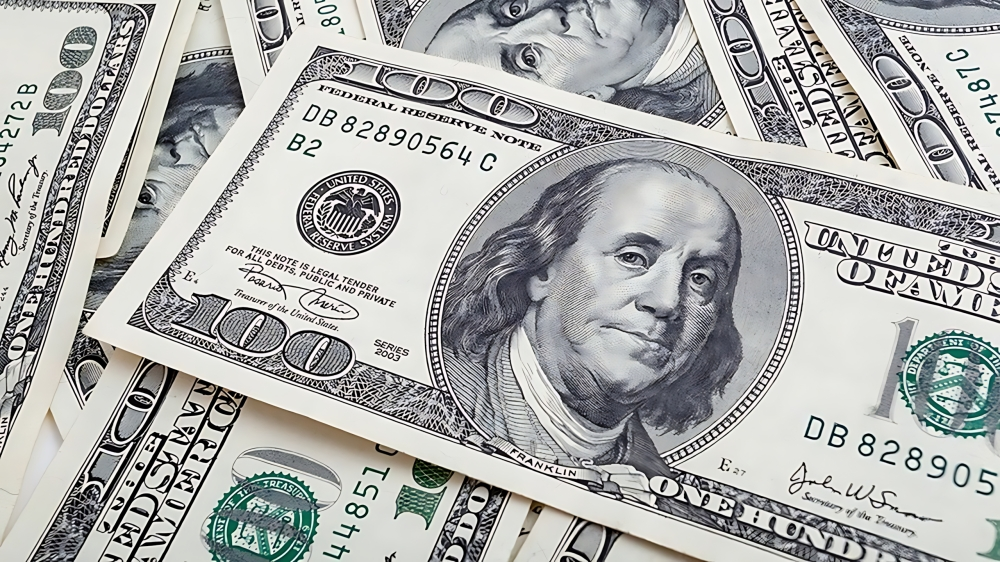
The exchange rate of the US dollar against the Egyptian pound saw slight fluctuations at the start of trading today in Egyptian banks, continuing the relative stability that has prevailed in the market over the past few weeks. These daily movements are part of the flexible exchange rate system followed by the Central Bank of Egypt, which reflects the dynamics of supply and demand for foreign currency.
Dollar exchange rates in major Egyptian banks today
Dollar exchange rates at major banks ranged around 47.70 Egyptian pounds for buying and 47.80 Egyptian pounds for selling, with slight variations between banks. Below are the details of the rates at several major banks:
- The Central Bank of Egypt: The buying price was recorded at 47.74 Egyptian pounds, and the selling price at 47.88 Egyptian pounds.
- National Bank of Egypt: The buying price was 47.69 Egyptian pounds, and the selling price was 47.79 Egyptian pounds.
- Bank of Egypt: The buying price was recorded at 47.71 Egyptian pounds, and the selling price at 47.81 Egyptian pounds.
- Commercial International Bank (CIB): The buying price was 47.71 Egyptian pounds, and the selling price was 47.81 Egyptian pounds.
- Abu Dhabi Islamic Bank: Recorded the highest selling price at 47.90 pounds, compared to 47.80 pounds for buying.
Historical context: The decision to liberalize the exchange rate
These daily fluctuations stem from the historic decision made by the Central Bank of Egypt on March 6, 2014, to fully liberalize the exchange rate of the Egyptian pound, allowing it to be determined by market forces. This decision was a crucial step in addressing the economic challenges facing the country, most notably the existence of a parallel market (black market) for the dollar, which had led to significant distortions in the economy and hindered the flow of foreign investment. The primary objective of the float was to eliminate this parallel market and unify the exchange rate through official channels, a goal that the monetary authorities have largely succeeded in achieving.
The importance of the event and its expected impact
The decision to float the exchange rate had profound and far-reaching effects on all levels, both domestically and internationally. Domestically, the decision led to a significant surge in inflation rates, as the cost of imported goods and raw materials rose sharply, impacting citizens' purchasing power and increasing their living expenses. Conversely, the decision contributed to a substantial influx of dollar liquidity into the banking sector, making it easier for companies and importers to meet their foreign currency needs.
On the international and regional levels, the decision resonated widely and positively. It contributed to bolstering the confidence of investors and international institutions in the Egyptian economy. This coincided with the announcement of a massive investment deal in the Ras al-Hikma project with the United Arab Emirates, which injected $35 billion into the economy, in addition to reaching a new agreement with the International Monetary Fund to increase the loan to $8 billion. These substantial cash inflows helped stabilize the exchange market after the initial shock of the currency float and provided a foreign currency buffer to support economic stability in the medium term.