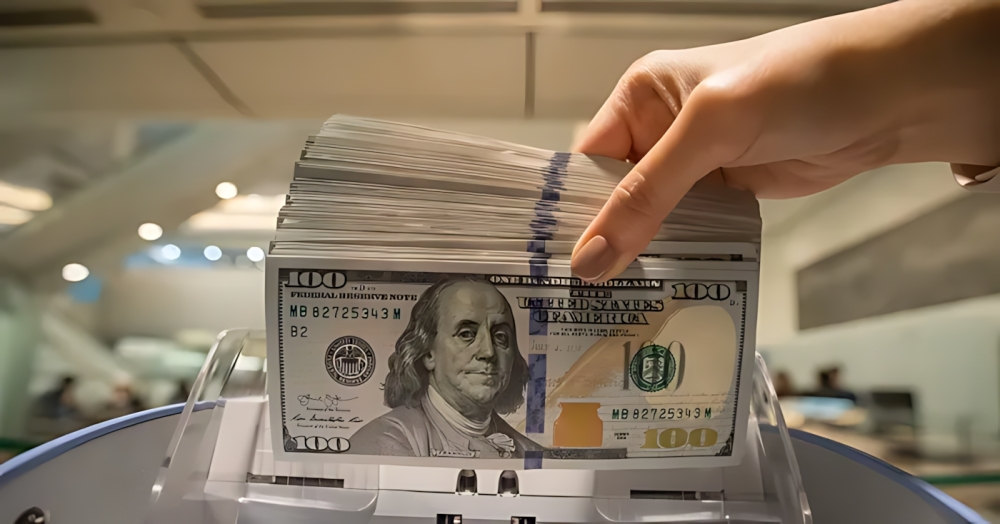
The US dollar saw a notable decline against the Egyptian pound at the close of trading on Wednesday in both public and private Egyptian banks, continuing its fluctuating trajectory towards relative stability after a period of sharp volatility. This decline comes amidst significant economic changes in the country, most notably the Central Bank of Egypt's decision to fully liberalize the exchange rate in March 2024, which effectively eliminated the parallel currency market and contributed to increased foreign currency inflows.
Dollar exchange rates in major Egyptian banks today
We present to you the latest exchange rates of the US dollar against the Egyptian pound in a number of major banks operating in Egypt today, Wednesday:
- Central Bank of Egypt: The buying price was recorded at 46.86 Egyptian pounds, and the selling price at 46.99 Egyptian pounds.
- National Bank of Egypt: The buying price was 46.89 Egyptian pounds, and the selling price was 46.99 Egyptian pounds.
- Bank of Egypt: The buying price was recorded at 46.89 Egyptian pounds, and the selling price at 46.99 Egyptian pounds.
- Commercial International Bank (CIB): The buying price was 46.86 Egyptian pounds, and the selling price was 46.96 Egyptian pounds.
- Bank of Alexandria: The buying price was recorded at 46.89 pounds, and the selling price at 46.99 pounds.
- Suez Canal Bank: The buying price remained stable at 46.92 Egyptian pounds, and the selling price at 47.02 Egyptian pounds.
- Abu Dhabi Islamic Bank: The buying price was 46.98 pounds, and the selling price was 47.08 pounds.
Background of exchange rate liberalization and its impact on the market
The current stability of the exchange rate is a direct result of the reform measures undertaken by the Egyptian government and the Central Bank. Before the decision to fully float the currency, the Egyptian economy suffered from a dual exchange rate system: an official rate at banks and a much higher rate on the parallel (black) market. This led to economic distortions and hindered foreign investment. The decision to liberalize the exchange rate on March 6, 2014, accompanied by a significant increase in interest rates, aimed to unify the exchange rate and attract direct and indirect foreign investment. This objective has already been achieved through major projects such as the Ras El Hekma development project and new agreements with the International Monetary Fund.
The importance of the stability of the pound and its local and international impact
The stability of the Egyptian pound has significant economic and social dimensions. Domestically, the decline in the dollar's value helps curb inflation, as Egypt relies heavily on imports of essential commodities and raw materials, such as wheat, fuel, and industrial production components. Lower import costs positively impact consumer prices, easing the burden of living expenses. Furthermore, a flexible and transparent exchange rate enhances the confidence of both domestic and foreign investors, encouraging increased investment that creates jobs and drives economic growth. Internationally, the stability of the Egyptian economy strengthens Egypt's position as a regional economic powerhouse, attracting investment and tourism, and bolstering its ability to meet its international obligations, thereby improving its credit rating with global financial institutions.