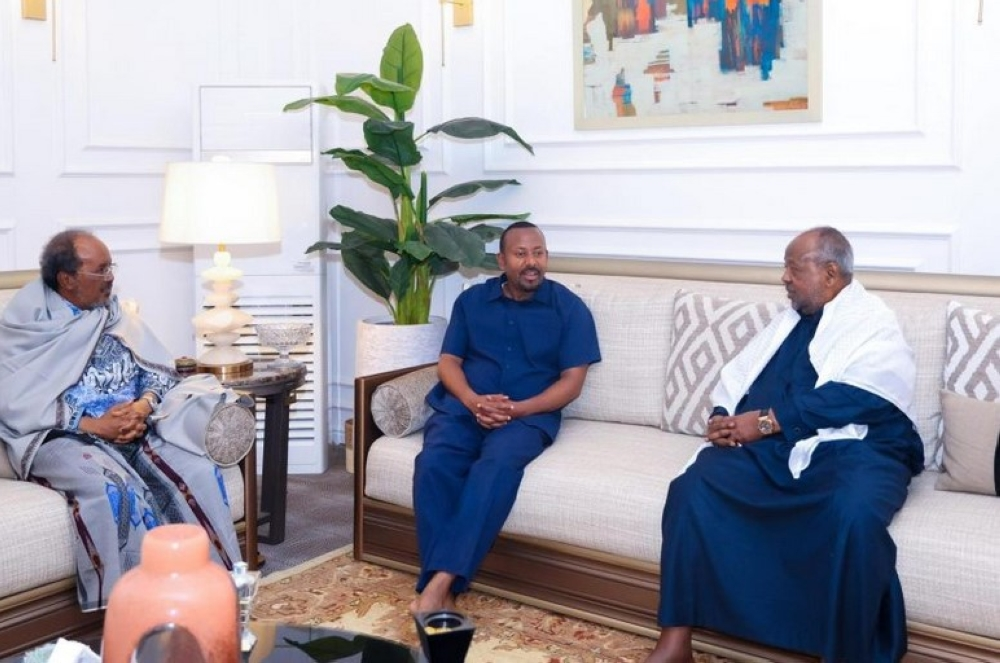
The Djiboutian capital hosted a tripartite summit bringing together the most prominent leaders of the Horn of Africa: Somali President Hassan Sheikh Mohamud, Djiboutian President Ismail Omar Guelleh, and Ethiopian Prime Minister Abiy Ahmed. This strategic summit focused on exploring ways to enhance regional cooperation and discussing the security and political challenges facing the region, with the aim of establishing stability and peace in one of the world's most vital areas.
Historical context and security challenges in the Horn of Africa
Historically, the Horn of Africa has faced complex security and political challenges, ranging from border disputes to the persistent threat posed by extremist groups such as Al-Shabaab in Somalia. Over the past decades, countries in the region have recognized that unilateral efforts are insufficient to combat transnational terrorism and achieve economic stability. Therefore, regional alliances and ongoing dialogue have become essential. Thanks to its strategic location overlooking the Bab el-Mandeb Strait and its relatively stable political environment, Djibouti has played a pivotal role as a mediator and host of crucial peace talks and regional summits. This historical context makes these meetings a continuation of long-standing efforts aimed at uniting East African nations in the face of shared threats.
The importance of holding a tripartite summit in Djibouti and its expected effects
a trilateral summit in Djibouti lies in its sensitive timing and the comprehensive agenda addressed by the leaders. At both the local and regional levels, the summit's outcomes are expected to contribute to Somalia's ongoing efforts toward democratic transition and its fierce fight against terrorism. By securing direct support and intelligence sharing with its immediate neighbors, Ethiopia and Djibouti, Somalia can achieve greater internal stability. Internationally, stability in the Horn of Africa is crucial for the security of global maritime trade routes passing through the Red Sea and the Gulf of Aden. The international community is closely monitoring these regional alliances, as local stability directly impacts global economic security and counter-piracy and counter-terrorism initiatives.
Economic integration and development of shared infrastructure
In addition to security matters, the summit placed considerable emphasis on economic development as a cornerstone of sustainable peace. The meeting discussed opportunities to develop joint investments and facilitate the movement of people and goods among the countries of the region. The strengthening of economic infrastructure projects, such as cross-border road networks, ports, and energy grids, was also highlighted as a crucial step toward achieving genuine regional integration. Ethiopia, being a landlocked country, relies heavily on the ports of Djibouti, while Somalia possesses a vast coastline with untapped economic potential. By aligning their economic strategies, the three countries aim to create a robust economic bloc capable of attracting foreign direct investment and providing development opportunities, thereby addressing the root causes of extremism and instability.
In this context, the Somali Presidency issued an official statement confirming that the talks resulted in a complete consensus on the need to intensify joint coordination in the areas of security and counterterrorism. The statement indicated that supporting the democratic transition and consolidating stability in Somalia is a paramount regional interest. The combined efforts of Mogadishu, Addis Ababa, and Djibouti represent a significant step towards shaping a brighter future for the region, where economic and security cooperation replaces conflict, paving the way for a comprehensive renaissance that fulfills the aspirations of the peoples of the Horn of Africa.