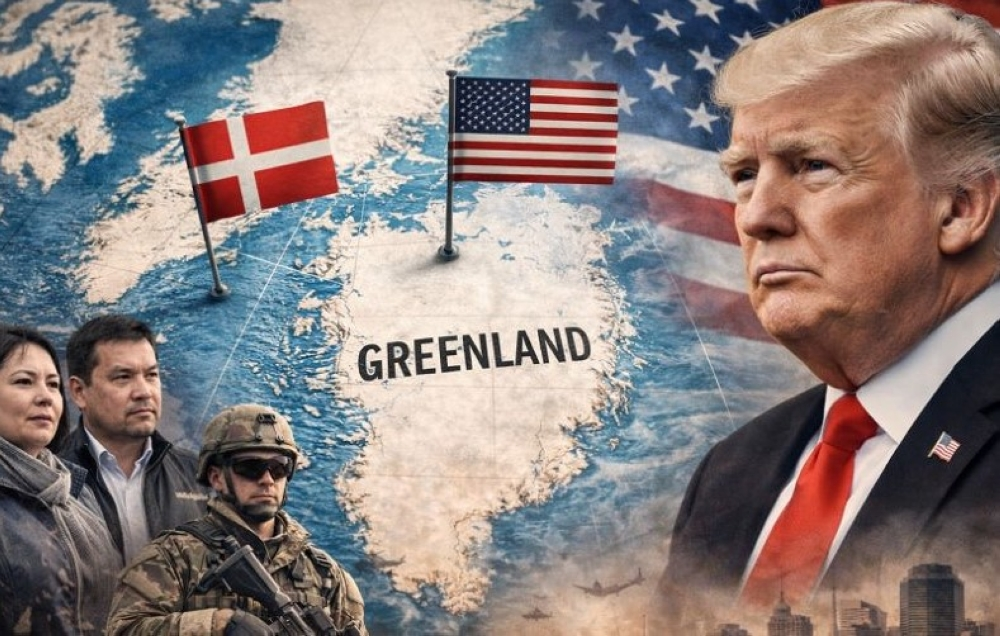
In a striking diplomatic escalation reflecting the deepening transatlantic divide, Danish Foreign Minister Lars Løkke Rasmussen issued a stark warning concerning the future of the global order and the cohesion of NATO. This warning came in response to recent threats by US President Donald Trump to impose punitive tariffs on European countries that oppose his ambitions to annex Greenland.
European solidarity in the face of pressure
During an official visit to Norway, which has also been targeted by US tariff threats, Rasmussen asserted that the future of Western alliances is at stake. At a joint press conference with his Norwegian counterpart, Espen Barth Eide, the Danish minister emphasized the necessity of European solidarity, stating, "I have no doubt that there is strong European support for Denmark." He added, in a tone of defiance and confidence in European institutions, "We have a powerful force… when we flex our muscles collectively and in solidarity, and this is of course what we must do," indicating that the European Union possesses the economic and political tools to respond in kind.
Background to the conflict: Trump's old dream renewed
To understand the implications of this statement, we must return to the historical context of this dispute. Donald Trump's interest in purchasing Greenland, a self-governing territory under the Danish crown, is not a recent development. In 2019, during his first term, Trump publicly floated the idea, describing it as a "great real estate deal." At the time, the offer was met with staunch rejection from Danish Prime Minister Mette Frederiksen, who called the idea "absurd," leading to diplomatic tensions and Trump's cancellation of a planned visit to Copenhagen. The resurgence of this issue now, accompanied by economic threats, transforms the crisis from mere media pronouncements into a direct threat to economic interests.
The strategic importance of Greenland
Washington's interest in Greenland is not without reason; the world's largest island enjoys a vital strategic location in the Arctic, a region witnessing escalating geopolitical competition between the United States, Russia, and China. Furthermore, Greenland possesses vast reserves of rare earth minerals essential for advanced technological and military industries, making control of it a strategic asset for any superpower.
Serious repercussions for the future of NATO
The danger of the Danish statements lies in their direct link between this trade/real estate dispute and the future of NATO. The United States' use of economic sanctions against its closest European allies undermines the mutual trust upon which the principle of collective defense is based. Analysts believe that transforming relations within the alliance from a strategic partnership to conditional trade deals could fracture the unified Western front, especially in light of current global security challenges, thus posing a genuine existential test to the liberal world order that emerged after World War II.