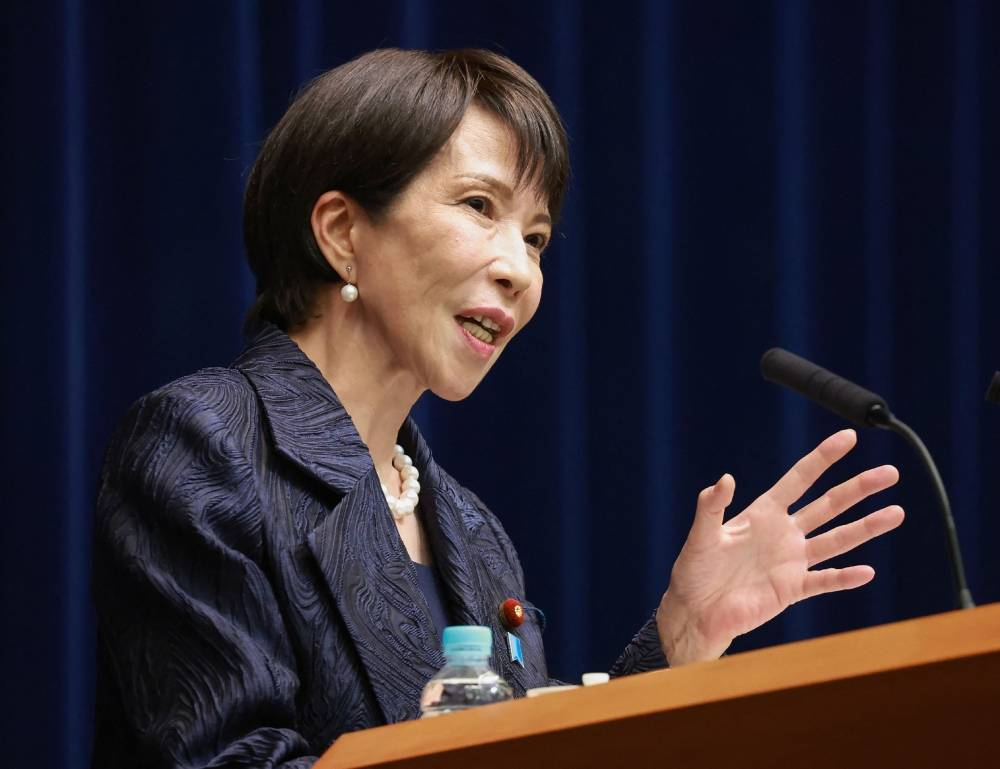
Danish Foreign Minister Lars Løkke Rasmussen affirmed that his country's position has been strengthened in the face of the desire expressed by the previous US administration under Donald Trump to annex Greenland, the self-governing territory of Denmark. While acknowledging that the diplomatic crisis is not entirely over, Rasmussen emphasized that "the situation is now much better than it was a few weeks ago," in remarks reflecting progress in the dialogue between the NATO allies.
Roots of the crisis and historical background
The diplomatic crisis erupted in August 2019 when media reports revealed then-US President Donald Trump's interest in purchasing Greenland. This proposal was met with staunch rejection from Copenhagen and the self-governing government in Nuuk, Greenland's capital, with Danish Prime Minister Mette Frederiksen dismissing it as "a ludicrous discussion." This rejection led to Trump canceling a planned state visit to Denmark, causing unprecedented tension in relations between the two countries. This was not the first time the United States had expressed interest in the island; in 1946, President Harry Truman offered to buy it from Denmark for $100 million, but that offer was also rejected.
Greenland's strategic importance at the heart of the conflict
The renewed American interest stems from the growing geopolitical importance of Greenland and the entire Arctic region. The island's strategic location between the Atlantic and Arctic Oceans makes it a vital point for controlling the northern sea lanes, which are becoming increasingly important as the ice melts due to climate change. Greenland also hosts Thule Air Base, the northernmost US military base, which houses a sophisticated early warning radar system for ballistic missiles, making it a cornerstone of the American defense system. Furthermore, the island is believed to possess vast untapped natural resources, including rare earth minerals, oil, and gas, further enhancing its appeal in an era of international competition for resources.
Regional and international impact
These developments come amid growing international competition in the Arctic, as other global powers such as Russia and China seek to expand their influence in the region. Moscow is working to reopen its Soviet-era military bases, while Beijing has declared itself a “sub-polar power” and is seeking to integrate the region into its “Arctic Silk Road” initiative. This geopolitical race places Denmark, through its sovereignty over Greenland, at the heart of the great power competition and explains Washington’s insistence on ensuring the island’s security and aligning it with NATO interests.
Towards a diplomatic solution with conditions
In an effort to defuse the crisis, a joint working group comprising the United States, Denmark, and Greenland was formed to discuss Washington's security concerns. Greenland's Foreign Minister, Viviane Motseveldt, welcomed the start of a "direct dialogue" between the three parties. However, both Denmark and Greenland emphasized that the island's sovereignty and territorial integrity constituted a non-negotiable "red line." In this context, Rasmussen affirmed that all parties agreed on the need to resolve the situation "through normal diplomatic channels," expressing optimism that a solution could be found that respected these red lines while also addressing shared security concerns.