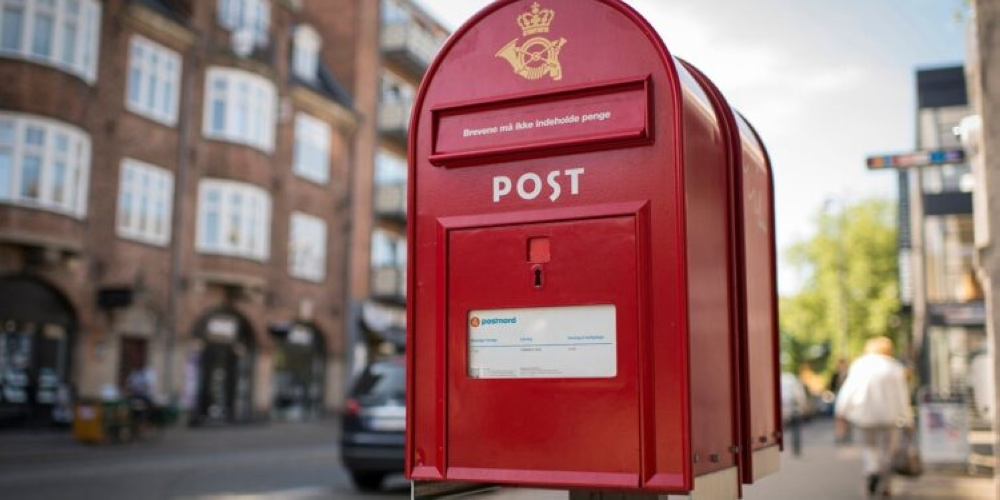
Denmark is preparing to close a long-standing chapter in its social and public service history, as authorities have announced a plan to discontinue the traditional public postal service provided by PostNord, bringing to a close a chapter that has lasted for more than four centuries. According to the decision, the company will cease its obligation to deliver mail to all residents and will begin removing approximately 1,500 of the iconic red mailboxes that have long been a part of the Danish streetscape, starting January 1, 2026.
A rich history dating back to the seventeenth century
To understand the magnitude of this change, one must look at the historical roots of this service. The Danish postal service was founded in 1624 by order of King Christian IV, one of the most famous monarchs of Denmark and Scandinavia. At that time, the service was a vital network connecting the different parts of the kingdom and facilitating governmental, commercial, and personal communication. Over 400 years, the service has evolved from horse-drawn carriages to modern trucks, and the red mailboxes have remained a symbol of reliable communication between citizens.
Digitalization: The main driver of decision-making
This decision didn't come out of nowhere; it's a natural consequence of Denmark's massive digital transformation. Denmark is ranked globally as one of the most advanced countries in e-government and digitalization. Today, Danish society relies almost entirely on the secure Digital Post system and electronic authentication (MitID) for official, banking, and healthcare transactions. This shift has led to a sharp decline in the volume of paper mail sent, with traditional letters becoming rarely used and mostly limited to tourist postcards or very special occasions. Maintaining a large logistical network for distributing paper mail has thus become an unjustifiable economic burden.
The implications of the decision and the future of logistics services
PostNord justified this move by stating that the new reality necessitates a restructuring of priorities. With the decline of paper mail and the explosive growth of e-commerce, the company will focus its efforts and resources on parcel delivery and logistics services rather than traditional mail. While this decision reflects economic efficiency and technological advancement, it raises questions about its impact on older generations, who may not be as quick to adapt to technological developments as younger generations, despite the existence of government programs to support them. The removal of postboxes in 2026 will not be merely an administrative measure; it will be a formal declaration of Denmark's entry into a new era where paper and pen are replaced by screens and digital data.