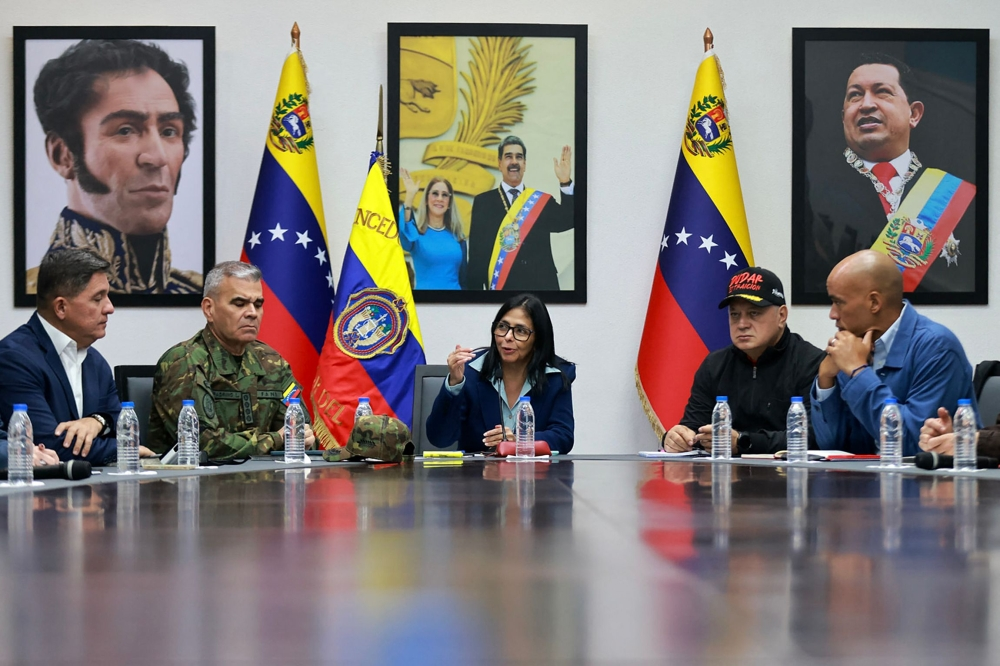
In a notable political move aimed at containing the current crisis, Venezuelan interim President Delcy Rodríguez a direct and explicit invitation to opposition forces to sit down at the negotiating table and reach a comprehensive national agreement. This invitation was broadcast on state television on Saturday, three weeks after the dramatic developments in the country, namely the US operation that led to the arrest of former President Nicolás Maduro.
A call to prioritize the national interest
Rodríguez, who is currently serving as interim president for a period that could last up to six months, as mandated by the constitution, until new presidential elections are held, stressed the need to overcome deep divisions. In her address, she stated, "Despite our differences, we must come together and reach understandings. Why? For the good of the Venezuelan people." She added decisively, "There can be no political or partisan disagreements when it comes to peace in Venezuela," emphasizing that internal stability is the top priority during this critical period.
Political context and transitional phase
These statements come at a time when Venezuela is experiencing an unprecedented historical turning point. After years of sharp political polarization between the ruling United Socialist Party and the opposition coalition, Maduro's absence has placed the country before urgent constitutional obligations. The Venezuelan constitution stipulates that a return to the polls is necessary to elect a new leadership, making the transitional period led by Rodríguez a true test of the political parties' ability to avoid chaos.
The importance of dialogue in light of the economic crisis
This political call cannot be separated from the economic and social realities of Venezuela. The country, which possesses the world's largest oil reserves, has suffered for years from hyperinflation and international sanctions that have directly impacted the daily lives of its citizens. Observers believe that Rodríguez's call for dialogue with the opposition could be a necessary step to break international isolation and pave the way for lifting sanctions, which could contribute to improving the living conditions of the Venezuelan people, exhausted by political conflicts.
Challenges of the near future
While this call offers a glimmer of hope, challenges remain. The Venezuelan opposition, which has long demanded free and fair elections, will face a test of its commitment to engaging with the current interim leadership. The coming weeks will be crucial in shaping Venezuela's political landscape and determining whether the opposing factions can forge a new "social contract" that guarantees a peaceful transfer of power and averts scenarios of violence or internal division.