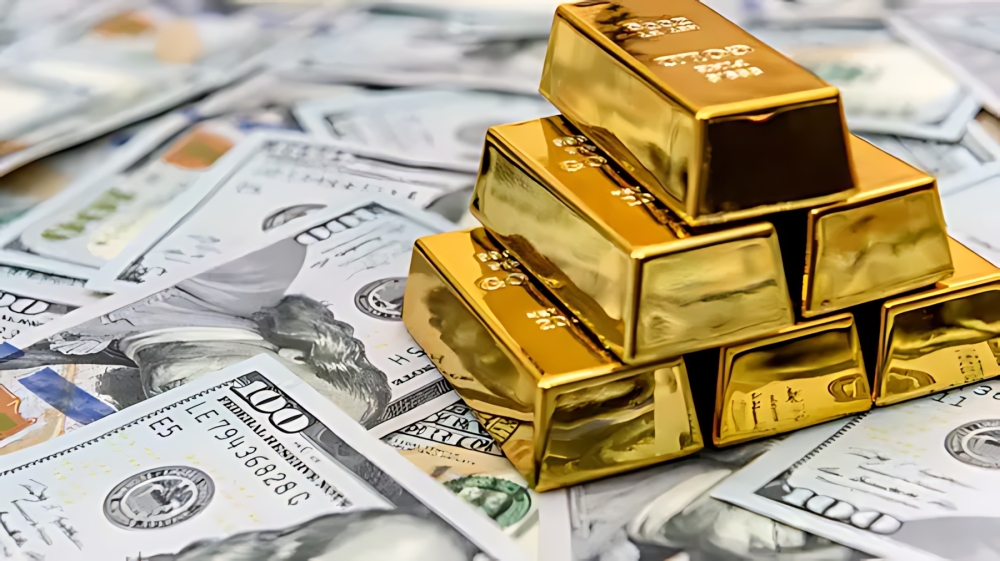
Global financial markets witnessed significant developments on Thursday, with gold prices to their lowest level in over a month. This notable decline was primarily driven by the strength of the US dollar and the continued rise in US Treasury yields. Despite some attempts at recovery, gains remained very limited, as the Federal Reserve (the US central bank) adopted a clearly hawkish stance, diminishing the appeal of the precious metal as a safe haven at present.
In trading details, spot gold rose 2.2% to $4,710.88 per ounce, its lowest level since February 6. Meanwhile, U.S. gold futures for April delivery fell 3.6% to settle at $4,721.40. These figures reflect the cautious and watchful attitude of investors amid rapidly evolving economic conditions.
The historical context behind the decline in global gold prices
Historically, the precious metal has a close inverse relationship with the US dollar and interest rates. When the US Federal Reserve raises interest rates or signals that it will keep them high for longer to control inflation, government bond yields rise. This increase makes fixed-income assets, such as bonds, more attractive to investors than gold, which does not offer a fixed return. Therefore, a decline in gold prices during periods of monetary tightening is a natural and recurring response in the history of financial markets. Over the past decades, a strong dollar has consistently acted as a headwind, putting downward pressure on the prices of dollar-denominated commodities, making them more expensive for buyers holding other currencies.
Expected economic impacts on local and international markets
This decline in the value of gold has far-reaching implications, extending to local, regional, and international markets. Internationally, the strength of the dollar and the decline in gold prices are redirecting capital flows toward US markets, putting pressure on emerging market currencies and increasing the cost of importing essential commodities. Regionally and locally, lower gold prices may stimulate consumer demand for jewelry and gold bars from individuals who view these price levels as a good buying opportunity and a hedge against local inflation. However, companies operating in the mining and precious metals extraction sector remain under pressure from declining profit margins.
Prices of other precious metals amid current volatility
The negative impact of monetary policies and the strong dollar wasn't limited to gold; it extended to other precious metals as well. Silver fell 4.8% in spot trading to $71.74 an ounce. Platinum also declined, losing 3.6% to $1,949.45. Similarly, palladium lost 1.7%, dropping to $1,451. These widespread declines underscore that markets are currently pricing in an economic environment characterized by high borrowing costs and a strong US dollar, posing ongoing challenges for commodities and metals in the foreseeable future.