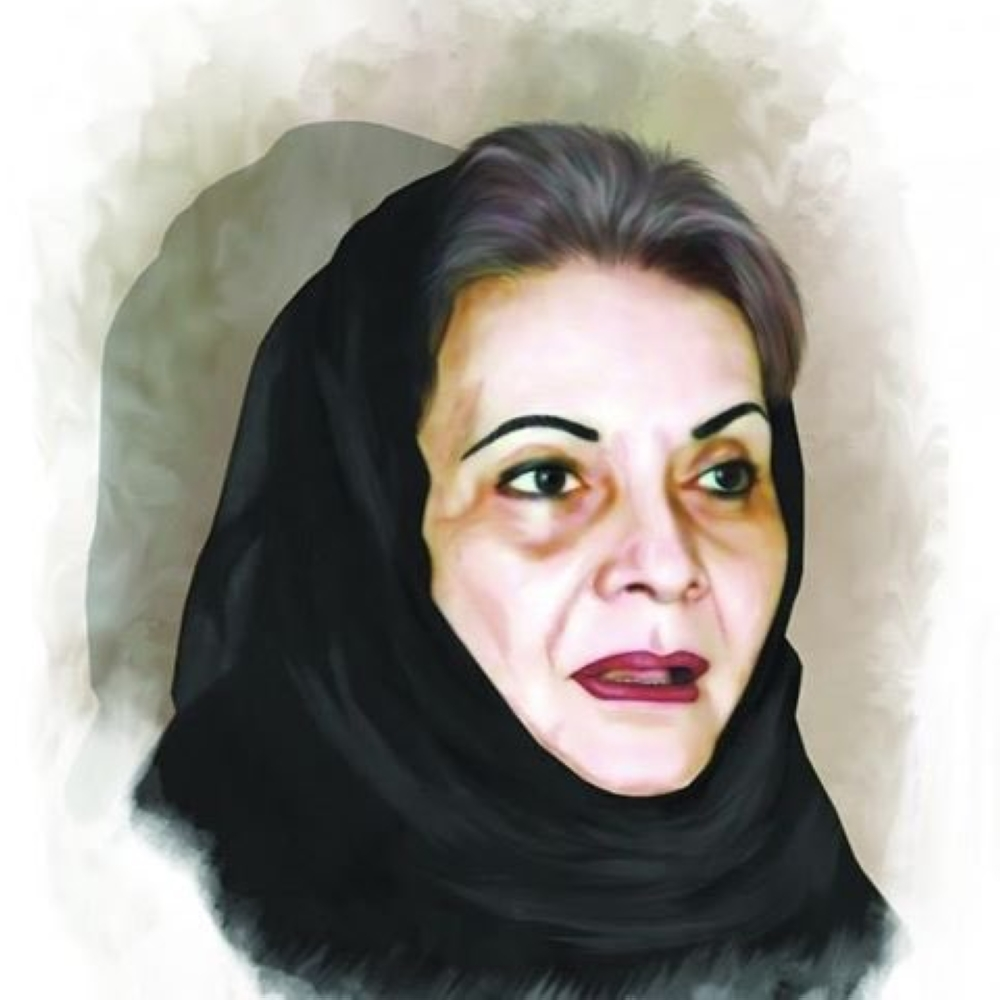
The Saudi and Arab cultural scene today lost a towering literary figure, with the passing of the pioneering poet and media personality Thuraya Qabil, nicknamed “The Voice of Jeddah,” who passed away leaving behind an indelible artistic and poetic legacy that contributed to shaping the conscience of entire generations and defining the features of the modern Saudi song.
Historical context and pioneering role
Thuraya Muhammad Abdul Qadir Qabil was born in Jeddah in 1940 and raised in a culturally open Hijazi environment in the Al-Mazloum neighborhood, one of the oldest and most historic districts of Jeddah. Her talent emerged at a time when women's presence in the public literary scene was limited, but she was able to break stereotypes with courage and boldness. The publication of her first collection of poems, "Al-Awzan Al-Bakiyah" (The Weeping Meters), in Beirut in 1963 marked a pivotal event in the history of Saudi literature, as it was the first collection of classical Arabic poetry by a Saudi woman published under her own name, paving the way for generations of Saudi female writers and poets to follow in her footsteps.
A career full of poetic and lyrical contributions
Thuraya Qabil received her primary education in Jeddah before moving to Beirut to complete her secondary studies. There, she honed her talent and began publishing her poems in prestigious Arab newspapers. Her poetry was distinguished by its sweetness, emotional sincerity, and unique ability to blend classical Arabic with the authentic Hijazi dialect, making her a bridge between elite poetry and popular sentiment.
Her most significant contributions lie in the field of song lyrics, where her words formed the basis for timeless songs that have become part of Saudi Arabia's artistic heritage. Her name is closely associated with prominent artists, most notably Talal Maddah, the "Voice of the Earth," who sang iconic songs like "Min Ba'd Mazh wa La'b" and "Edini Ahd El Hawa," and Fawzi Mahsoum, who performed her masterpiece "Jani El Asmar." These collaborations not only launched her fame but also contributed to establishing the identity of Saudi song and its widespread popularity across the Arab world.
Significance and impact: A lasting cultural legacy
Thuraya Qabil was more than just a poet; she was a cultural phenomenon and a source of inspiration. Her passing represents a great loss to the local and regional cultural scene. Her influence extends far beyond her sung poems; she is a symbol of women's empowerment in literature and media during an early period in the Kingdom's history. She proved that female talent is capable of making its mark and leaving an enduring legacy.
Today, even after her passing, her work remains alive in the memory of millions. Her songs are sung on every occasion, and her experience is studied as a model for Saudi women who defied challenges and enriched the artistic scene with sincere and refined lyrics. Thuraya Qabil's legacy will continue to be a beacon illuminating the paths of creative men and women in the Kingdom and the Arab world.