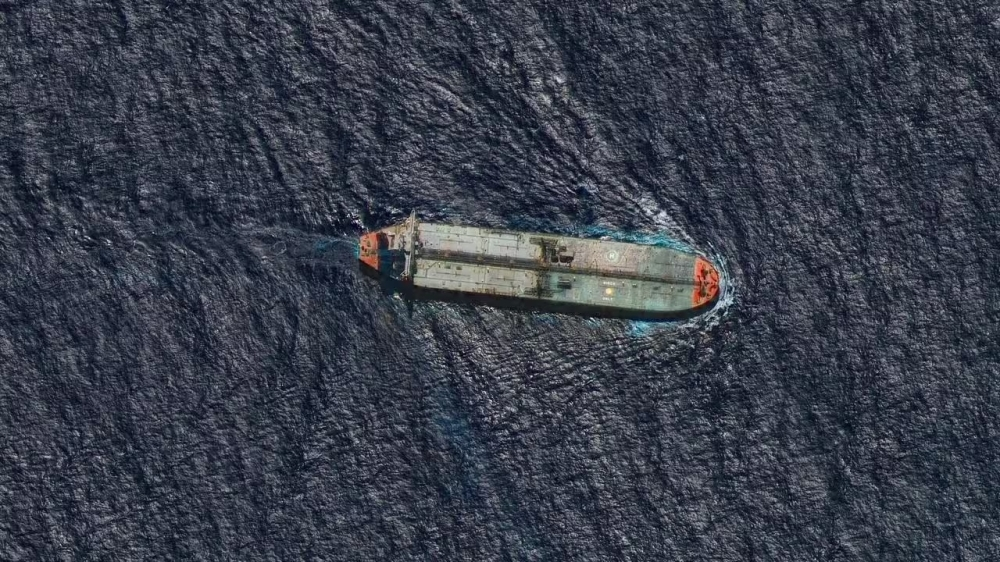
Rear Admiral David Baratta, an officer in the U.S. Coast Guard, revealed a disturbing reality facing global maritime security, asserting that between 600 and 800 vessels belonging to what is known as the “dark fleet” are sailing the world’s waters, in blatant defiance of international sanctions imposed on countries such as Iran, Venezuela, and Russia. Even more alarming is that international efforts have succeeded in intercepting only seven vessels from this massive fleet, a figure Baratta described as “a very small percentage.”.
What is the Dark Fleet and how does it work?
The term “dark fleet” or “shadow fleet” refers to a group of oil tankers operating outside the regulatory and legal frameworks of international maritime shipping. This concept emerged and expanded significantly as a means of circumventing economic sanctions imposed by the United States and other Western countries. The phenomenon began with sanctions on Iran, then extended to Venezuela, and experienced explosive growth following sanctions on the Russian energy sector after the war in Ukraine. These vessels employ deceptive tactics to conceal their activities, such as disabling their Automatic Identification System (AIS) transponders to avoid tracking, falsifying cargo and ownership documents, and engaging in ship-to-ship transfers at sea to obscure the origin and destination of the oil.
Serious security challenges and environmental risks
During a congressional hearing, General Baratta explained that these vessels use “forged documents, fake ownership, and compromised identities,” making tracking and holding them accountable virtually impossible. This evasion not only presents an economic and political challenge to sanctions but also constitutes an environmental time bomb. The majority of these tankers are old and dilapidated vessels, lacking regular maintenance and adequate insurance, which increases their risk of catastrophic oil spills. In the event of a disaster, determining responsibility for cleanup and compensation costs would be extremely complicated due to opaque ownership structures and shell companies behind them.
International efforts to address the challenge
In an effort to counter this growing threat, former US President Donald Trump issued an order in December to track sanctioned oil tankers traveling to and from Venezuela, a campaign that has so far resulted in the seizure of seven vessels. Washington has also deployed a naval force to the Caribbean to increase pressure. These efforts are not limited to the United States; the French navy recently intercepted a Russian-linked oil tanker in the Mediterranean. Despite these efforts, the sheer size of the shadowy fleet and the sophisticated tactics it employs make confronting it a global challenge requiring broad international cooperation to ensure the safety of waterways and protect the marine environment from this imminent danger.