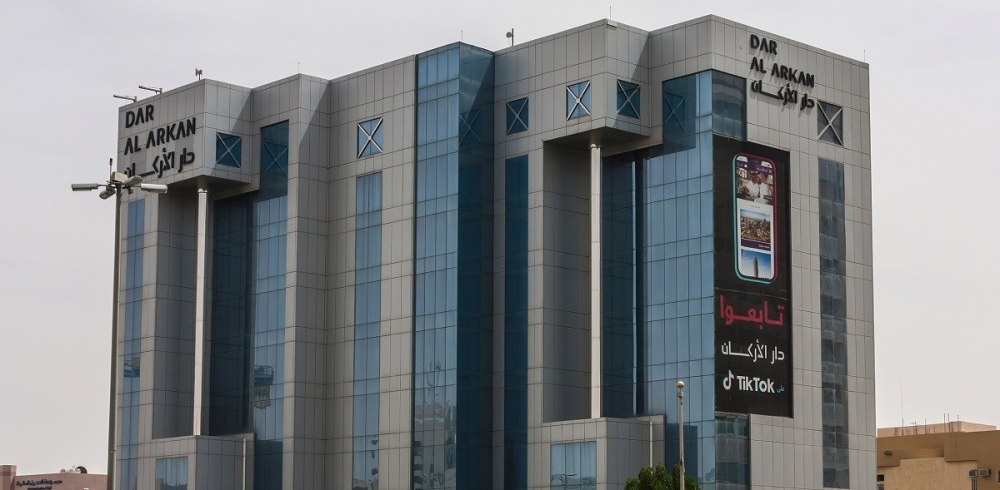
Dar Al Arkan Real Estate Development Company, one of the largest real estate companies in Saudi Arabia, announced that it has received three invoices related to vacant land fees, totaling over SAR 201 million. In an official statement published on the Saudi Stock Exchange (Tadawul) website, the company clarified that these invoices pertain to land located within its large-scale Shams Al Riyadh project.
According to the statement, the payments were distributed across three invoices: the first for SAR 48.31 million, the second for SAR 108.10 million, and the third for SAR 44.72 million, bringing the total to SAR 201.13 million. The company confirmed that these lands are subject to the "Wafi" off-plan sales program and that it is currently developing them.
General context of the White Land Fees Program
This measure comes as part of the implementation of the “White Land Tax Program,” which Saudi Arabia approved in 2016 as one of the key initiatives of Vision 2030, aimed at reforming the real estate sector and addressing the housing crisis. The program primarily aims to increase the supply of developed land within the urban boundaries of major cities by imposing an annual tax of 2.5% on the estimated value of undeveloped (white) land owned by one or more individuals or legal entities. This is intended to curb monopolistic practices and encourage landowners to develop or sell their land, ultimately contributing to price stability and providing affordable housing units for citizens.
Dar Al Arkan's position and the importance of the event
Dar Al Arkan emphasized in its statement that the Shams Al Riyadh project is currently undergoing intensive development and is licensed by the Wafi program of the General Authority for Real Estate. The company added that it has sold all units in the project to buyers under contracts documented with the program, and therefore, ownership of the land no longer technically belongs to the company. Accordingly, the company has informed the relevant authorities of these details, confirming that there is no expected material financial impact on its financial statements as a result of these invoices, given the nature of the situation and the progress of the project's development.
This case is of particular importance to the local real estate market, as it highlights the mechanisms for applying the vacant land tax to large-scale off-plan projects. Developers and investors are closely monitoring how regulatory bodies handle such cases, which could set a legal and regulatory precedent that will influence real estate development strategies in the Kingdom in the future. This measure also reflects the government's commitment to implementing its reform programs to increase the real estate supply and stabilize the market, in line with the development goals of Vision 2030.