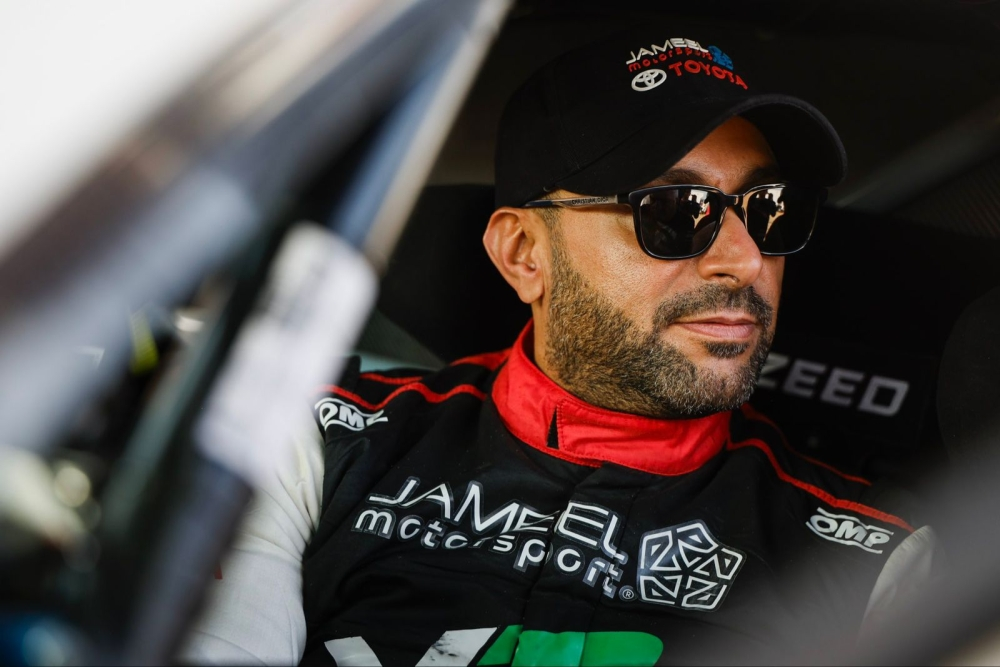
The Dakar Desert Rally, in its current edition, witnessed dramatic developments, represented by the withdrawal of the Saudi champion, Yazeed Al-Rajhi, the title holder, from the fourth stage that was held in Al-Ula Governorate, as a result of a series of technical problems that coincided with serious health concerns, thus bidding farewell to the competition to retain his title in this major global event.
Background to the event: The Dakar Rally and the challenges of Saudi Arabia's terrain
The Dakar Rally is one of the toughest and most demanding motor races in the world, testing the endurance of drivers and their vehicles in harsh natural conditions. Since moving to Saudi Arabia in 2020, the race has taken on a new dimension thanks to the Kingdom's incredible geographical diversity, from the towering sand dunes of the Empty Quarter to the rugged, rocky terrain of AlUla. Stage four in AlUla, in particular, is considered pivotal due to its geological nature, which demands intense concentration and calculated risk-taking, making any technical or human error extremely costly.
Al-Rajhi's withdrawal details: Between technical glitch and medical decision
Toyota Overdrive driver Yazeed Al-Rajhi officially withdrew from the stage at kilometer 234, citing his desire to avoid aggravating a pre-existing health issue. In a video posted next to his car, Al-Rajhi explained that the withdrawal was based on prior medical advice. Tests he underwent a week before the start revealed that a fracture in his third vertebra had not healed, an injury he sustained in a serious accident at the Jordan Baja last April.
Al-Rajhi (44 years old) indicated that the scenario he faced in the fourth stage forced him to make this difficult decision. His car suffered three punctures, forcing him to wait for nearly half an hour to get replacement tires, leaving him about an hour behind his competitors. Faced with two options—either risking driving at a reckless speed to make up for lost time and potentially causing an accident that could worsen his back injury, or withdrawing safely—Al-Rajhi chose the second option, saying, "Why risk an accident? There's the Dakar Rally coming up, and we won last year, and God willing, we'll make it up to you with a second victory in the coming years.".
The marathon stage and its impact on the race
Al-Rajhi's withdrawal came at a critical juncture, as stages four and five coincide with what is known as the "marathon stage." This stage is a nightmare for competitors, as technical assistance from maintenance crews is prohibited in the evening after the race. Drivers are forced to camp in makeshift camps and repair their vehicles themselves without external spare parts, placing immense pressure on their driving strategies to preserve the vehicle.
Changes at the top: Latigan steals the spotlight
In the competition, South African Henk Latigan capitalized on the circumstances, setting the fastest time in the fourth stage (451 km) to seize the overall lead in his Toyota. Latigan managed to establish a comfortable lead over his fierce rival, Qatari Nasser Al-Attiyah (Dacia), who finished second overall.
In the motorcycle category, the Honda team continued its dominance, with Spaniard Tusha Sharina taking the overall lead after achieving his second consecutive victory, equal in time with his American teammate Ricky Brabec, but the advantage of winning the stage gave the lead to the Spaniard.
The top five rankings in the car category (stage four):
- 1- Henk Latigan (South Africa – Toyota): 16:29:15 hours
- 2- Nasser Al-Attiyah (Qatar – Dacia): by a difference of 3:55 minutes
- 3- Mattias Ekström (Sweden – Ford): 13 minutes behind
- 4- Carlos Sainz (Spain – Ford): 15:53 minutes behind
- 5- Mathieu Serradori (France – Century Racing): 16:53 minutes behind
The top five in the motorcycle category:
- 1- Tusha Sharina (Spain – Honda): 16:45:40 hours
- 2- Ricky Brabec (USA – Honda): Same time
- 3- Daniel Sanders (Australia – Red Bull KTM): 1:24 minutes behind
- 4- Edgar Canet (Spain – Red Bull KTM): 11:22 minutes behind
- 5- Luciano Benavides (Argentina – Red Bull KTM): 13:09 minutes behind