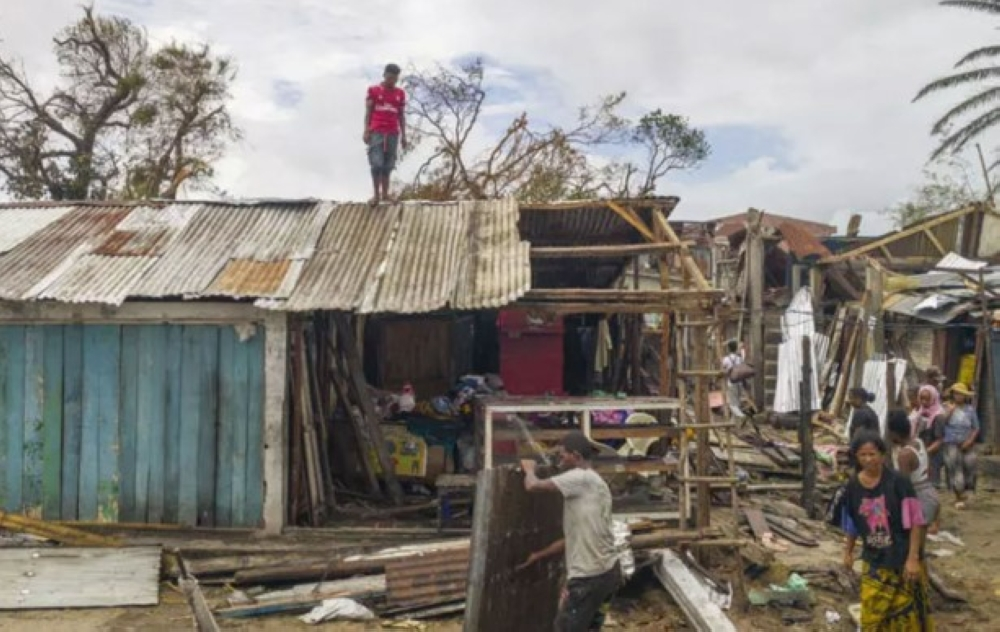
Authorities in Madagascar have announced a tragic rise in the death toll from Cyclone Jizani, which struck the island's northeast coast six days ago, bringing the total to at least 59, with 15 people still missing. The cyclone, which brought winds of up to 250 kilometers per hour, caused widespread devastation in the coastal city of Toamasina and surrounding areas, exacerbating the humanitarian crisis in one of the world's poorest countries.
Massive destruction and humanitarian consequences
Cyclone Jizani caused a widespread humanitarian disaster. Official reports indicate that the material damage was extensive, with the force of the winds and torrential rains causing:
- At least 25,000 homes were completely destroyed.
- Another 27,000 homes were flooded, rendering them uninhabitable.
- More than 16,000 people have been displaced from their homes and are now searching for safe shelter, food, and clean water.
- More than 800 people have been injured to varying degrees, putting enormous pressure on the limited local health facilities.
- Widespread power outages and destruction of basic infrastructure such as roads and bridges are hindering the access of rescue teams and humanitarian aid to the affected areas.
Madagascar facing cyclones: a climatic and historical context
Madagascar lies in the Indian Ocean, making it highly vulnerable to tropical cyclones that form in the region during the annual cyclone season, which typically runs from November to April. The country is one of the most weather-prone in the world. Over the years, Madagascar has suffered devastating cyclones that have left a profound mark on its economy and society. In 2022, Cyclone Batseray struck, killing more than 120 people and displacing tens of thousands. Years earlier, Cyclone Enawo in 2017 also caused widespread destruction. These recurring disasters exacerbate the vulnerability of local communities that rely heavily on agriculture, which are often the first victims of floods and strong winds.
Regional and international importance and impacts
The impact of Cyclone Jizani extends far beyond the local level, with broader economic and humanitarian repercussions. Madagascar relies heavily on international aid to cope with such disasters. The government has issued urgent appeals to the international community and humanitarian organizations, such as the United Nations and the Red Cross, for immediate support for those affected. Economically, the destruction of crops and infrastructure exacerbates poverty and food insecurity. Damage to the port of Toamasina, a vital hub for the country's trade, could negatively impact import and export activity, further straining the nation's economy. This disaster underscores once again the urgent need to strengthen early warning systems and build resilient infrastructure capable of withstanding increasing climate change.