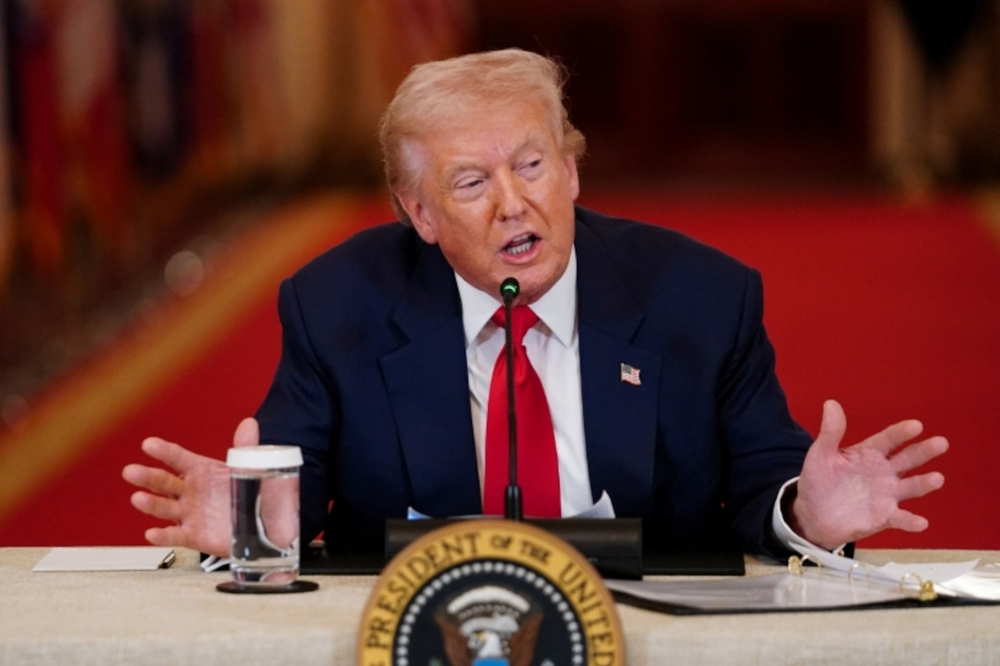
In a new escalation of the war of words between Havana and Washington, Cuban President Miguel Diaz-Canel a strongly worded message in response to recent threats made by US President Donald Trump, stressing his country's commitment to its national sovereignty and its categorical rejection of any external dictates.
A challenge message via the X platform
In a post on his official X account (formerly Twitter) on Sunday, Diaz-Canel stated that Cuba is a "free and independent nation," emphasizing, "No one dictates to us what to do." These remarks came as a direct and immediate response to Trump's call for the Cuban leadership to reach a political agreement "before it's too late," language Havana interpreted as a veiled threat aimed at destabilizing the island.
Roots of the conflict: 66 years of confrontation
The Cuban president did not limit himself to an immediate response, but rather invoked the long historical context of the conflict between the two countries. In his message, he clarified that Cuba is not the aggressor, but rather the victim of continuous aggression from the United States for 66 years, a clear reference to the period following the success of the Cuban Revolution in 1959 and the imposition of US economic sanctions.
This figure reflects decades of economic and trade embargo (which Cuba calls "the blockade") imposed by Washington to pressure the island's socialist regime. Havana considers these US policies the main obstacle to the country's economic development, and views the recent threats as just another link in a long chain of attempts to interfere in its internal affairs.
Preparing to defend sovereignty
In a tone reflecting the military and political doctrine of the Cuban leadership, Díaz-Canel asserted that his country "poses no threat to anyone," but is instead "prepared and ready to defend the homeland to the last drop of blood." This statement reflects the ongoing state of alert on the Caribbean island in the face of what it describes as American imperialism, particularly in light of the political transformations taking place in the region.
These developments come at a time of significant tension in international relations in Latin America, as the United States seeks to exert maximum pressure on leftist governments in the region, particularly Cuba and Venezuela, making the Cuban president's statements a message that transcends local boundaries to emphasize the cohesion of the anti-American front in the region.