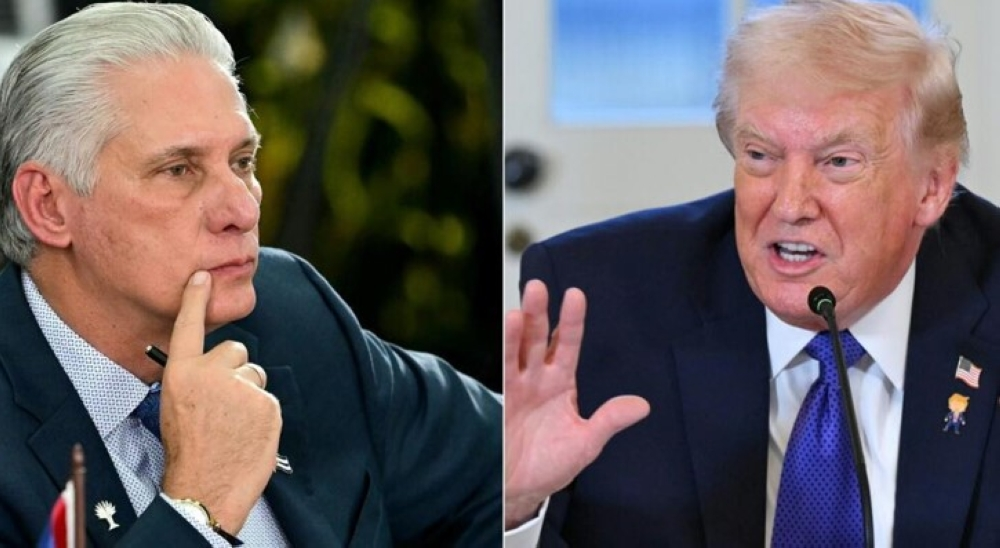
Cuban President Miguel Díaz-Canel on Monday categorically denied the existence of any secret political or diplomatic talks between his country and the United States, responding to recent statements by US President Donald Trump. In an official statement released via the "X" platform, Díaz-Canel affirmed that the only existing channels of communication are limited to procedural matters related to immigration, thus refuting claims made by the US side regarding broader negotiations.
Context of escalation and American pressure
These statements come at a highly sensitive time, marked by an unprecedented escalation in tensions between Washington and Havana, particularly after the US president announced talks with Cuba following the military operation that led to the arrest of Venezuelan President Nicolás Maduro on January 3. Trump has brandished the threat of maximum economic pressure, warning of cutting off any oil or financial supplies to the island from its ally Venezuela, and urging Havana to "reach an agreement before it's too late.".
Historical background: The clash of wills
To understand the depth of this dispute, one must consider the historical background of relations between the two countries. Cuba has been subjected to a crippling US economic and trade embargo for over six decades. Cuba is Venezuela's primary strategic ally in the Caribbean, and for many years their relationship has been based on an exchange of Venezuelan oil for Cuban medical and security services. The current US administration, through this escalation, seeks to sever this close ties, exploiting the changing political landscape in Caracas to further isolate the communist regime in Havana.
Economic and political repercussions
This diplomatic row carries serious regional implications. Tightening the noose around Cuba and threatening to cut off its economic lifeline from Venezuela could exacerbate the island's energy and food crises, potentially triggering humanitarian crises and new waves of migration that could directly impact US border security. Observers believe Trump's strategy aims to force the Cuban leadership to make significant political concessions under the pressure of economic necessity.
Cuban position: Sovereignty first
In concluding his remarks, the Cuban president reiterated the constants of his country's foreign policy, emphasizing that bilateral relations with the United States must be based on respect for international law and national sovereignty, not on the logic of "hostility, threats, and economic coercion." Díaz-Canel clarified that Cuba does not accept external dictates and that any future dialogue must be on equal footing, free from the threatening language employed by the current US administration.