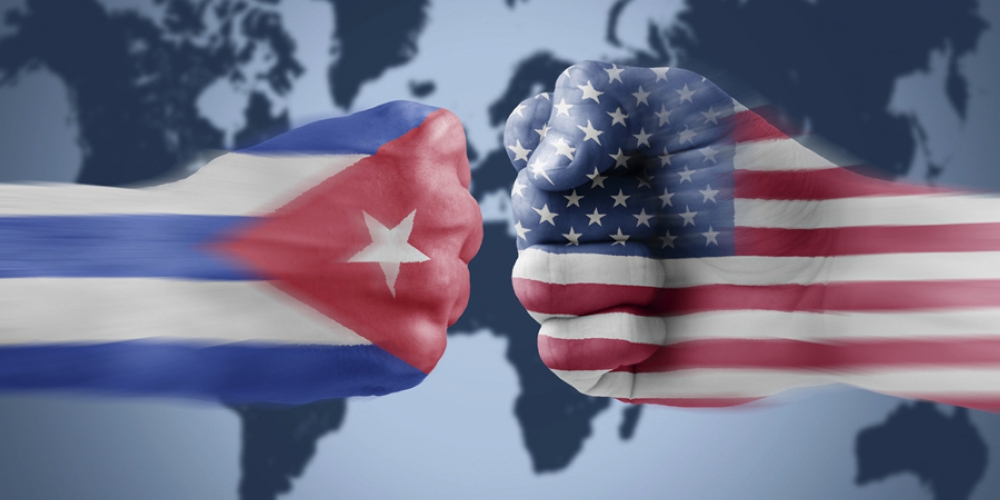
Cuban Deputy Foreign Minister Carlos Fernandez de Cossio confirmed that Havana has placed its armed forces on high alert in anticipation of a possible US military attack . In a televised interview broadcast on NBC, de Cossio explained that the Cuban military is seriously preparing for such scenarios, noting that his government is not seeking to escalate relations with the United States or provoke a direct conflict with the administration of President Donald Trump, but rather prefers to pursue diplomatic dialogue.
The roots of the conflict and the history of threats between Washington and Havana
The current tensions are not a recent development, but rather an extension of a long history of ideological and political conflict between the two countries. Since the success of the Cuban Revolution and the communist regime's seizure of power in 1959 under Fidel Castro, Washington has imposed a crippling economic embargo on the island. Tensions reached their peak in 1961 when the United States failed to overthrow the Cuban regime through the infamous Bay of Pigs invasion. This complex historical legacy means that any hint of military action is taken very seriously in Cuba, where the political memory still retains the details of that tense era, which nearly ignited a third world war during the Cuban Missile Crisis.
Defensive readiness in the face of any American military aggression
In a related context, De Cossio emphasized that “the Cuban military is always on high alert,” adding that, given the rapid pace of global developments, it would be naive not to prepare for the possibility of a US military attack . Despite these stringent defensive preparations, the Cuban official expressed his hope that matters would not escalate militarily, stressing that there is no logical or legal justification for an attack on his country. He added, “Cuba does not wish to engage in armed conflict with the United States. We have a legitimate need to protect our sovereignty and ourselves, and we have every right to do so, but at the same time, we are open and ready to sit down at the negotiating table to resolve our differences peacefully.”
Regional and international repercussions of escalating tensions
This escalation in rhetoric carries significant weight and far-reaching implications that extend beyond Cuba's borders. Regionally, these tensions exacerbate instability in Latin America, particularly given the economic and political pressure Washington is exerting on Havana's allies, most notably Venezuela. The US administration has intensified its sanctions and fuel embargo against Cuba in an attempt to pressure the Cuban regime to sever its ties with Venezuelan President Nicolás Maduro. Internationally, any military action or serious escalation could provoke other major powers, such as Russia and China, which have strategic and historical ties with Havana, potentially redrawing the map of geopolitical alliances and further complicating the international landscape.
Trump's statements and the future of bilateral relations
These developments come at a time when US President Donald Trump has made controversial statements, expressing his belief that he would have the “honor of taking over Cuba” and speaking of “liberating” it, without providing specific details about the nature or mechanisms of these steps. These statements have heightened anticipation and caution in Havana, prompting the Cuban leadership to strengthen its security and defense measures. Ultimately, the future of relations between Washington and Havana hinges on the ability of both sides to prioritize reason and diplomacy and avoid sliding into disastrous confrontations that could cost the entire region dearly.