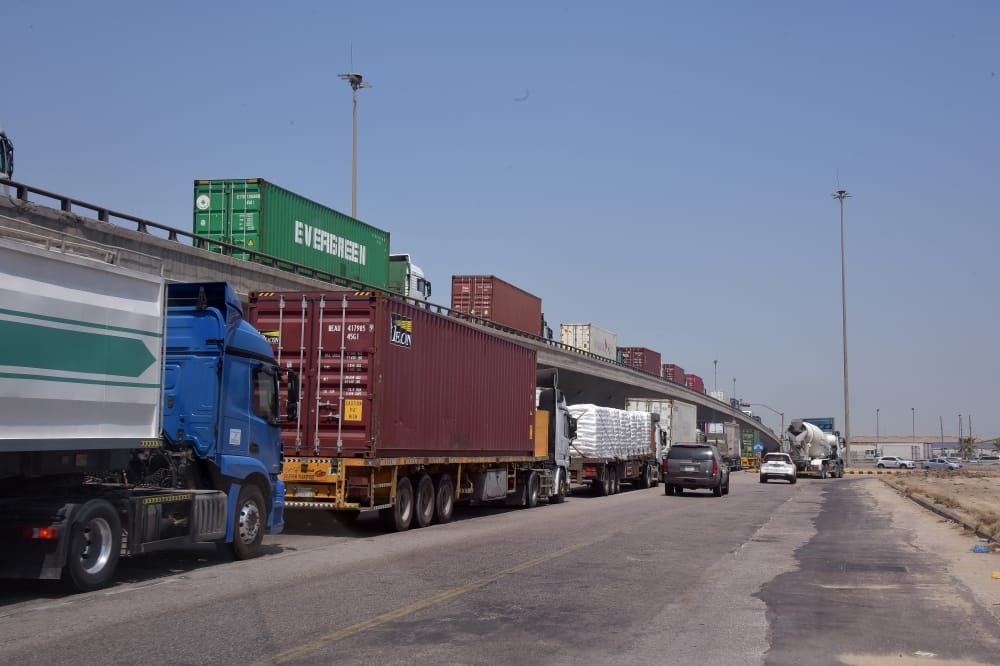
Amid the economic and geopolitical challenges facing the world, maintaining stable supply chains is of paramount importance. In this context, the Federation of Saudi Chambers, represented by its land transport sector, has mobilized its efforts to ensure maximum readiness across the Kingdom's border crossings. These urgent measures aim to address the repercussions of the current situation and guarantee the smooth flow of cross-border trade, ensuring the seamless movement of goods and trucks during this period of crisis without any disruption.
Federation of Chambers strategies to promote cross-border trade
The Federation of Saudi Chambers issued an urgent circular to chambers of commerce across the Kingdom, urging international and local transport companies to develop proactive action plans. The directives included ensuring a sufficient fleet of trucks to accommodate the anticipated increase in operational volume and efficiently meet the needs of the Saudi market. The circulars also emphasized the necessity of doubling the number of trucks specifically authorized for transit services to expedite trade and manage the expected surge in traffic at land border crossings in the coming days.
Regional context and the impact of crises on supply chains
To understand the implications of these steps, it is essential to consider the broader context and historical background of regional events. Historically, the Middle East has been affected by geopolitical fluctuations that directly impact shipping lanes and global supply chains. With escalating tensions in some vital waterways, the need to strengthen land routes as a secure strategic alternative becomes increasingly apparent. Saudi Arabia, by virtue of its strategic geographic location connecting Asia, Africa, and Europe, has long played a pivotal role in mitigating such crises by providing safe and efficient land transit routes. This makes current preparedness a necessary and well-considered step to address any emergencies that might disrupt trade.
The economic importance of securing the flow of goods both domestically and internationally
These proactive steps are of paramount importance and are expected to have a far-reaching impact. Domestically, ensuring the flow of goods contributes to price stability and the availability of essential commodities for consumers, thus protecting the national economy from imported inflation. Regionally, enhancing transit capabilities reinforces the Kingdom's position as a vital artery supplying neighboring markets in the Gulf Cooperation Council (GCC) and the wider Arab world, thereby supporting regional economic integration. Internationally, these measures bolster investor and trading partners' confidence in the Kingdom's logistics infrastructure and underscore its ability to maintain business continuity even during times of crisis.
Integrating the transport sector with the objectives of Saudi Vision 2030
These efforts are not limited to managing temporary crises, but are closely aligned with the National Transport and Logistics Strategy, a key pillar of Saudi Vision 2030. The Kingdom aims to solidify its position as a global logistics hub and develop a more resilient and sustainable land transport sector. The Federation of Chambers' directives to increase the number of trucks and develop contingency plans reflect institutional maturity in dealing with global changes and contribute to raising the Kingdom's ranking in the Global Logistics Performance Index, which will positively impact attracting foreign investment and developing non-oil exports.