Introduction: Beyond a Player's Transfer
When Portuguese legend Cristiano Ronaldo signed his contract to join the Saudi Professional League, the deal was more than just a footballer moving to a new club; it was a clear declaration of a strategic shift that transcended the boundaries of the pitch. The aim wasn't simply to score goals, but to score a symbolic goal against the global image of Saudi Arabia and reposition the Kingdom at the heart of the international sports industry.
General context: Sports as one of the pillars of Vision 2030
This bold move comes within the broader framework of Saudi Vision 2030, an ambitious plan to diversify the Kingdom's economy and reduce its dependence on oil. The sports and entertainment sector is a key pillar of this vision, as the Kingdom seeks to build a sustainable sports economy, attract global investment, and host major sporting events. Prior to the Ronaldo deal, there were preliminary steps such as hosting Formula 1 races, world boxing matches, and golf tournaments, but securing a name of Cristiano Ronaldo's stature proved to be a turning point, transforming the project from an aspiration into a tangible reality.
Strategic dimensions of the deal: soft power and global influence
The deal can be analyzed from several complementary angles:
Politically and in the media, the message was clear: sports are a powerful tool of soft power. Whoever possesses top-tier stars wields influence over global media decision-making. Saudi Arabia is no longer merely a consumer of the sports scene; it has become a key player in shaping its landscape. Ronaldo's name didn't appear as a fleeting publicity stunt, but as a modern force of influence, reaching hundreds of millions of followers worldwide.
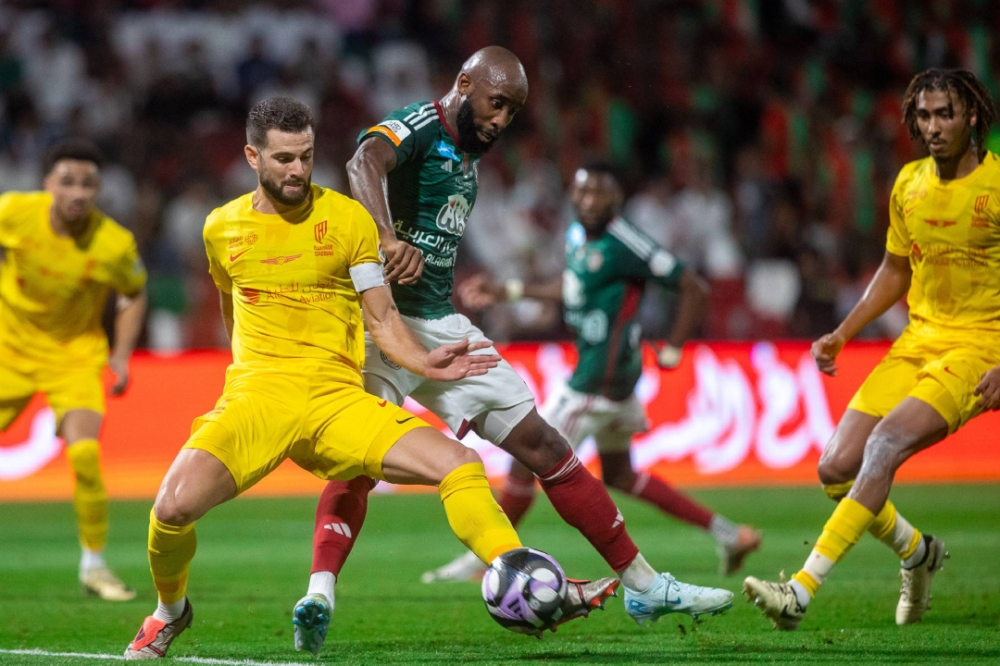
Economically speaking, the sum paid may seem astronomical at first glance, but in the world of sports finance, it's interpreted as a calculated investment with compounding returns. Upon Ronaldo's arrival, the value of the league's television broadcasting rights doubled, sponsorship deals soared, the market value of clubs skyrocketed, and the Saudi league transformed into a globally exportable product. Ronaldo created an entirely new market, raised expectations, and ignited a competitive internal race that later attracted other prominent names like Neymar, Benzema, and Kanté, who had previously seemed completely out of the picture.
From a marketing perspective, Cristiano Ronaldo isn't just a player; he's a walking global media phenomenon. Every appearance he makes is an advertisement, every goal he scores is content, and every press conference he attends is a story that gets recycled across hundreds of platforms. The Saudi league didn't just buy playing time; it bought global attention worth billions of views, which is considered the most valuable currency in the digital age.
In conclusion: Investing in the future
The Ronaldo deal wasn't a fleeting trend; it was a quiet, multifaceted sporting revolution. Those who reduce it to a mere annual figure miss the fact that it was an investment for an entire era, and a new position for the Kingdom within the global sports industry. A single signing might not change the outcome of a match in the 90th minute, but it has the potential to alter the entire market dynamic in the long run, and that's precisely what happened.