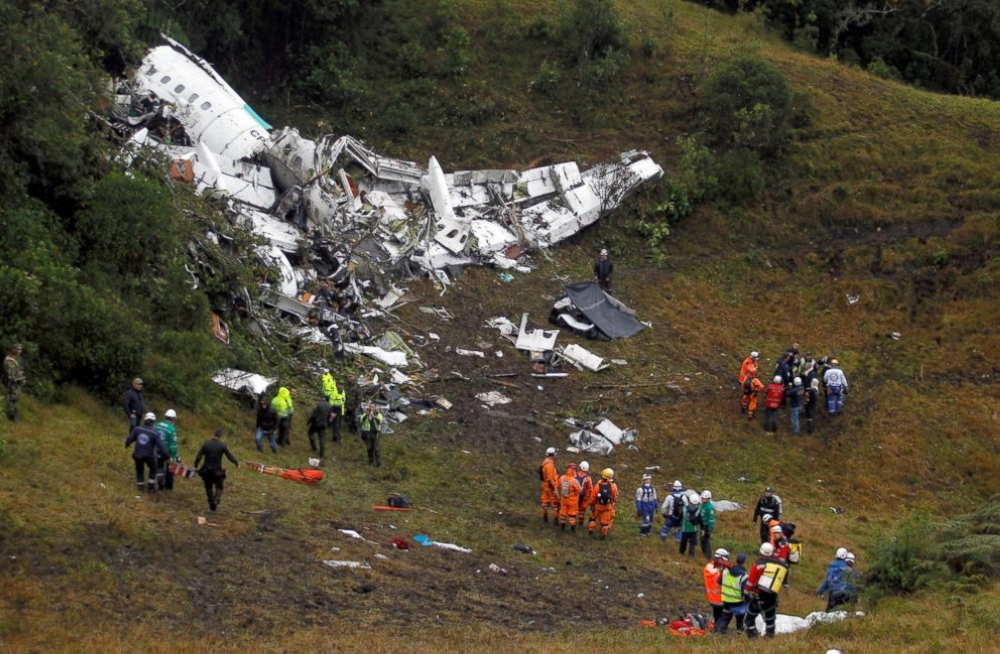
In a tragic accident, Colombia's Civil Aviation Authority announced that all passengers and crew members of a plane carrying 15 people perished after it crashed on Wednesday near the border with Venezuela. The aircraft, operated by the state-owned airline Satina, was on a short domestic flight from Cúcuta to Ocaña, a rugged region in the northeast of the country. A Civil Aviation Authority official confirmed that there were "no survivors," a devastating blow to the local community.
Background and challenges of aviation in Colombia
This incident once again highlights the challenges of aviation in Colombia, a country characterized by its complex geography, dominated by the Andes Mountains. This mountainous terrain, coupled with unpredictable and rapidly changing weather conditions, makes air navigation, especially for short-haul flights using smaller aircraft, inherently risky. Historically, Colombia has experienced a number of aviation accidents linked to these factors, prompting authorities to adopt stringent and continuously evolving safety standards.
Satina's vital role in remote areas
Satina (Servicio Aéreo a Territorios Nacionales), a state-owned airline, plays a vital role in connecting remote and isolated areas of Colombia to the rest of the country. The company was founded to provide essential transportation for communities that are difficult to reach by road due to rugged terrain or a lack of adequate infrastructure. Its flights serve not only civilian passengers but also act as a lifeline for transporting goods, aid, and government personnel, making it an integral part of the social and economic fabric of these regions.
Details of the incident and initial investigations
According to preliminary data, the aircraft lost contact with air traffic control just minutes before its scheduled landing at Ocaña Airport. Takeoff and landing are among the most critical phases of any flight, requiring high levels of precision and concentration, especially at airports located in mountainous regions. Search and rescue operations commenced immediately after the aircraft was reported missing, quickly evolving into a mission to recover the wreckage and the victims' remains. The Colombian Civil Aviation Authority has launched a comprehensive technical investigation to determine the precise cause of the crash, which may include mechanical failure, pilot error, or severe weather conditions.
Impact and importance on aviation safety
Locally, the crash left residents of Cúcuta and Ocaña in mourning and shock, as the victims were locals who relied on these flights for transportation. Nationally, the incident puts Satina's reputation and operational safety under intense scrutiny, raising questions about the adequacy of its maintenance and training procedures. The investigation's findings are expected to lead to a comprehensive review of aviation safety protocols in Colombia, with the aim of strengthening them, preventing future tragedies, and ensuring the continued provision of vital air services by regional airlines at the highest possible safety standards.