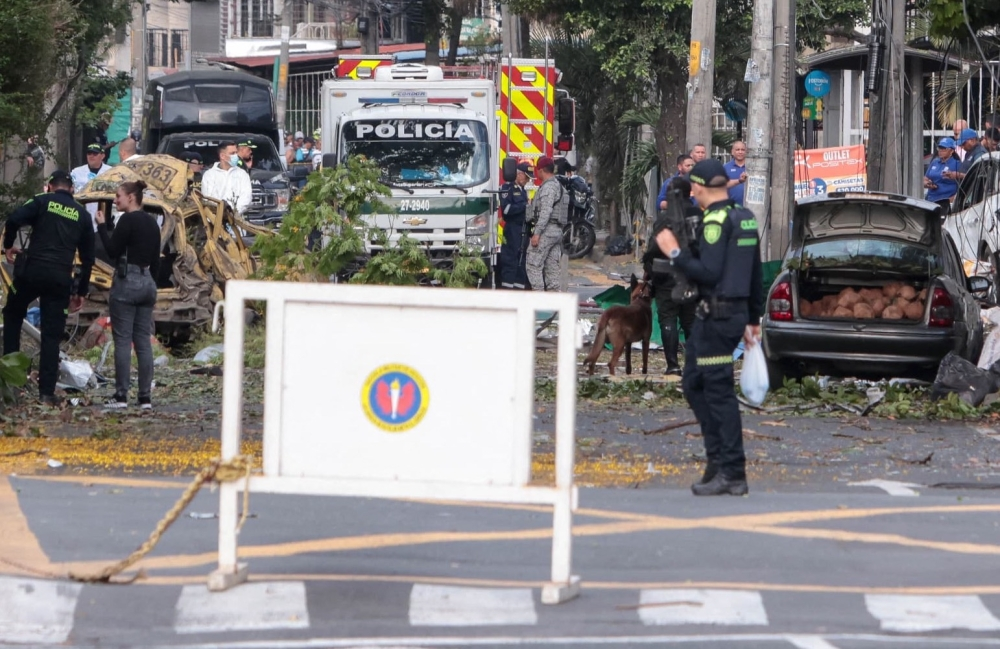
The Amazon region of southern Colombia has witnessed a dangerous escalation in violence, with at least 27 people killed in fierce armed clashes between two rival leftist groups, official military sources confirmed to AFP on Sunday. The intense fighting is taking place in the strategic Guaviare department between two factions that broke away from the Revolutionary Armed Forces of Colombia (FARC), the former rebel group that signed a landmark peace agreement with the government in 2016.
The struggle for influence and field control
Field reports indicate that fighting is taking place between a faction led by Iván Mordisco, one of Colombia's most wanted men, and another group headed by a commander known by his nom de guerre "Calarca." A video seen by the army shows the bodies of more than 20 fighters in military fatigues lying on a dirt road, reflecting the intensity of the clashes. The army stated that the primary motivation behind these confrontations is a power struggle for control of drug trafficking routes, illegal mining areas, and the lucrative extortion operations in this remote region.
Historical background: After the 2016 agreement
To understand the context of this event, one must go back to 2016, when the Colombian government signed a historic peace agreement with the FARC leadership to end an armed conflict that had lasted for more than five decades and claimed hundreds of thousands of lives. Despite the demobilization of thousands of fighters, some factions—now known as "dissidents"—refused to lay down their arms, arguing that the agreement did not provide sufficient guarantees or expressing a desire to continue their illicit economic activities.
These splinter groups initially coalesced, but quickly fractured due to disagreements over leadership and the sharing of financial returns from the cocaine trade and mining, transforming the conflict from an ideological war against the state into internal guerrilla wars for control of resources.
Challenges of the "comprehensive peace" policy
This escalation comes as a blow to the efforts of Colombian leftist President Gustavo Petro, who, since taking office, has adopted a policy of "Paz Total" (Total Peace), aimed at negotiating with all remaining armed groups in the country to end the cycle of violence. Mordisco had previously engaged in peace talks with Petro's government, but withdrew in 2014 and intensified its attacks against civilians and security forces, while the group led by Calarca continues to hold intermittent talks with the government.
Regional and environmental impact
The dangers of these clashes extend beyond security concerns, encompassing environmental and regional dimensions. The Amazon region, where the fighting is taking place, is considered the lungs of the world and is suffering systematic destruction due to coca cultivation and illegal mining carried out by these groups to finance their operations. Furthermore, the ongoing chaos in southern Colombia threatens the stability of border regions with neighboring countries, making the elimination of these volatile areas a top priority for Colombian national and regional security.