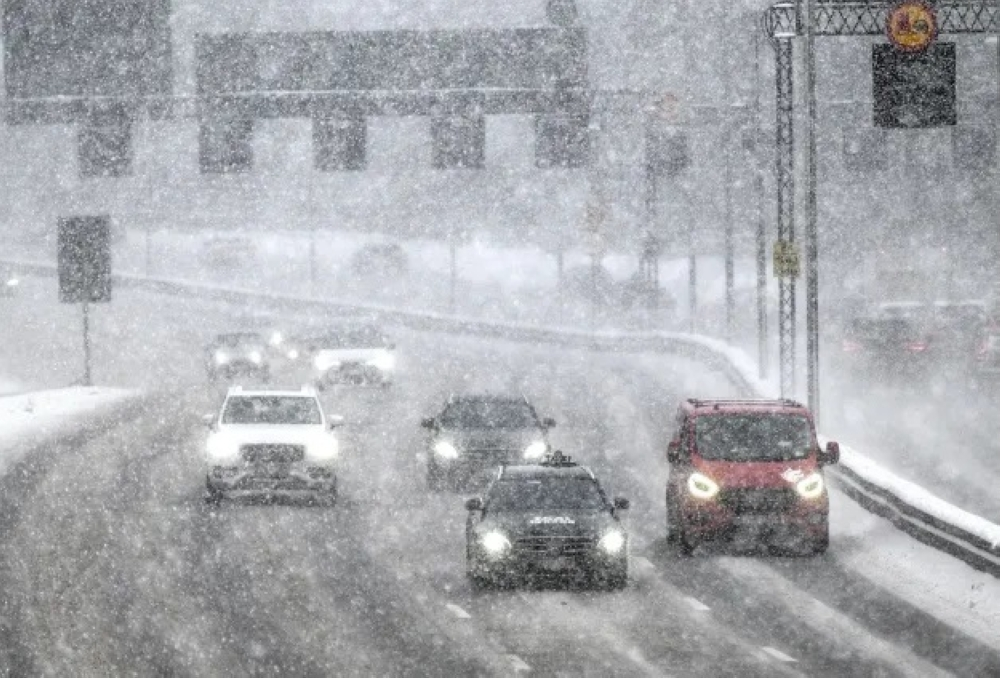
Northwest European countries are experiencing near-total paralysis in their transportation sectors following a severe cold wave, considered one of the most intense to hit the continent this winter. These harsh weather conditions have caused widespread disruption, including the cancellation of hundreds of flights, the suspension of train services, and the closure of numerous major roads and schools in Britain, France, and the Netherlands.
Widespread disruptions to international travel
At the heart of this crisis, international rail travelers faced significant difficulties, with Eurostar, the vital link between the UK and mainland Europe, announcing widespread service disruptions. The company advised passengers traveling between London and the Netherlands to postpone their journeys, as trains beyond Brussels were unable to operate due to heavy snow and ice. Furthermore, six major trains between London's St. Pancras and Paris's Gare du Nord were cancelled, leaving thousands of passengers stranded or facing lengthy delays.
These disruptions come as a second blow to the European transport sector in just a few days, as train traffic through the Channel Tunnel had only just resumed on New Year's Eve after a sudden power outage, reflecting the enormous pressure that transport infrastructure is under in extreme weather conditions.
Air travel disruptions and mass cancellations
The aviation sector fared no better, as the snowstorm severely disrupted air traffic. In the Netherlands, Amsterdam's Schiphol Airport, one of Europe's busiest, saw nearly 700 flights canceled – more than half of Monday's scheduled flights – with further disruptions expected.
In France, airlines were forced to reduce flights by 15% at Paris's Charles de Gaulle and Orly airports, following instructions from the civil aviation authority due to heavy snowfall and the difficulty of de-icing aircraft and runways. Cancellations also affected several British airports, including Liverpool, Aberdeen, Inverness, and Belfast.
Climate and infrastructure impacts
This cold snap highlights the challenges facing Europe's infrastructure in the face of extreme climate change. Record-breaking low temperatures – such as -10.9°C in the Shab Highlands of northwest England – typically cause railway diversion points to freeze and dangerous ice to form on motorways.
In this context, British Rail deployed a fleet of snowplows to deal with accumulations of up to 52 centimeters in Scotland, while Dutch Railways (NS) announced a significant reduction in its services, particularly around the capital, Amsterdam.
Precautionary measures and social impacts
The effects of the cold wave extended to the daily lives of residents, with educational authorities announcing the closure of hundreds of schools to ensure student safety, including 212 schools in Northern Ireland and dozens in Scotland and Wales. In Paris, the snow caused massive traffic jams and disrupted the bus network, prompting the French meteorological service, Météo France, to issue an orange alert for most of the northwest of the country.
Authorities in the three countries are warning of the continuation of this weather condition, calling on citizens to be cautious and avoid travel except when absolutely necessary, given expectations that temperatures will drop again to 12 degrees below zero in snow-covered areas, increasing the risk of slips and traffic accidents.