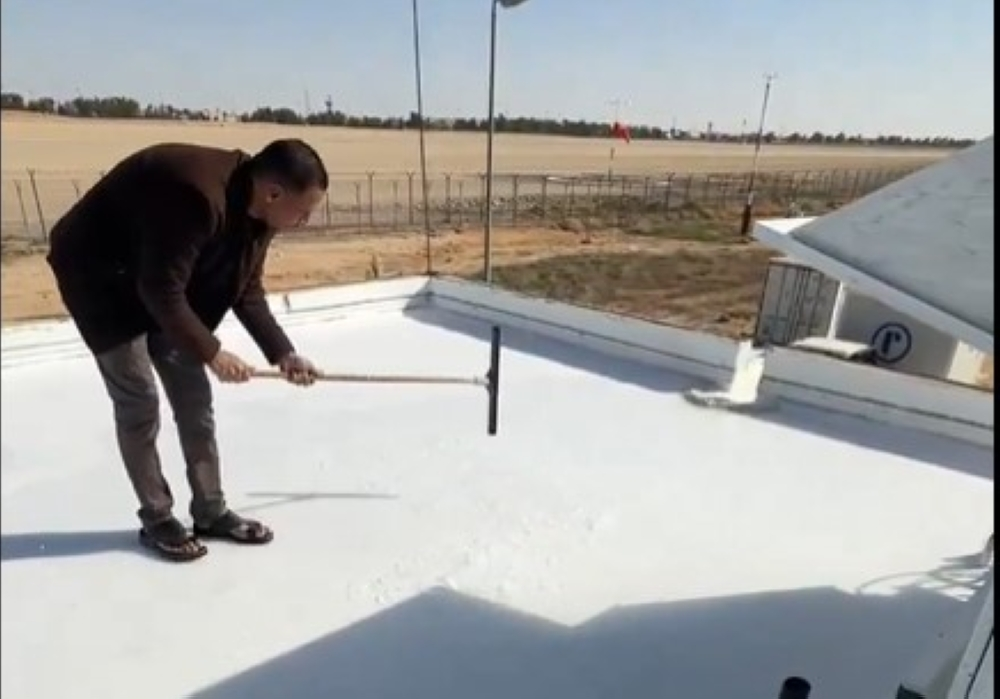
The northern regions of Saudi Arabia witnessed a radical change in weather conditions on Wednesday, as a severe cold wave swept through the northern cities, turning the natural landscape in Rafha Governorate into a bright white canvas due to frost, in an event that reflects the peak of this year's winter season.
Lowest recorded temperatures
In detailing the weather situation, the official spokesperson for the National Center for Meteorology, Hussein Al-Qahtani, confirmed that this day is the coldest so far since the beginning of winter. Weather stations recorded a sharp drop in temperatures, with the city of Tarif topping the list at -3°C, followed by the city of Qurayyat at -2°C, indicating the penetration of a very cold air mass into the atmosphere.
Al-Qahtani documented this noticeable decrease with a video clip showing the formation of frost in large quantities on the roofs of buildings and cars in Rafha Governorate, reflecting the severity of the cold that prevailed in the region during the early morning hours.
climatic and geographical context
This cold wave is part of the typical climate of the northern regions of the Kingdom (such as the Northern Borders, Al-Jawf, and Tabuk), which serve as the primary gateway for polar air masses originating from northern Arabia and the Levant. These regions typically experience record-breaking low temperatures, sometimes reaching freezing point, during January and February, directly impacting daily life and agricultural practices in these provinces.
Weather forecast and safety alerts
Regarding the upcoming forecast, the National Center for Meteorology explained that the weather conditions will continue – God willing – with temperatures ranging from cold to very cold in the regions of Tabuk, Al-Jawf, Hail, and the Northern Borders, with continued chances of frost formation. This requires citizens and residents to exercise caution, especially when driving in the early morning hours to avoid slippery roads, in addition to the need to follow safety guidelines when using various heating methods.
On another note, the impact of the current weather system is not limited to coldness, but extends to include activity in surface winds that stir up dust and sand, which may limit horizontal visibility in parts of the Qassim, Riyadh, Eastern Province, and Najran regions, reaching the eastern parts of the southwestern highlands and parts of Makkah and Madinah.