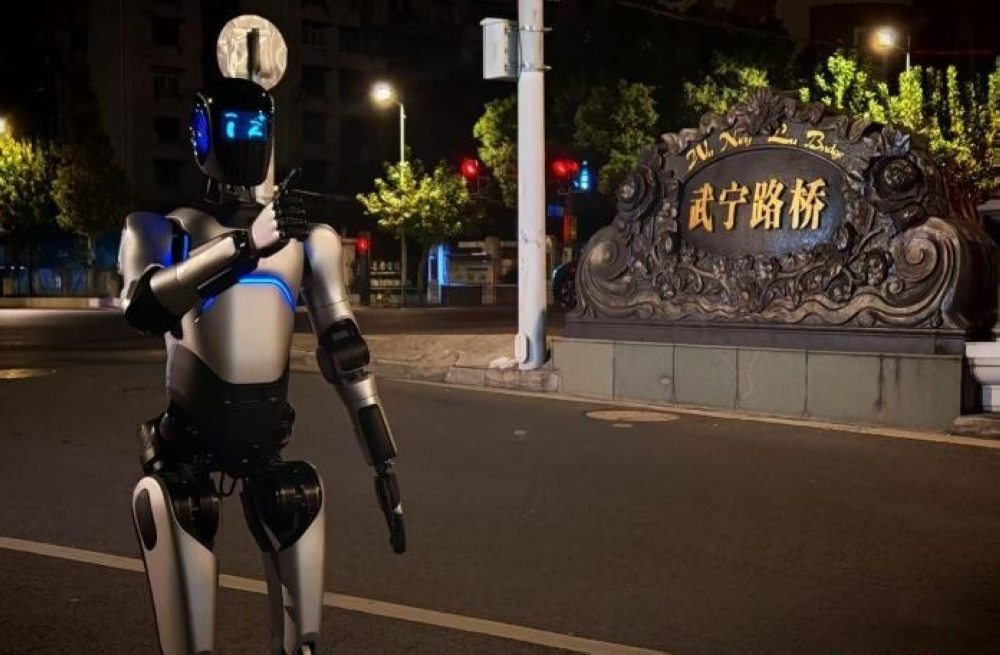
In a move reflecting the significant advancements in the technology and artificial intelligence sector, a Chinese-made humanoid robot has achieved an unprecedented feat by entering the Guinness World Records. The robot managed to walk a distance exceeding 106 kilometers continuously, overcoming the technical challenges related to power and endurance that have long confronted humanoid robot developers worldwide.
Standard flight details from Suzhou to Shanghai
The journey of the robot known as "Android A2," developed by a Shanghai-based technology company, began in Suzhou on the night of November 10th. The journey lasted several days until the robot successfully arrived at the famous Bund area in the heart of Shanghai in the early hours of November 13th. This journey documented the robot's ability to travel a distance of 106,286 kilometers, a figure that sets a new standard in the world of robotics.
Technical challenges and innovative energy solutions
Power consumption has always been the biggest obstacle for bipedal humanoid robots, as maintaining balance and mimicking human-like movement requires high electricity consumption. However, the Android A2 robot has overcome this obstacle thanks to its quick-replacement "hot battery" system. This technology allows the robot to operate efficiently throughout its journey without needing to shut down for traditional recharging, demonstrating its readiness to operate for extended periods in real-world scenarios.
The competitive context and development of the robotics industry in China
This achievement further solidifies China's position as a leading power in robotics and artificial intelligence. Prior to this event, specifically last April, another robot, "Tieng Kung Ultra," developed by the Beijing Humanoid Robotics Innovation Center, successfully completed a 21-kilometer half marathon in 2 hours and 40 minutes. The significant difference in time between these two achievements illustrates the rapid pace of technological development in such a short period.
Future prospects and the impact of the event
This record is not merely a technological demonstration; it holds significant implications for the future of the industry. The ability of humanoid robots to travel long distances suggests their potential use in complex logistical tasks, such as delivering packages in cities, participating in search and rescue operations in disaster zones, or even accompanying the elderly. This field test proves that humanoid robots are beginning to transition from laboratory experiments to practical applications and high reliability.