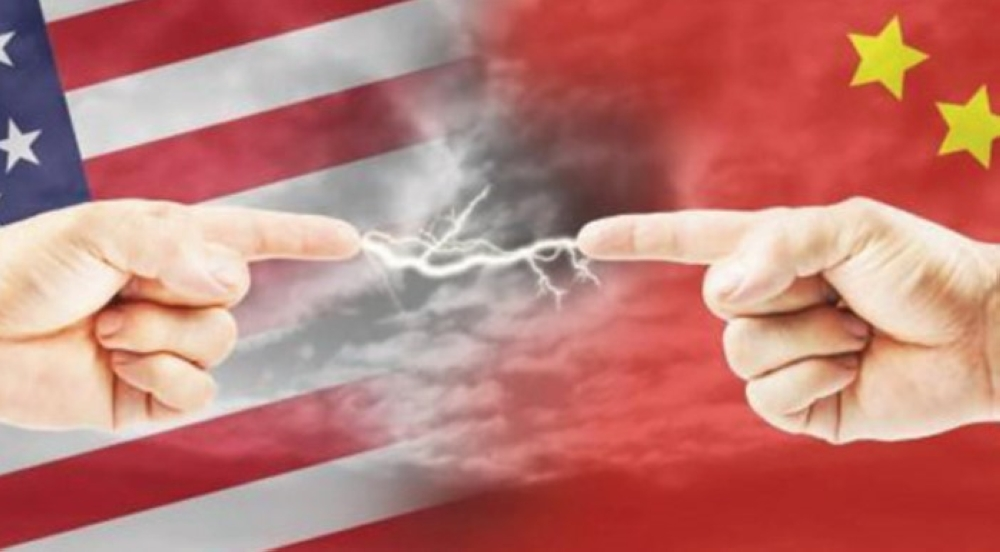
Escalating tensions between Beijing and Washington
In a statement reflecting the escalating tensions between the two superpowers, Chinese Foreign Minister Wang Yi issued a stern warning to the United States, asserting that any American attempt to orchestrate the separation of Taiwan from China would likely lead to a “direct confrontation.” His remarks, delivered at the Munich Security Conference, clearly outlined the red lines that Beijing will not allow to be crossed.
Wang Yi explained that Washington faces two paths: either cooperation with Beijing or separation and the formation of blocs aimed at containing and dividing China through the Taiwan issue. He warned, “This latter path will cross China’s red lines and will most likely lead to a direct confrontation between China and the United States.”.
The historical roots of the Taiwan crisis
The roots of the crisis lie in the end of the Chinese Civil War in 1949, when Chiang Kai-shek's Kuomintang forces were defeated and retreated to Taiwan, while Mao Zedong's Communist Party established the People's Republic of China on the mainland. Since then, Beijing has considered Taiwan a "renegade province" that must be reunified with the mainland, by force if necessary—a policy known as "One China." In contrast, Taiwan has developed into a prosperous, self-governing democracy, officially calling itself the Republic of China, with its own government, military, and currency.
The importance of the event and its expected impact
Taiwan's importance extends beyond its geographical boundaries; it is not merely a sovereign issue for China, but rather a global geopolitical and economic focal point.
- Domestically: The Taiwan issue is the cornerstone of the legitimacy of the Chinese Communist Party, which sets “reunification” as its supreme national goal.
- Regionally, any military conflict in the Taiwan Strait would threaten the stability of the entire Indo-Pacific region and draw in US allies such as Japan and South Korea. Wang Yi condemned statements by Japanese officials hinting at a possible military intervention to defend Taiwan, calling it a revival of Japan’s “militarism.”
- Internationally, Taiwan controls over 60% of global semiconductor production, the electronic brains that power everything from smartphones to cars and advanced weaponry. Any disruption to this industry would lead to an unprecedented global economic crisis. Furthermore, a direct confrontation between China and the United States, both nuclear powers, carries catastrophic risks for international peace and security.
The United States' position and its policy of "strategic ambiguity"
The United States officially adheres to the “One China” policy, diplomatically recognizing Beijing, not Taipei. However, it also pursues a policy of “strategic ambiguity,” refraining from explicitly committing to Taiwan’s military defense but leaving that option open to deter any Chinese invasion. Under the 1979 Taiwan Relations Act, Washington is obligated to provide the island with the weapons and resources necessary for its self-defense, a commitment Beijing views as interference in its internal affairs and a serious provocation.