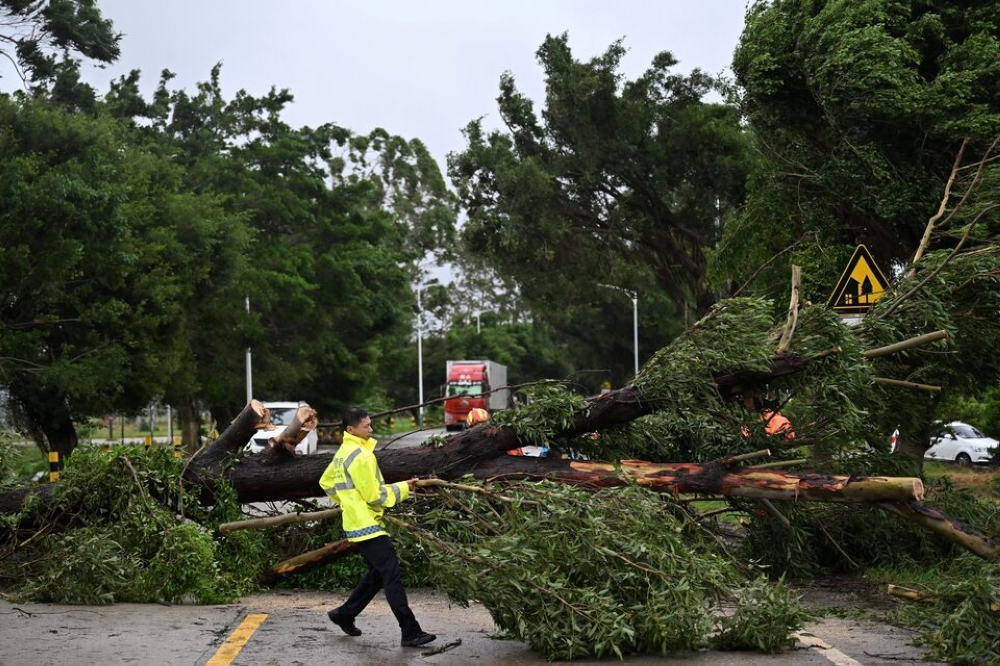
China's National Weather Service renewed its blue alert for storms and strong winds, a proactive measure aimed at mitigating the risks posed by severe weather fluctuations affecting large parts of the country. This warning comes as several provinces and coastal areas prepare for strong winds that could disrupt daily activities and shipping.
Details of areas affected by the wind
According to a statement from the National Meteorological Center, strong winds are expected to begin today and continue until 8:00 PM tomorrow, Sunday. The land areas directly affected include parts of Inner Mongolia , Shandong, Xicang (Tibet), and Qinghai. Simultaneously, vital bodies of water will experience strong winds, particularly in parts of the Yellow Sea, the East China Sea, the Taiwan Strait, the Bashi Channel, and the South China Sea.
China's weather warning system
To understand the nature of this warning, it's important to note that China employs a sophisticated early warning system for severe weather, comprised of four color-coded levels to ensure a rapid and effective response. Red the most severe level, followed by orange, then yellow, and finally blue . Although blue is the lowest level of warning, it still requires serious action, as it indicates weather conditions that could develop into a threat to public safety and property if not addressed with caution.
Expected navigational and economic impacts
These warnings are of paramount importance given the geographical location of the affected maritime areas. The South China Sea and the Taiwan Strait are among the world's busiest waterways, through which a significant portion of global trade and supply chains pass. Therefore, any weather disturbance necessitates heightened vigilance from the maritime shipping sector to prevent accidents or logistical delays. Chinese authorities have urged all vessels and fishing boats to exercise extreme caution while at sea, or to return to port if necessary, to ensure the safety of crews and equipment.
Safety and prevention measures
In addition to maritime warnings, the relevant authorities stressed the need for strict preventive measures on land. The directives focused particularly on fire prevention , as strong winds increase the speed at which fires spread, posing a threat to forested, agricultural, and residential areas. The need to secure transportation and reinforce temporary structures and billboards that could be blown away by the wind was also emphasized, as part of a comprehensive strategy aimed at protecting lives and property and minimizing potential economic losses.