Introduction: A strategic battleground in the trade war
In the midst of the fierce trade war ignited by former US President Donald Trump, the battleground was not limited to tariffs and traditional goods, but extended to a vital strategic resource: rare earth minerals. While the US objective was to pressure Beijing, China emerged from this confrontation as the biggest beneficiary, successfully leveraging its near-total dominance of this sector to solidify its position as an unassailable economic and geopolitical power, and exposing a structural weakness in the West.
What are rare earth minerals and why are they considered the “oil of the 21st century”?
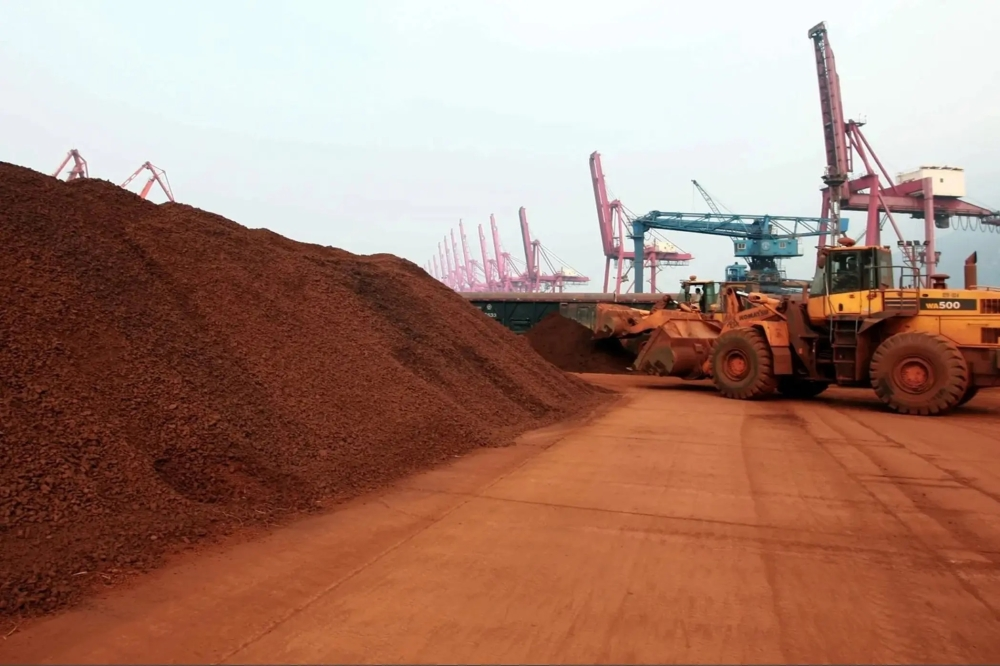
Rare earth metals, or rare earth elements (REEs), are a group of 17 chemical elements in the periodic table. Contrary to what their name might suggest, they are not rare in terms of abundance in the Earth's crust, but rather their scarcity stems from the difficulty and complexity of extracting, separating, and refining them economically and environmentally safely. These elements are central to modern technology, being essential components in strategic industries including:
- Advanced technology: smartphones, computer monitors, and electronic chips.
- Renewable energy: wind turbines and high-efficiency motors in electric vehicles.
- Defense industries: missile guidance systems, radars, lasers, and fighter jet engines such as the F-35.
This vital importance made controlling its supply a strategic bargaining chip equivalent to the control countries had over oil supplies in the twentieth century.
Historical background: How did China silently build its empire?
China’s dominance was no accident. In the 1980s and 1990s, the United States led the way with its Mountain Pass mine in California. But American companies gradually moved their operations to China, drawn by lower labor costs and less stringent environmental regulations. Beijing shrewdly seized this opportunity, not only extracting but also investing heavily in building an integrated value chain encompassing the most challenging and profitable stages: separation, refining, and the production of alloys and permanent magnets. A 1992 statement by former Chinese leader Deng Xiaoping encapsulates this strategic vision: “The Middle East has oil, and China has rare earths.” Today, China controls more than 60% of global production of these minerals and, more importantly, dominates nearly 90% of the complex refining and processing operations.
Use of rare earth metals paper during Trump's era
When the Trump administration imposed tariffs on Chinese goods, Beijing responded with strong hints that it might restrict its rare earth exports to the United States. Chinese President Xi Jinping’s May 2019 visit to a rare earth processing facility in Jiangxi province sent a clear message to the world. The move caused considerable alarm in Washington and other Western capitals, as technology and defense companies realized how reliant they were on Chinese supplies. While China did not impose a complete embargo, the threat alone was enough to send shockwaves through global markets and demonstrate Beijing’s considerable influence.
Global reaction and search for alternatives
The shock prompted the United States and its allies to move quickly to diversify their supply sources and reduce their reliance on China. Washington launched initiatives to bolster the domestic “mine-to-magnet” supply chain, and the Department of Defense invested in rebuilding U.S. capabilities in this area. International partnerships were also strengthened with countries like Australia, home to Linas, the largest producer of rare earth minerals outside of China. However, experts acknowledged that building a fully independent and alternative supply chain is a long-term and extremely expensive undertaking that could take a decade or more to yield tangible results.
Conclusion: China emerges stronger
Ultimately, the rare earth metals war revealed a strategic truth: China has successfully transformed a natural resource into a potent tool of geopolitical influence. Rather than weakening it, the confrontation highlighted the world's dependence on China, prompting it to increase its investments and consolidate its state-owned giants to strengthen its market grip. Beijing has demonstrated that any attempt to decouple the global economy from it would be painful and costly, and that it possesses powerful cards to play effectively, emerging from this trade war even stronger and more influential in a sector that represents the nerve center of the future technological and military landscape.