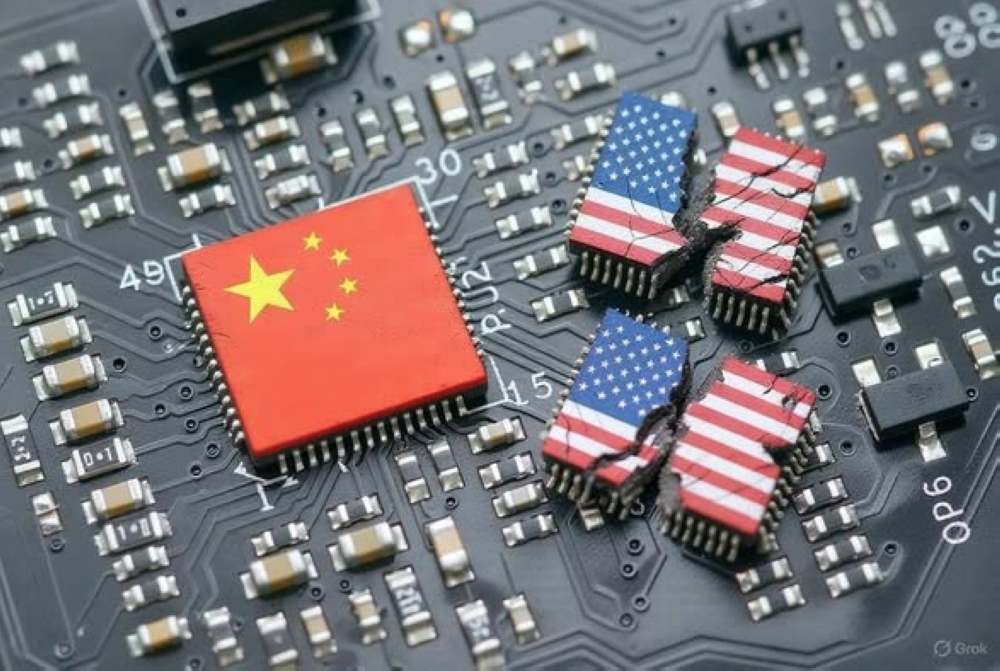
The Chinese government today expressed its firm opposition to the United States' recent move to impose additional tariffs on Chinese semiconductor exports. This stance comes amid escalating trade and technology tensions between the world's two largest economies, as Washington seeks to restrict Beijing's access to advanced technology.
Official position of the Chinese Ministry of Commerce
In an official response to the US measures, Chinese Ministry of Commerce spokesperson He Yongqian stated during a regular press conference that China does not recognize the so-called "conclusions of the Section 301 investigation" upon which Washington based its actions. He emphasized that China firmly opposes the imposition of any additional tariffs under this section on Chinese semiconductor products, describing the measure as unilateral and detrimental to the stability of global supply chains.
Details of the American plan and timeline
The Office of the United States Trade Representative recently released the findings of its Section 301 investigation into Chinese technology and intellectual property policies. Based on these findings, Washington announced plans to impose new tariffs targeting semiconductors imported from China.
According to the US announcement, the implementation will be gradual, beginning with an initial tariff rate of zero percent, which will then increase over an 18-month period. The final tariff level is scheduled to be announced at least 30 days before June 23, 2027, giving companies time to adjust their supply chains, but it will also place continued pressure on Chinese manufacturers.
The context of the "chip wars" and the technological conflict
This measure cannot be separated from the broader context of what has become known as the “chip war” between the United States and China. For several years, Washington has been imposing increasing restrictions on the export of advanced chip-making equipment to China and working to incentivize domestic production and that of its allies to reduce reliance on Chinese technology. The US administration views China’s potential dominance of the semiconductor market as a threat to national security, particularly given the dual applications of these technologies in the military and artificial intelligence sectors.
Economic and diplomatic repercussions
From an economic perspective, experts believe that the continued imposition of reciprocal tariffs could lead to higher costs for consumer electronics worldwide and hinder technological innovation due to the fragmentation of the global market. The Chinese spokesperson indicated that Beijing is aware of the current situation and has lodged strong protests with the US through the Joint Economic and Trade Consultation Mechanism, emphasizing that China will take necessary measures to protect the interests of its domestic companies.