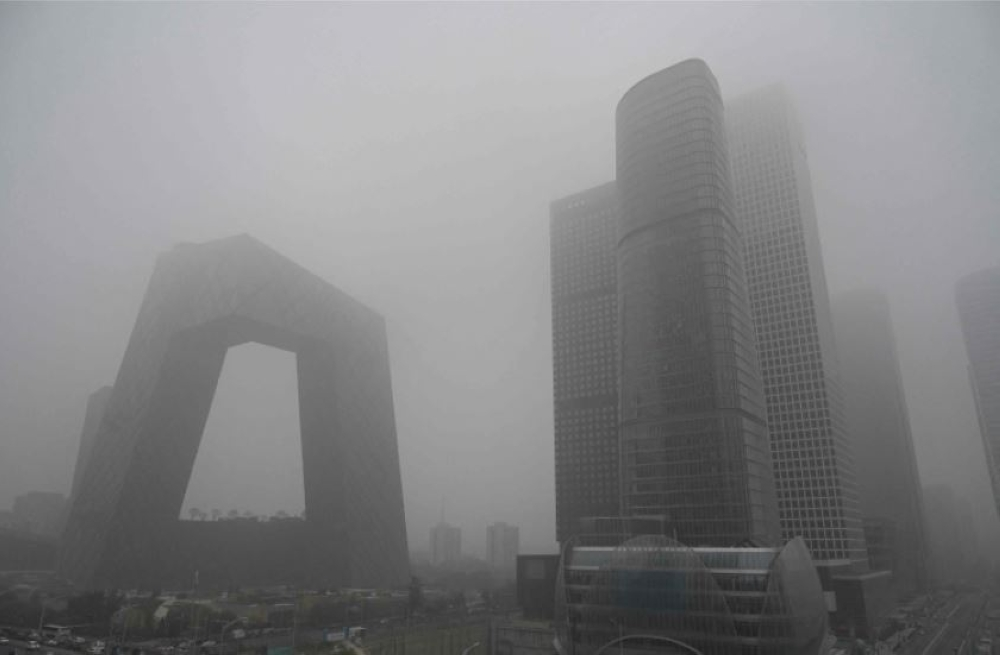
China's National Meteorological Center issued a level four weather warning for severe weather, including strong winds and sandstorms, expected to hit several areas in the north of the country. This warning is part of a four-tier emergency response system, with level four being the lowest level.
According to the center's statement, the severe weather conditions that began on Saturday are expected to continue through Sunday, with large areas experiencing strong winds accompanied by dust and sandstorms. A yellow warning for strong winds and sandstorms, along with a blue warning for a cold wave, covered vast provinces and regions including Xinjiang, Inner Mongolia, Gansu, Ningxia, Qinghai, and Shaanxi, as well as parts of northern and northeastern China and the Shandong Peninsula.
General context and historical background
Sandstorms are a recurring weather phenomenon in northern China, particularly during the spring, when strong winds from Siberia coincide with the drying soil of the Gobi Desert and surrounding areas. For decades, China has struggled with increasing desertification, which exacerbates these storms. To address this environmental challenge, the Chinese government launched ambitious projects, most notably the “Great Green Wall” (Northern Triple Shelter Forest Program) in the late 1970s, which aimed to plant billions of trees to create a green belt that would halt desertification and reduce the impact of sandstorms.
Importance and expected impact
At the local level, these storms directly impact the lives of millions of residents. The drastic reduction in visibility leads to significant disruptions to transportation, including the delay or cancellation of hundreds of flights and the closure of major highways. Sandstorms also pose a public health risk, increasing the concentration of fine particulate matter in the air, which can cause respiratory problems, particularly for children, the elderly, and those with chronic illnesses. Authorities typically advise residents to stay indoors, keep windows closed, and wear face masks when going out for essential purposes.
Regionally and internationally, the impact of these storms is not limited to China. Strong winds can carry dust and sand particles long distances across East Asia, reaching the Korean Peninsula and Japan, leading to a deterioration in air quality in these countries and the emergence of what is known as "yellow dust." In some severe cases, these particles have even been observed reaching the west coast of the United States, highlighting the transboundary nature of this environmental phenomenon and the importance of international cooperation in combating desertification and climate change.