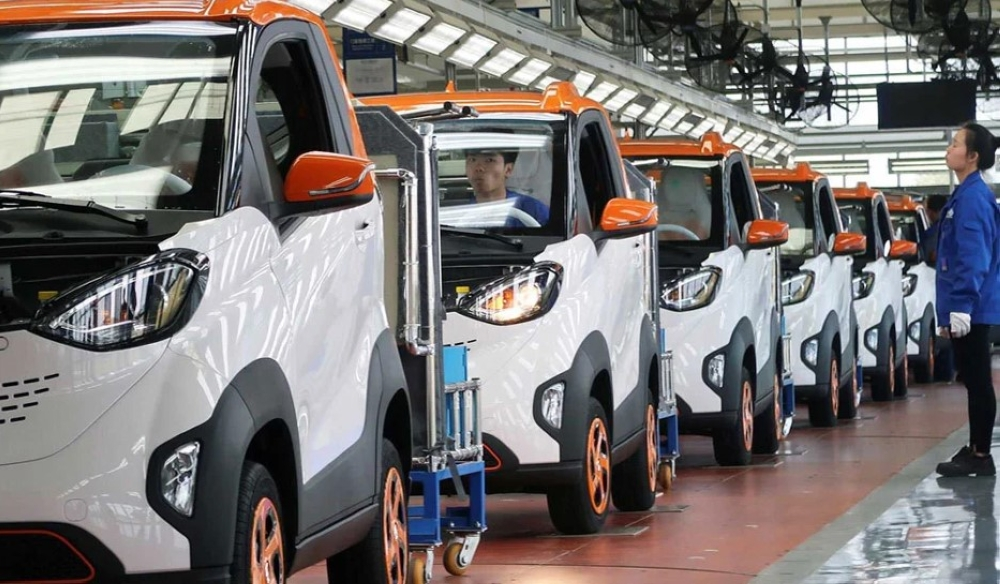
In a decisive regulatory move, Chinese authorities announced new guidelines aimed at ending the fierce price war that has gripped the automotive industry, prohibiting the sale of vehicles below their total cost. This decision comes as part of a broader campaign to restore stability to the world's largest car market, which has experienced unprecedented competition that has led to significant disruptions and threatened the viability of many companies.
Background and context of the price war
The price war in China’s auto sector began to gain significant momentum in early 2023 when Tesla, a leader in electric vehicles, drastically reduced the prices of its models to boost sales in the face of slowing demand and increasing competition. Other companies, including local giants like BYD, quickly followed suit, triggering a spiral of price cuts. This phenomenon was exacerbated by several factors, most notably excess production capacity in Chinese factories, a general slowdown in economic growth that impacted consumer confidence, and years of generous government subsidies for the electric vehicle sector, which led to the emergence of dozens of new brands and intensified competition.
Details of the new regulations
According to the directives, automakers are prohibited from selling vehicles below their total cost. The definition of cost extends beyond manufacturing and raw material expenses to include administrative, financial, sales, and marketing costs. Regulators have also prevented brands from pressuring their dealers and distributors to sell vehicles at a loss. The measures also regulate software promotions, requiring manufacturers to clearly notify customers before free trial periods expire and prohibiting the conversion of free features into paid subscriptions without explicit consent.
Importance and expected impact of the market
Domestically, this move aims to protect small and medium-sized enterprises (SMEs), which were the hardest hit by the price war, pushing many to the brink of bankruptcy. While giants like BYD and Tesla benefited by increasing their market share, companies less able to withstand losses suffered. These rules are expected to contribute to a fairer and more sustainable competitive environment, encouraging companies to compete on quality, technological innovation, and after-sales service, rather than solely on price.
Internationally, the stabilization of the Chinese automotive market has global implications. With Chinese brands expanding strongly in Europe, Southeast Asia, and Latin America, domestic price stability could impact their export strategies. This regulation also comes at a time when Chinese electric vehicle exports are facing scrutiny from the European Union and the United States over allegations of unfair government subsidies. This move can be seen as an attempt by Beijing to regulate its domestic industry and avoid practices that could trigger further trade disputes, reflecting its desire to ensure the healthy and sustainable growth of one of its most important economic sectors.