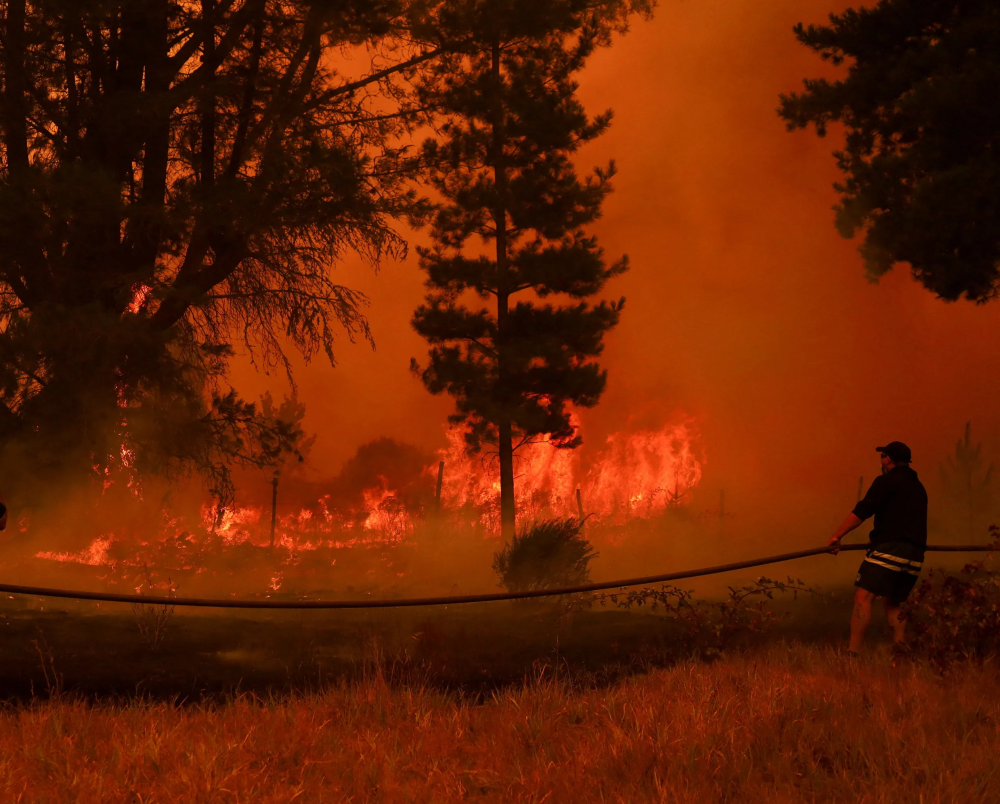
Southern Chile has witnessed a tragic escalation in the ongoing fire crisis, with official authorities announcing on Sunday that at least 15 people have been killed and more than 50,000 citizens have been forced to evacuate their homes and flee from the flames that have engulfed large areas in the Noble and Biobío regions.
In a press statement, Chilean Security Minister Luis Cordero confirmed that the death toll is likely to rise as search and rescue operations continue in the affected areas, located approximately 500 kilometers south of the capital, Santiago. The minister indicated that the top priority is currently protecting lives, which has necessitated one of the largest evacuations in the region's modern history, involving tens of thousands of residents trapped by smoke and flames.
Declaration of a state of natural disaster
In response to this critical situation, Chilean President Gabriel Burrich officially declared the two regions disaster areas, issuing a decree declaring a "state of natural disaster" in both Noble and Biobío. The president wrote via the X platform, emphasizing that this measure aims to expedite the mobilization of government resources, facilitate the deployment of military forces to assist in firefighting and relief operations, and ensure the delivery of urgent humanitarian aid to those affected.
Climatic conditions and the challenges of the southern summer
These fires are occurring at the height of summer in the Southern Hemisphere, as Chile faces intense heat waves and persistent drought, exacerbating the rapid spread of the flames. Strong winds also play a significant role in complicating firefighters' efforts, carrying sparks over long distances and creating new, difficult-to-control fire hotspots. Experts believe that the rugged terrain and dense forests of southern Chile provide ideal fuel for the fires, especially given the low humidity levels.
Historical background and growing concerns
This disaster is not an isolated event, but rather part of a series of environmental disasters that have struck the country in recent years. On February 2, 2024, Chile experienced a similar nightmare when devastating fires broke out around the tourist city of Viña del Mar and the Valparaíso region, resulting in the death of 138 people and the destruction of thousands of homes, and was classified as one of the worst disasters in the country's modern history.
Scientists and environmental organizations link the increasing frequency of these fires to global climate change, as Chile has been suffering from what is known as the "Great Drought" (Megadrought) for more than a decade, making forests and agricultural lands more prone to ignition. This presents the Chilean government with enormous economic and environmental challenges that require long-term strategies to deal with this new climatic reality.