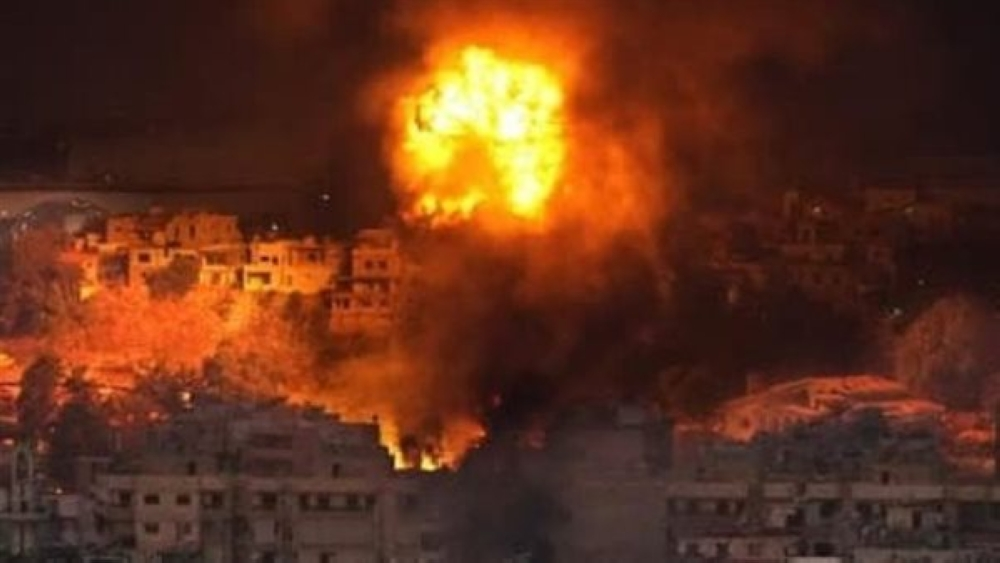
The death toll from the violent forest fires sweeping through southern Chile has risen to at least 19, in an environmental and humanitarian disaster that has prompted urgent intervention from the highest levels of power, with President Gabriel Burrich issuing a decree imposing a nighttime curfew in the most affected areas to try to control the security situation and facilitate evacuations.
Details of the disaster and government measures
Chilean Security Minister Luis Cordeiro confirmed in a press conference on Sunday that the death toll had reached 19, explaining that the vast majority (18 victims) perished in the Biobío region, while one death was recorded in the Noble region. These figures come as authorities announced the evacuation of more than 50,000 people from their homes to escape the rapidly advancing flames.
In response to the crisis, President Burić declared a state of "natural disaster," a constitutional measure that allows for the deployment of military forces to assist in firefighting and maintaining order. Speaking from Concepción, the operations center, Burić stated that the figures for material losses were likely to rise significantly, noting that initial estimates of 300 destroyed homes were "a considerable underestimate," and predicting that the number of destroyed homes would exceed 1,000.
Eyewitness accounts from the heart of the fire
Local residents described the sheer terror they experienced in the affected areas, particularly in the coastal towns of Penco and Lercuín. Matías Sead, a 25-year-old student from Penco, recounted how the fire raged out of control at 2:30 a.m., emphasizing that the rapid spread of the flames prevented anyone from salvaging their belongings. "If we had been just 20 minutes later," he said, "we would all be dead." In Lercuín, Alejandro Arredondo described the scene as horrific, with entire neighborhoods engulfed in flames in mere seconds, forcing residents to flee to the beach for their lives.
Environmental and climatic context: Why do fires keep recurring?
These fires come at the height of the southern summer, which in Chile is characterized by high temperatures and strong winds—ideal conditions for wildfires to spread. Climate experts point out that Chile faces increasing challenges due to climate change, as the country has been experiencing prolonged droughts (megadroughts) for more than a decade, leaving forests and woodlands highly flammable.
The fire crews, which have mobilized some 3,700 personnel, are facing considerable difficulties due to what are known as "30-30-30" conditions (temperature above 30, wind speed above 30 knots, and humidity below 30%), conditions which Interior Minister Alvaro Elizalde described as "complicated" and unfavorable in the coming hours.
A history of fires and economic impacts
This is not the first time Chile has faced such disasters; in recent years, fires have intensified in the central and southern regions, areas vital to the Chilean economy due to the extensive forestry and agricultural industries. These fires are feared to cause significant economic losses, in addition to the social impact of displacing thousands.
These events bring to mind the tragedy of February 2, 2024, when devastating fires broke out around the tourist city of Viña del Mar, killing 138 people and affecting about 16,000, putting the Chilean government under considerable pressure to develop more effective strategies for fire prevention and dealing with the consequences of global warming.