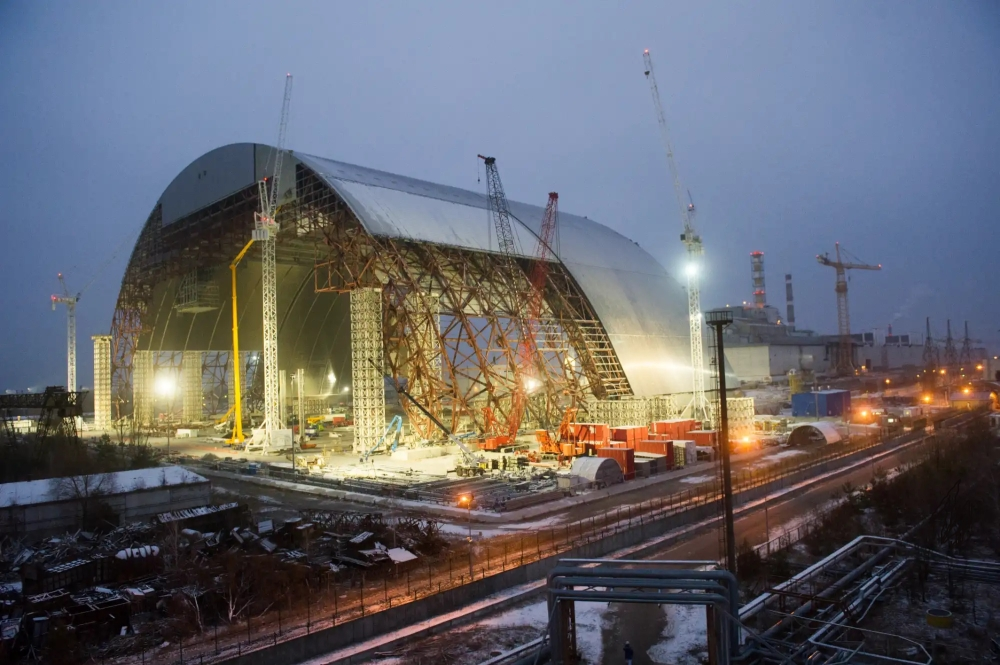
International concerns have recently intensified regarding the safety of the Chernobyl nuclear power plant in Ukraine, following stark warnings from the plant's director, Sergei Tarakanov, about the potential for a new radiological disaster should the site be targeted by direct Russian military strikes. These warnings come at a time when Ukraine's energy infrastructure is under constant attack, raising the specter of a grim scenario reminiscent of the 1986 tragedy.
Risk of shelter collapse
Tarakanov told AFP that a direct missile strike, or even the impact of an Iskander missile near the plant, could cause a "minor earthquake" in the area, threatening the stability of the radiation shelter. The Ukrainian official explained that the greatest danger lies in the lack of guarantees that the shelter would remain intact after such an attack, which could lead to the collapse of its internal structures and the release of radioactive dust.
It should be noted that the nuclear power plant, which is currently out of service, is protected by an internal steel and concrete structure that was urgently constructed following the historic disaster, as well as a modern and sophisticated outer envelope known as the "New Safety Seal" (NSC), which is designed to be an impenetrable barrier against radioactive leaks for a century.
Historical context: The specter of the 1986 disaster
To understand the scale of the current risks, it is essential to revisit the site's historical background. On April 26, 1986, reactor number 4 at the Chernobyl plant experienced the worst nuclear disaster in human history, with the reactor explosion releasing a radioactive cloud that blanketed large parts of Europe. Since then, the international community has invested tremendous effort and significant resources to secure the site, culminating in the construction of the giant steel arch (the new safety containment structure) that completely encloses the damaged reactor.
Recent damage and assessment by the International Agency
The station director revealed that the outer casing had already sustained significant damage following a Russian drone attack last February, which caused a massive fire that destroyed the steel structure's outer cladding. He indicated that the barrier "lost many of its key functions," estimating that restoring its safety features would take approximately three to four years.
For its part, the International Atomic Energy Agency confirmed in a report at the beginning of this month, after sending an inspection mission, that the shelter had lost some of its basic security functions, specifically its buffering capabilities, although it confirmed that there was no permanent damage to the supporting structures or basic monitoring systems so far.
Regional and international repercussions
The dangers of the situation in Chernobyl extend far beyond Ukraine, posing a threat to environmental and health security in Europe and the surrounding region. A major radioactive leak would not respect geographical boundaries and could have long-term health and environmental consequences.
It is worth noting that Russian forces seized control of the plant at the beginning of the 2022 invasion before later withdrawing. However, the ongoing military operations and airstrikes keep the area in a state of constant danger. Despite assurances from the administration that radiation levels remain "stable and within normal limits" for now, the fragile security situation makes Chernobyl a ticking time bomb requiring extreme international vigilance.